Aluminum foil does not have a single "standard" thickness as the appropriate gauge depends entirely on the function for which the foil is intended. For example, 0.006 mm thickness is used in high-barrier films for coffee sachets, whereas a 0.06 mm thickness deep-draw pharmaceutical blister foil and a 0.12 mm thickness building insulation facing are used for different applications, even though these are classified as industrial aluminum foils.
Selecting the right thickness for any packaging/processing project is the most significant factor because thickness directly influences barrier performance, tensile strength, resistance to pinholes, ability to be formed, and cost of the material. As a professional aluminum foil manufacturer with 15 years of export experience, HTMM Aluminum Foil produces aluminum foil materials precisely according to clients’ specifications. This guide describes how industrial strength thicknesses correspond to various end-uses and explains the way HTMM assists their customers in choosing the correct thickness of their products.
Overall, aluminum foil is usually produced in thickness levels varying between 0.006 and 0.2 mm. This sort of foil manufacturing can be categorized into three types based on standard usage of aluminum foil.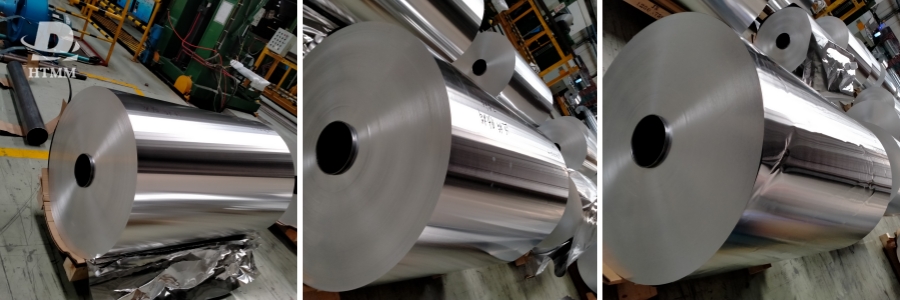
Double Zero Foil (Thickness: 0.006 – 0.009 mm)
One of the major strains of foil is called double-zero foil. The name comes from the two zeros in the thickness measurement. This foil has the highest weight to barrier ratio, but, at the same time, it is more vulnerable to pinholes, which may appear during the processes of lamination and cutting. It is generally combined with PET, PE, or PP films to manufacture high barrier constructions, for example, sachets for coffee and spices, cigarette packs, and wrappers for food. HTMM usually produces double-zero foil out of 1235 alloy with more than 99.35% purity, soft grain, and excellent lamination.
Single-Zero and Medium Foil (0.01 mm – 0.05 mm)
Medium gauge foil is regarded as the most diversified family since it has the highest percentage of industrial orders compared to other types of gauges. It achieves an optimal balance between ductility, tensile strength and cost, which makes it useful for producing lids for yogurt cups and substrates for food containers, as well as different middle layers used in retort pouches and duct facings in HVAC systems. The characteristic alloy represented in this family is alloy 8011, which has good ability to be formed into different shapes and affordability at the same time. It should be noted that a lot of food container producers order 8011-O foil in this family, so as to produce trays covered with golden coating using stamping method.
Thick Foils (greater than 0.05 mm)
Foils greater than 0.05 mm have structural strength and specification, and are used when rigidity is more critical than low thickness. Applications for these foils include radiant insulation, wire protection foils and semi-rigid constructions. The most common temper for the foils is H-series which ensures the required rigidity, while O temper provides flexibility in construction for all foil types.
Thickness Specifications for Different Applications
Various fields of industry have established appropriate thickness parameters based on the existing experience of production. The table below provides the necessary values of thicknesses commonly used.
Flexible Packaging for Food Products
- For use in vacuum and high-barrier food packaging, this type of packaging has a thickness of about 0.006–0.012 mm. This type of packaging is typically laminated with a film, making it lightweight but effective against moisture and oxygen.
- The thickness of chocolate and candy twist wrap is approximately 0.008–0.011 mm. This type of wrapping has one glossy face and needs to meet the requirements of having clean edges and consistent unwinding while being used for packaging.
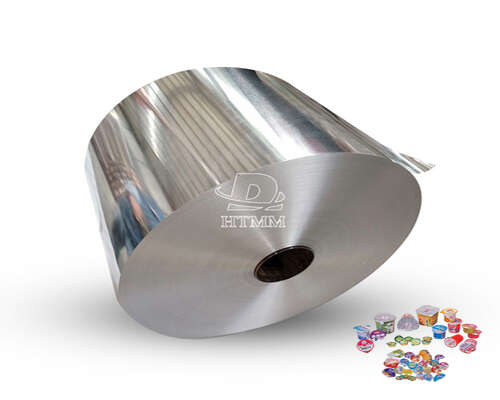
- The thickness of yogurt cup lids is between 0.03 and 0.05 mm. This type of packaging has either PP or PE heat seal lacquer coating that enables it to bond well to the rim of the cup.
- Retort pouches have a thickness of about 0.009–0.02 mm. These pouches must be able to withstand the 121°C sterilization process without any delamination occurring.
Aluminum Foil Packaging and Containers
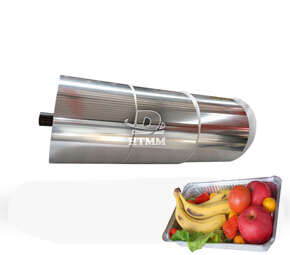
- Disposable food trays and oven-safe aluminum containers have a thickness of about 0.03–0.08 mm. The thinner trays are typically used for cold and takeaway food while the thicker trays are for cooked and grilled foods that require structural support when subjected to heat. The gold coated trays use the 8011-O aluminum alloy in their production.
Distinguishing Different Types of Foil by Their Thickness
- Blister foil with a PTP lid: from 0.02 mm to 0.03 mm thick and coated with a sealing lacquer that must adhere to PVC or PVC/PVDC foil.
- Cold-form alu-alu foil: between 0.04 mm and 0.06 mm thick, almost exclusively made of 8079 aluminum alloy. The aluminum alloy with a higher quantity of silicon and iron performs well for application that requires deep drawing of foil without breaking it.
Insulation
- Radiant barriers and vapour barriers: from 0.005 mm to 0.02 mm thick foil, laminated with kraft paper, glass fiber or PE. Cost of the foil and its pinhole presence are more important than its deep drawing performance.
Electrical and cable shielding
- Cable and data wire wrapping foils: from 0.05 mm to 0.15 mm thick. Uniform foil and wire thickness and tension in the process minimize the presence of gaps in wire camouflaging process.
A number of purchasers pay attention to only the nominal thickness while failing to pay attention to tolerance, but it is tolerance that determines the smooth operation of your process. A foil that has a nominal thickness of 0.02 mm and a tolerance of +/- 5% can actually vary between 0.019 mm and 0.021 mm along its length. In high-speed lamination processes, such a variation can lead to tension fluctuations, problems with registration and wrinkles. HTMM supplies foil with tolerance-adjusted thickness, usually between +/- 3% and +/- 5% for the packaging grades and with a smaller tolerance range for the pharmaceutical and electronic foil types. Our specialists examine your conversion process before producing the desired product and advise the tolerance that would suit your machine speed and requirements of the downstream production processes.
HTMM's benefit lies in that aluminum foil is adjusted to meet your specific production requirements rather than using rigid standard materials. The process is outlined as follows: First, we gather information about your requirements such as the type of machinery, converting process, necessary barrier index and heat resistance, coating requirements, and acceptable reject rate. Second, we recommend the alloy, thickness, temper, and width needed and prepare and send you a specification sheet for approval. If the project is new, we can provide a short trial roll for testing purposes before mass production. Then, we launch the production using special rolling, coating, and slitting equipment and check the material during the process for thickness, width, number of pinholes, cleanliness, and lacquer adherence. Finally, we provide you with the test certificates for each shipment including the SGS, FDA, and mill reports.
HTMM offers custom changes in addition to thickness, such as different alloys (like series 1000 or 3000), temper (including O, H14, H18, etc.), slitting widths ranging from 100mm to 1650mm, and core diameters (76mm or 152mm); also, surface finish options like bright, matte, one-sided bright and coatings like PP heat-seal lacquers, golden coatings and primers.
Before you place an order, find out the following key parameters from your supplier: application, alloy and temper, nominal thickness and its tolerance, finished width and diameter of the core, the quality of the surface, type of coating, limit of the pinholes, required certificates and quantity (trial or batch).
The gauge of aluminum foil is not something to take a chance on or leave to one's guess. Choosing the wrong gauge results in waste, stoppage of production, and high reject rates in printing, lamination and forming. By partnering with HTMM, you will have a chance to use stabilized and traceable customized aluminum foil master rolls with the support of 15 years of export experience and responsive customer service. No matter if you are a big converter purchasing thousands of tons of raw materials monthly or a manufacturer working with small batches of coated foil, HTMM will help you find the right gauge and specification for your application.