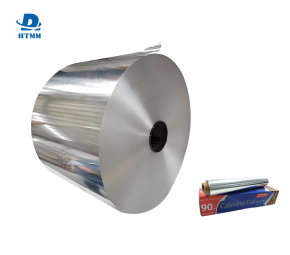
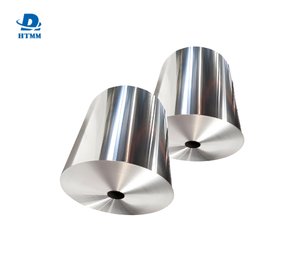
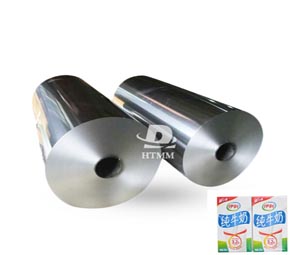
Whether you are looking for a standard roll for regular food storage or a massive roll for extensive commercial use, you must know all specifications and specifics associated with thickness, grade, surface treatment, and safety certification.
As one of the most renowned aluminum foil manufacturers, HTMM has accumulated a lot of experience, which will allow you to make the best selection.
This article has been prepared specifically for those who need to know all essential factors, including thickness and grade selection, surface treatments, safety, and price.
Recognizing Various Thicknesses and Classes
The thickness of aluminum foil, often gauged in microns (µm), plays a crucial role in dictating the strength, resistance to punctures, and usability of the item in numerous tasks.
Regular Duty Aluminum Foil (10-12 microns) is the most typical type of foil people use at home, and it comes in ordinary rolls.
The typical thicknesses of this foil vary from 10, 11, and 12 microns, enabling the user to perform everyday household functions like wrap sandwiches, cover bowls, place in oven pans before baking, and secure leftovers in the fridge.
It provides the right degree of strength while being economical, making it the foil of choice for daily food-related tasks at home.
Its disadvantage is the possibility of tearing since the foil may not hold when in use for packing sharp-edged or heavy loads.
Heavy-Duty Aluminum Foil (14-20 microns) ensures improved resistance to tearing and puncturing even in the most challenging conditions.
The standard thicknesses of the foil include 14, 15, 18, and 20 microns, thus allowing one to pack items such as whole animals, huge pans for roasting, and heavy baking pans.
In addition to that, it can withstand high temperatures while being exposed to heavy loads.
Extra Heavy-Duty/Industrial-Grade Aluminum Foil (25 microns or more) is used in the most challenging commercial and industrial applications.
Common thicknesses are 25 microns, 30 microns, 40 microns, and 50 microns; these thicknesses are used to make food containers and trays, heavy-duty baking containers, catering pans, and industrial packaging.
This grade provides exceptional structural integrity, excellent distribution of heat, and fantastic durability.
It is extremely useful in high-volume food production, institutional kitchen applications, etc.
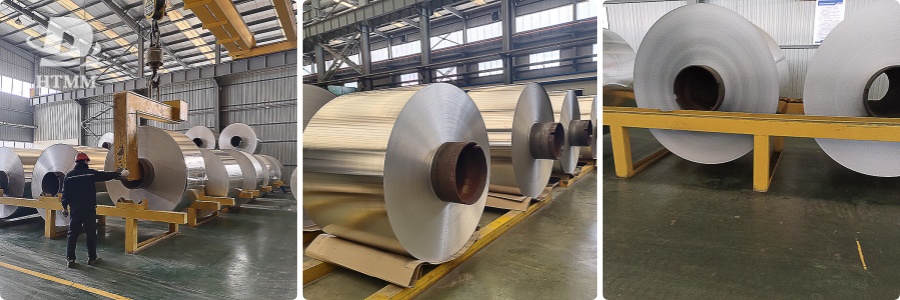
Choosing Surface Treatment depending on cooking requirements
The surface features of aluminum foil can greatly affect its performance in cooking and baking.
Regular Aluminum Foil (Glossy and Matte) consists of one glossy side and one matte side.
The glossy side reflects more heat, thus it is perfect for roasting and covering food.
The matte side absorbs a little more heat, assisting in some cooking processes.
Both sides are safe to use for food, thus the choice depends mostly on preferences.
Some people prefer the glossy side facing down, and others give their preference to the matte side.
Non-Stick Aluminum Foil contains a food-grade coating on one side to curb food stickiness, making it great for baking sticky items like cheese or caramel or fishes.
The coating is not only heat-resistant but also safe for purposes of food contact.
Thanks to this characteristic, clean-up work becomes much easier and food release is perfect.
Non-stick foil becomes very handy when making baking sheets, grilling and roasting.
Custom-made sizes are possible through an order for larger radius baking pans, pizza trays, or irregular shapes that refer to specialty baking and food service practices where catering to design is necessary.
.jpg)
Material Safety and Environmental Responsibility
Safety of products and environment friendliness are becoming more and more important for clients and companies in business as well.
Make your choice for 100% Food-Grade Aluminum that is certified for contact with food.
The aluminum foil is manufactured at ISO 22000 certified facilities that meet FDA, EU 10/2011 and worldwide food safety conventions.
The aluminum foil doesn’t react with any types of food including acid foods, salty foods and fatty meals, which indicates that there will be no metallic flavor or other issues.
Aluminum foil has advantages in relation to Energy Saving and Sustainable Development.
Its property of being 100% recyclable contributes to sustainability.
As a result, recycling aluminum requires to save energy by about 95% compared to production of primary aluminum from ore.
The excellent barrier functionality of aluminum foil also helps to minimize food wasting since it extends the shelf life of products.
In addition, a great number of our foils are offered in recycled versions for environmental objectives and performance.
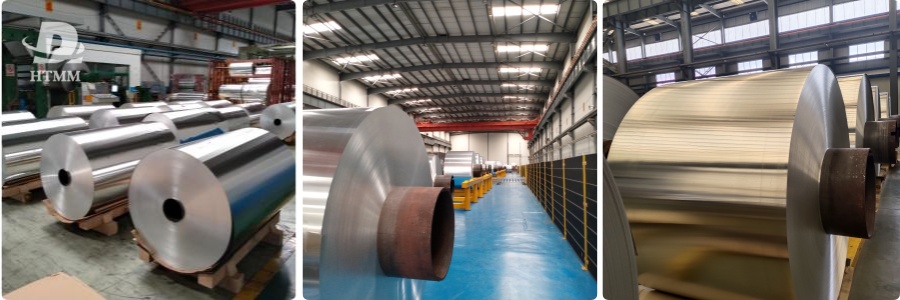
Assessing Cost-effectiveness and Packaging Types
The economics of foil purchase plays an important role in choosing the cost-effective option for the required applications.
The length and the width of our rolls significantly influence the cost-efficiency.
The standard length (12 inches / 300mm) is the best for most applications at household level and fits the standard dispensers.
The width of the foil (18 inches / 450mm) could also be used as an option for improved coverage of large baking sheets and roasting dishes and reducing of the waste due to overlapping.
For high-volume use large and jumbo rolls have the optimal price in connection with area per foil.
Calculating Cost per Unit Area enables a comparison of different products on the basis of cost-effectiveness.
Typically, larger rolls provide better cost per square meter than smaller rolls.
Premium heavy-duty foil is usually expensive at first but proves to be more cost-effective because it results in less waste caused by torn foil and better protection of food against spoilage.
For domestic purposes, standard rolls are more economical in case of occasional usage as against large or heavy-duty rolls in intensive cases.
When to go for premium product instead of cheap one: Choose premium foil for various applications that require extra strength such as wrapping meat with bones, long-term freezing, grilling etc.
Go for standard foil in case you need to wrap sandwiches, cover bowls, bake light cake etc.
Use non-stick foil for cooking sticky food and easy cleaning.
Bulk commercial foil can be used in high-volume businesses for cost-effective operations.
Choosing the right aluminum foil involves examining the thickness, the kind of treatment on the surface, the safety, and the cost.
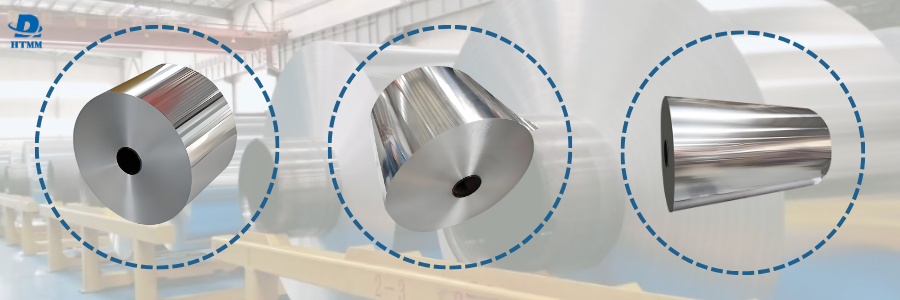
Whether you're looking for a regular type of foil you use in your kitchen, an extra-strong foil used in bulk in restaurants and other commercial settings, or some specialized non-stick foil for cooking, keeping all these points in mind will help you choose the right product.
HTMM is one of the top manufacturers of aluminum foil that offer all kinds of foils to meet any needs.
Our specialists will help you analyze your needs and choose the right material.
Feel free to contact us to learn more about our offerings.