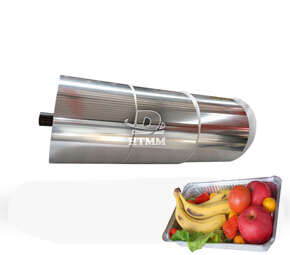
What are the strengths of 8011 aluminum foil? The 8011 aluminum foil is one of the most common alloys for packaging.
You will find it in every household kitchen, takeaway containers, as well as lidding film and general flexible packaging.
What makes 8011 such a popular material is an ideal compromise between strength, formability, corrosion resistance, and price.
How does it perform in each of these applications? It will depend on everything from thickness, to temper, to surface quality, and the requirements of the specific packaging application.
This article will explore the strengths, limits, and application-specific performance of 8011 foil for food and beverage packaging, food containers, lidding applications, flexible packaging, and pharmaceutical packaging.
1. Composition and General Characteristics
The 8011 alloy is composed of aluminum, iron, silicon, and some minor elements such as manganese and magnesium.
Iron and silicon provide the foil with excellent strength and corrosion resistance.
8011 alloys are often supplied in O temper for household and lamination applications, and H22 or H24 temper for container production.
The typical aluminum content is greater than 98.5%.
The alloy typically features a stable set of mechanical properties across alloys with different contents of additional elements, such as magnesium and manganese.
The alloy provides moderate tensile strength and elongation as well as good formability.
Although not as high-purity as the standard 8xxx alloys, it is still cost effective and highly practical, and that explains why it continues to be the standard alloy for the majority of packaging applications.
2. Performance in Household Foil Applications
8011 in O temper has an outstanding performance in household foil.
Soft temper provides excellent dead fold for wrapping tight round foods and prevents springing back.
Its elongation ensures it can be torn and folded by hand.
The surface is clean, and is considered food safe provided it is degreased in accordance with good manufacturing practice (GMP).
Typical thickness is from 10 to 30 microns, with 11 to 15 microns being most common.
In this gauge 8011 has sufficient puncture resistance for wrapping sandwiches, lining baking trays and covering bowls, both when freezers are frozen and also for oven use up to 220deg C.
Good value everyday household foil.
3. Performance in Food Container Manufacturing
Of the 3 alloys, 8011 in food containers as processed in H22 or H24 temper.
8011-H24 temper has a higher strength for large containers able to support food for heavy loads.
8011 H22 temper has improved formability for complex shapes with deep draws.
Thickness range from 30 – 200 microns.
At these gauges, 8011 is capable of forming tray and pie plate blanks on high speed press lines, forming compartmented lunch boxes, without cracking.
Moderate amount of elongation is in the alloy to allow for deep drawing applications.
Good strength also gives the material a strong rigid feel for stacking.
Good dent resistance, though not as high as 3003.
For standard takeout containers and baking trays, 8011 can be a economical solution for most applications in the food service industry.
4. Performance in Lidding Applications
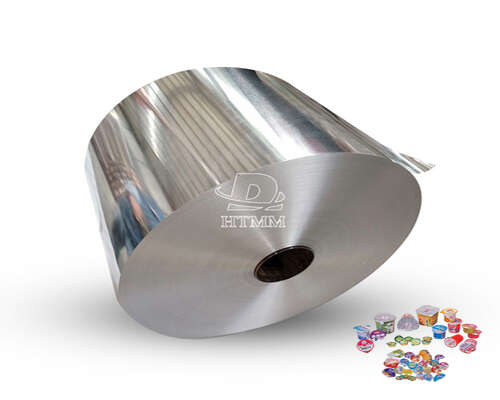
For lidding applications, 8011 foil is used for yogurt cup lids, water bottle neck bands and steel top seals for dairy products.
Typical thickness may range from 30–50 micron.
The foil must be able to create a good seal with container rim during heat and pressure contact.
The surface cleanliness and uniform thickness of 8011 ensures good sealing even around the rim area.
The softness of O temper 8011 allows effective rims sealing around the edges without gaps; strong alloy structure prevents tearing when opening.
In pharmaceutical lidding, 8011 is also suitable at thinner gauges with proper coatings.
The performance hinges upon surface quality and uniform thickness, so specified 8011 offers reliable lidding seals.
5. Performance in Flexible Packaging
Commonly used in flexible packaging, 8011 is suitable for gauges of 10 micron and above.
Gauges below 10 micron tend to be 8079 or 1235 alloys due to the large size of intermetallic particles in 8011 that lead to pin holes in thinner gauges, whereas 10-30 micron range can be used effectively with paper, PET and polyethylenes in lamination applications.
8011 provides good barrier properties (against oxygen, light and grease) and due to its brighter surface, can be used for printing without prior treatment.
Excellent adhesion of coatings and adhesives to the surface of 8011 is achieved while elongation values are such that it can be used in lamination and cutting processes without cracking.
6. Performance in Pharmaceutical Packaging
8011 is used in pharmaceutical packaging for blister lidding foil and some sachet uses.
Food and pharmaceutical contact specifications are demanding, and surface cleanliness and pinhole control are important.
Thicknesses are typically 20-40 micron for lidding, with coatings for heat sealing.
8011 performs well with strict quality controls.
For some ultra thin high barrier blister applications, 8079 or 1235 are the preferred option due to better pinhole resistance.
As with all packaging, the pharmaceutical blisters should be selected for the specific pharmaceutical application and buyers should confirm that the supplier's alloy complies.
7. Limitations and When to Choose Other Alloys
The 8011 has limitations.
At gauges below 10 microns there is a potential for pinhole formation.
For ultra-thin flexible packaging with the strictest barrier requirements the 8079 or 1235 may offer better performance.
For container products where maximum strength and dent resistance are required the 3003 may be the better choice.
For high-purity requirements where a very high level of surface cleanliness is critical the 1235 may be desirable.
Buyers should understand these limitations and select the alloy that meets their needs.
Using 8011 in place of another alloy can result in processing problems and product failures, but in its proper place can provide excellent value.
8. How to Specify 8011 Foil for Packaging
When ordering 8011 foil, specify metal condition (O,H22,H24), thickness and tolerance, width and tolerance, temper, surface condition, pinhole specifications, mechanical characteristics.
Typical aluminum foil thickness varies based on the application: Household foil – O temper, 10-30 micron; Container foil – H22 or H24 temper, 30-200 micron; Lidding foil – O temper, 30-50 micron, suitable surface treatments; Flexible packaging – O temper, 10-30 micron.
Ask for test reports and run small trial batches before buying in volume.
About Henan Tendeli Henan Tendeli Metallurgical Materials Co., Ltd., is established in 2009, and specializes in 8011 O aluminum foil, H22 aluminum foil and H24 aluminum foil for packaging.
The company manufactures and supplies only aluminum foil and its products are sold to over 3,000 customers in more than 60 countries.
The 8011 is generally reliable for a wide range of packaging end-use applications.
As household foil, it is soft and dead-fold.
As a container foil, it is strong and formable.
As a lid foil, it seals well.
As a flexible packaging foil (above 10 micron gauge), it is low-cost with reasonable barrier properties.
Its limitations are noted when very thin gauges are specified or high strength is required.
A buyer who is familiar with the foil's limitations can confidently specify the 8011 gauge needed for their end-use application.
Partnering with a knowledgeable 8011 foil supplier like HTMM is an advantage.