Aluminum foil alloy choice may be the most important decision a buyer makes.
The alloy produces a different combination of properties, including tensile strength, elongation, formability, corrosion performance and barrier efficiency, and impacts the behavior of the master roll through the entire production process from rolling to slitting, lamination and converting.
Two foils can be made from the same general alloy but at the end of the line they will perform very differently.
This article discusses how alloy choice impacts master roll performance on the six most important properties to consider: mechanical performance, gauge tolerances, pinhole performance, surface quality, formability and downstream compatibility.
We also highlight why application-specific alloys make for a better investment than familiar or more readily available options.
1. Alloy Composition and Mechanical Properties
Alloy chemistry influences mechanical properties.
The 8011 alloy contains iron and silicon, in addition to small amounts of manganese and magnesium, which improve strength and corrosion resistance.
The 8079 alloy has more iron and less silicon, with no manganese or magnesium; the silicon level is optimized for improved elongation and pinhole resistance at extremely thin gauges.
The 1235 alloy is a high-purity, premium-grade alloy containing more than 99.35 percent aluminum; it provides excellent softness and elongation for ultra-thin applications.
The 3003 alloy contains manganese, with improved strength and dent resistance.
Each of these alloys provides a different balance of properties and that difference affects master roll performance in converting.
2. Elongation and Formability
Elongation is the extent of stretch for the foil before it breaks.
It is essential for lamination, deep drawing, and fast converting.
High levels of elongation in alloys such as 8079 and 1235 allow for thin-gauge lamination without stress cracks, or pinholes.
The 8011 alloy offers medium elongation for general lamination and thicker gauge substrates, and the 3003 alloy produces lower elongation but higher strength for container-forming applications, where stiffness is a critical consideration.
Not enough elongation can result in web breaks, lost production, and scrapped material.
The performance of your master roll depends on providing an alloy with the right amount of elongation for your converting process.
3. Tensile Strength and Web Tension
Tensile Strength, the amount of tension that the foil is able to handle without tearing.
Both the high speed lamination and slitting lines place a lot of tension on the web.
If the tensile strength is too low the foil will tear or stretch and if the tensile strength is too high it can be too stiff for some forming operations.
The 8011 alloy has the right amount of tensile strength for a household foil and general lamination uses.
The 8079 and 1235 alloys have lower tensile strength, but much higher elongation levels, which is perfect for thin gauge flexible packaging.
The 3003 alloy has very high tensile strength and is used when manufacturing containers.
4. Pinhole Resistance and Barrier Integrity
Pinhole resistance To meet barrier specifications, foils must be resistant to pinholes.
As gauge gets thinner, the foil becomes more prone to pinholes, and alloy plays a part.
The low alloy purities and higher elongations of the 8079 and 1235 alloys mean they are best for pinhole resistant foils at the thinner gauges.
The larger intermetallic particles of the 8011 alloy can cause pinholes at very thin gauges so it is usually used at 10 micron and above.
The 3003 alloy is suitable for thicker container foil where pinholes are less of an issue.
Alloy should be specified for the gauge.
If 8011 is used at 6 micron instead of 8079 pinholes and barrier failure may result.
The master roll may perform well, but it will not match a quality 8079 master roll.
5. Surface Quality and Cleanliness
Surface quality will influence adhesion, coating, printing and lamination
Different alloys will exhibit variable behavior in rolling and degreasing
The 1235 alloy are usually of very high quality in terms of surface cleanliness for low residual oil due to the high purity
The 8079 alloys can also exhibit high quality surface for lamination
The 8011 alloy can require more careful degreasing steps depending on the residual oil values
The 3003 alloy, with a higher level of manganese, is expected to display a different surface quality
Buyers should specify residual oil requirements and confirm that the chosen alloy can meet them
The performance of master roll is related to the surface quality required for the downstream process.
6. Formability and Downstream Processing
Formability influences the slitting, lamination, printing and container forming performance of the foil.
Alloys with high elongation such as 8079 and 1235, slit and laminate easily without cracking at the edges.
8011 alloy is very good formability, used in general applications.
3003 alloy has higher strength, lower formability, can be used for container pressing, can not be used for deep drawing process.
When the buyer uses the material, the application should be selected according to the forming process.
When the high-strength alloy is used for lamination, the edges may crack, and when the soft alloy is used for the container, the container may deform.
7. Corrosion Resistance and Shelf Life
Corrosion resistance will impact on the shelf life of the foil and the packed product.
Alloys such as 8011 have manganese added which gives them good corrosion resistance, 1235 and 8079 offer excellent corrosion resistance as they are very pure alloys.
3003 also offers good corrosion resistance due to the addition of manganese.
If foil is to be stored in humid conditions the corrosion resistance of the alloy needs to be considered, how well a master roll performs depends on the corrosion resistance of the alloy over time.
8. Matching Alloy to Application
The right alloy depends on what you are doing.
In household foil, 8011 with O temper is preferred.
Flexible packaging lamination, which should be clear and free of punctures, often uses 8079 or 1235 with O temper.
Food container foil, which needs a broader spectrum of characteristics and hence a different alloy, can use 3003 or 8011 with H22 or H24.
Which combination of properties you need is critical to know before selecting the alloy.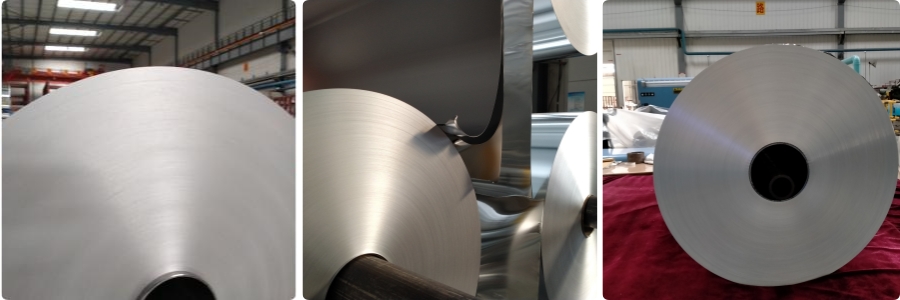
Henan tendeli metallurgical materials Co, Ltd is a professional production of 8011 8079 1235 3003 household foil alloy, aluminum foil master roll companies, only production of aluminum foil master roll, to provide more than 3000 customers in over 60 countries of aluminum foil in 8011 8079 1235 3003 alloy application.
Aluminum foil alloy influences the performance of a master roll in each key aspect: Mechanical, elongation, tensile, pinhole resistant, surface quality, formability and corrosion resistance.
Wise buyers know alloy factors, and make smarter sourcing choices.
The unwise buyer goes into production blindly, with disastrous results and substandard end products.
Before choosing alloy, source with an expert foil converter such as HTMM, who guarantees the right alloy for your application every time, in every master roll.