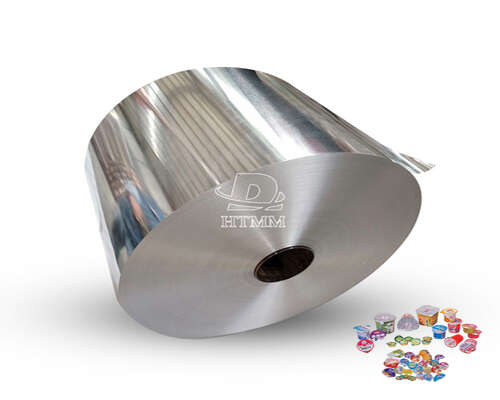
Aluminum foil is a basic component of flexible packaging, thermal insulation, and many manufacturing businesses.
The gauge of foil interacts with other materials such as paper, film, and adhesives. Thickness has an important impact on the operation of the foils.
Many of the manufacturers pay attention to the prices of foils. But the operating characteristics of the gauge will influence the lamination.
The main aim of this article is to evaluate the correlation between the foil thickness and the lamination process.
Thickness affects the mechanical strength that the foil possesses during lamination.
The thinner the foil is the more fragile it becomes. For example, foils below 9 microns tend to be fragile, easily tearable, and wrinkled.
When working with such thin foils, the manufacturers can face problems of production downtime.
On the other hand, thick foils are better in terms of their dimensional stability. Such foils have gauges above 12 microns which allows them to keep flat and be uniform in tension.
The thickness of foil will also have an impact on the bond of adhesive.
Thicker foils will lend itself to a tougher surface that would see little flex during the curing process. This decreases the chances of an adhesive failing or delaminating especially in cases where strong and permanent bonds are required.
On the other hand thinning foil may, in the process, lead to the foil curling or bending due to the dwindling adhesive. In such cases, important points of weakness are created in the bond.
Where high peel strength is a requirement, for example in some food pouches and pharmaceutical blisters, it is important to take care in the selection of foil thickness.
Barrier properties are another major consideration to use aluminum foil.
This kind of foil is good for preventing moisture oxygen and sunlight from reaching products.
However, barrier performance depends not only on the thickness. It should also be taken into consideration the degree of pinhole formation and surface defects.
Thin foil is prone to the pinhole formation during rolling and treatment and compromises barrier performance as a consequence.
The thickness of the foil has an impact on surface characteristics and printable properties.
Like greyish foil, thicker foil produce a much better surface after the lamination process, making the adhesion to ink or coating better and ensuring excellent quality during the printing process, which is usually critical in decorative lamination and branding.
However, since thinner foils tend to cause more random surface imperfections, they lead to inconsistent ink transfer and coatings’ adhesion levels.
Hence, manufacturers of luxury packaging usually choose thick foils.
The way of transferring heat in the course of lamination also matters as the thickness of the foil impacts the way heat is transferred.
Thicker foil transfers heat slower, which might damage the curing process of the adhesive applied to the foil.
In case the process requires heating, no proper heat transfer might end up with insufficiently cured glue and poor quality of the lamination.
On the other side, when the foil is too thin then it might transfer heat too quickly and the adhesive is going to evaporate quickly.
Cost becomes an unavoidable topic of discussion.
While thicker foil does have a higher cost per square unit of area, one must also consider the total cost of ownership that includes factors like waste, downtime, and defect rates.
It is often the case that a foil that is slightly more expensive reduces the customer returns and downtime of the delivery.
In this respect, the buyers should not assess the thickness of the foil in vacuum.
It is useful to evaluate the thickness of the foil together with specific characteristics of the lamination process.
In this way, it is very important is to have a good supplier who knows how to navigate through the potential trade-offs.
To summarize, the thickness of the aluminum foil should not be treated as an insignificant characteristic, but rather vice versa.
The thickness impacts all the aspects of the lamination process and its quality, which has a direct impact on profitability, apart from other stages of production like mechanical stability, adhesive bonding, etc.