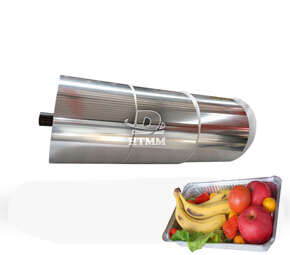
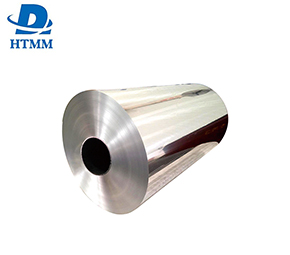
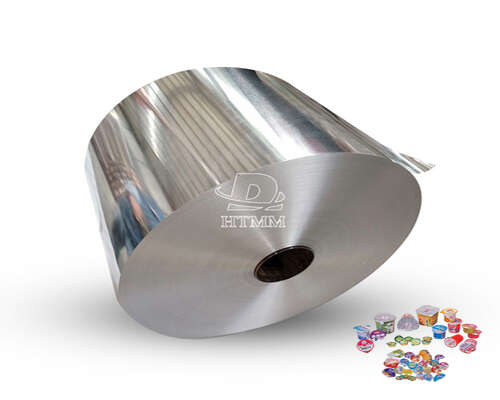
THE COMMERCIAL PERSPECTIVE: INDUSTRIAL ALUMINUM FOIL As a commercial product, aluminum foil master rolls aren't nearly as flexible as retail foil packaging. They aren't cut and wrapped to uniform length and width, one item at a time. They are rolled out in one continuous, high speed process producing hundreds of thousands of linear feet of foil.
A single master roll that isn't quite right can result in web breaks, printing issues, lamination problems, product quality issues and material waste.
Unlike retail foil, industrial foil master rolls must be compatible with the equipment and process lines they're intended for, the specified parameters of the process, and the finished product intended to be produced. This guide explains each specification and its impact on production line efficiency, product quality and final cost.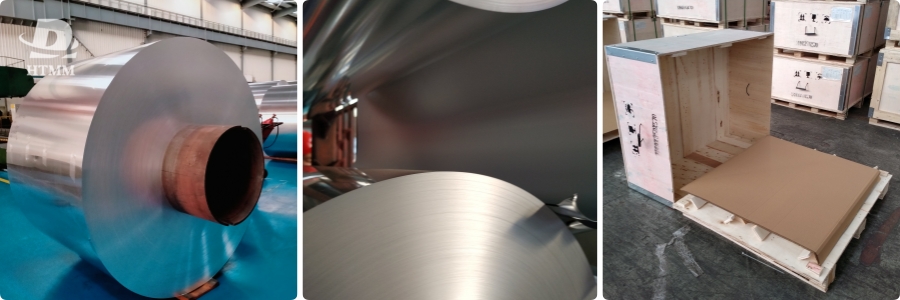
1. Alloy and Temper: The Performance Baseline
The alloy and temper single handedly impacts the basic behaviour of the foil during manufacture. In industrial production, common alloys used to manufacture foil include 8011, 8079, 1235, 3003, 8006 and so on, which are suitable for various manufacturing processes. For household foil and lamination, 8011 O temper is generally selected. 8079 or 1235 O temper is used in the manufacturing of flexible packaging films for coffee, cocoa, medicine and light packaging (alloy thin gauges). 3003 or 8011 H22/H24 temper is used for rigid packaging and containers, formed packaging and raw materials; 8006 H22/H24 temper is used for air-conditioner fin stock. Use of wrong alloy or wrong temper will cause problems in forming, sealing, barrier failure and early damage, etc., the buyer should work out the alloy and the temper with the actual process, rather than the end product.
2. Thickness and Thickness Tolerance
Thickness is perhaps the most important criterion for industrial manufacture. Thickness determines the barrier properties, mechanical strength, overall cost and process stability. 6-9 micron gauges are used in flexible packaging lamination, 10-30 micron for household foil and general lamination, 30-200 micron for containers. Thickness tolerance is equally crucial. 5 percent is the usual tolerance, but higher speed lines may require closer tolerance.
Unstable thickness creates tension rolls to roll on and off at different tensions, resulting in uneven coating or adhesive application, not to mention web breaks.
Buyers should require reports on measurements and ask for the supplier to use automated gauge control equipment. Consistency from first meter to last meter of every roll will produce stable manufacturing.
3. Width and Width Tolerance
The width needs to match the production line. If it is slitting, then the width of the master roll should match the effective working width of the slitter as much as possible to reduce trim waste. If it is lamination, then the width should be suitable for the maximum web width of the laminator.
Many products are custom-made to be applied in industrial production.
The width tolerance is usually less than 1mm. The deviation of too wide is out of line, damaging and wasting the edges. Even a tiny deviation will affect the material utilization for high-volume production. Buyers should ask the production team for the precise width requirement before placing the order.
4. Surface Condition and Cleanliness
Condition of surface Adhesion, printing, coating and lamination Surface should be free of scratches, dents, wrinkles and black spots. Surface cleanliness Adhesion is most important in casting off. Residual rolling oil should be less than 2 mg/m2 for laminated roller.
For coating or printing, consistent surface wettability is desirable.
Buyers should state needed surface condition, and check whether supplier will produce with needed surface condition. Small surface blemish that is not obvious may result in visible defects. Gloss results are determined by the reflected light intensity, i.e., gloss. The brighter the surface, the greater the surface gloss.
5. Mechanical Properties and Formability
Mechanical Properties-The foil's machine performance in converting. Elongation is the most important in lamination and deep drawing since the foil has to stretch without breaking. Tensile strength needs to be high enough to support the web tension without rupture.
Hardness and dent resistance is important for container foil, softness and conformability for lamination foil.
Mechanical properties must be uniform and reproducible in the master roll and between batches. Differences may result in web breaks, loss of good forming, rejected product and lost production time. Buyers should always request mechanical property test reports per batch.
6. Winding Quality and Roll Parameters
Winding quality influences the amount of turbulence in the master roll fed onto the production line. When the winding is bad, situations such as telescopic shaft, driving of edges and tension variation all may occur. The edges end faces should be neat without kicked out.
It should be tight winding without looseness and loose points.
It may require corresponding dimensions in core diameter, roll diameter and roll weight with the equipment. Core diameter standard sizes are 76 millimeters and 152 millimeters, roll weight standard sizes are 200-800kg (for Industrial use). The buyers should specify these dimensions and ask for samples to do trial test before proceeding to the mass manufacturing stage.
7. Packaging and Delivery
Packaging safeguards the master roll during shipment and storage. For export consignments fumigation free wooden packings and moisture barrier packings are used. It should safeguard the material from moisture, oxidization, impact etc.
Packing inside the container should hold the roll in place during shipment by ocean.
Customers need to know the number of rolls per container, arrangment of the pallets on the container and the method by which the rolls are held in place in the container. For large volumes batch uniformity is as important as product quality as an unreliable shipper ruins production schedule no matter how good the product.
8. Supplier Verification and Quality Assurance
Before placing a bulk order, confirm that the company is an actual manufacturer and not a trading company. Sourcing directly from the mill gives you greater control of alloy chemistry, rolling parameters, and quality consistency. Request a technical data sheet, food contact certification, and sample rolls.
Conduct trial production using your own equipment to ensure performance. 
Test samples from different batches to verify batch-to-batch consistency. Ensure lead time, MOQ, payment terms, and packaging are confirmed in writing. Henan Tengdeli Metallurgical Materials Co., Ltd. (ISO9001) was established in 2009. As a large-scale modern enterprise, HTMM primarily produces aluminum foil in both jumbo rolls and small rolls, with customizable specifications.
The company produces master rolls of 8011, 8079, 1235, 3003, and 8006 alloys, with customizable width, thickness, temper, and roll specifications.
HTMM exports to over 60 countries and 3,000 customers, with 10+ years of experience.