Making a bulk buy of 8011 flexible packaging foil is really an important decision, because it can affect how efficiently production runs, the quality of the products, and the profitability in the long term.
When sourcing from suppliers in various countries, importers need to account for factors other than price, such as whether the specifications match, the processing allows for the use of the given foil, and whether or not it can guarantee quality and reliability.
What Specifications Should Be Confirmed Before Bulk Purchasing 8011 Flexible Packaging Foil?
Find the Right Foil Thickness Depending on Packaging
The thickness of the 8011 foil is determined by the packaging needs.
Some common thicknesses of flexible packages differ somewhat:
6-9 microns. The foil has been used in composite flexible packages, where it acts as a barrier layer in different laminates.
9-12 microns. This foil is used for packaging coffee, snacks, and dried food, and for the products, which require good shelf life.
12-15 microns. The foil is ideal for pharmaceutical uses and applications, where maximum barrier protection is needed.
Identify foil dimensions and roll specifications according to the lamination technology employed
The principal roll size should be compatible with the efficient lamination and cutting equipment specifications.
Factors needed to be verified are:
Maximum lamination equipment width
Possible external rolling diameters
Roll weight limit of the equipment being used.
The incorrect size may add to the wastage of used materials and affect production process.
Verify usage of O temper foil and aluminum alloy AA8011 for the supported technologies
Aluminum foil AA8011 in O temper (annealed) is the regular aluminum material used in food flexible packaging, as it has the necessary flexibility and fold characteristics.
Make sure with your supplier that:
The grade of the aluminum foil is 8011 with the specification controlled;
The temper is O (annealed) for the maximum flexibility of the foil;
The foil has the certification for food packaging application.
Specify Core, External Diameter, Weight of a Single Roll, and Packing Type
Roll characteristics should conform to specifications of your production equipment and logistics practices from below:
Diameter of Core: 76 mm (3 inches) is standard diameter, 152 mm (6 inches) is the second variant, and 200 mm (8 inches) is the third option.
Diameter of Roll: Diameter should be between 1200 mm and 1500 mm.
Weight of a Single Roll: Can range between 500 and 5000 kg.
Packing: Must be waterproof; wrapping should be done, protective covering applied, and pallets be secured for export.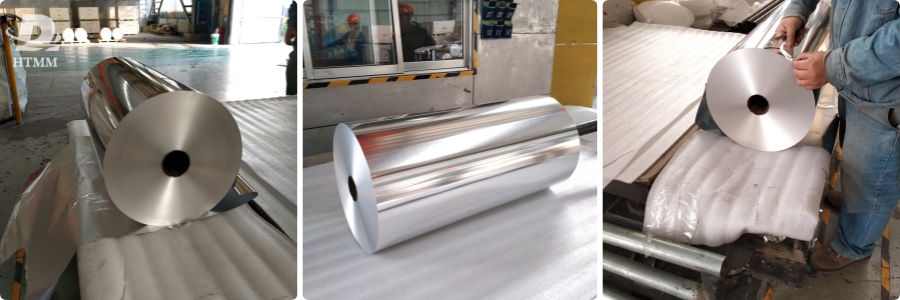
How can importers understand if 8011 foil can meet their flexible packaging processing requirements?
The effect of tolerance on thickness on the stability of lamination and slitting
Tolerance, which is the degree of deviation within the gauge on the roll, is extremely important for stability in processing.
Narrow tolerances (±3 to 5% typically) guarantee:
The uniformity of unwinding tension.
The evenness of adhesive application.
The predictability of lamination quality.
The reduction of wrinkles and breaks in the web.
A large tolerance creates tension alteration leading to problems in production and increased waste.
Effect of Pinhole Rate on Barrier Efficiency and Finished Product Quality
Pinhole count is a vital sign of the flexible packaging foil quality.
A single pinhole could damage the foil's barrier and lead to moisture and oxygen getting inside and spoiling the product.
Importers should indicate the maximum number of pinholes that is acceptable in relation to their product.
Surface Cleanliness and Adhesion of Adhesives
Surface cleanliness is key for proper laminating.
Residual rolling oils, dust, or other contaminants may disrupt the proper adhesion of the adhesive resulting in delamination or failure of the package.
Importers should check:
The surface oil residue is within food grade standards.
The foil is free of scratches, stains, or oxidation.
The supplier provides certificates confirming surface quality.
The Effect of Elongation, Flatness, and Winding Quality on High-Speed Processing
To ensure high-speed lamination and slitting, the foil should be:
Sufficiently elongated to conform to the laminator without cracking.
Flat enough to avoid tracking problems and wrinkles.
Wound properly for smooth unwinding and minimal downtime.
Importers should request samples for testing on their equipment before making bulk orders.
How to Manage Actual Cost of Using 8011 Foil in Bulk Buying?
Influence of Thickness on Materials Consumption for the Area
Thickness determines the amount of foil consumed.
When thinner foil is used, less aluminum is needed per square meter because of lower weight of aluminum.
Thin foil may have higher pinhole percentage and less strength, but having an insufficient thickness might lead to difficulties with achieving the required performance levels.
Correlation between Foil Quality Stability and Production Waste
When quality of the foil is not the same, it brings about:
-Loss of materials due to misaligned and broken web
-Idle time of machines to adjust
-High reject rates of finished products
In case the quality is stable, there is less waste and lower overall cost per finished product.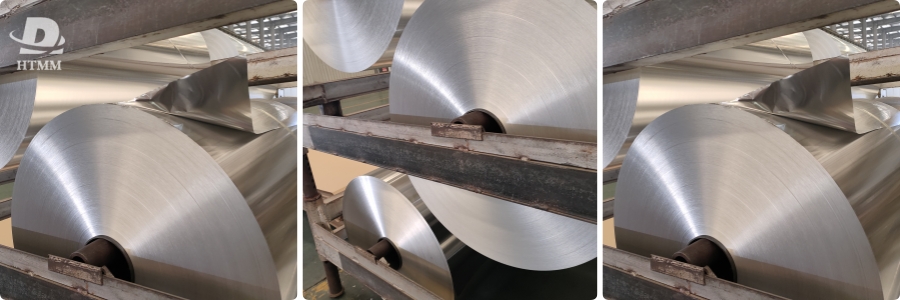
How to Manage Actual Cost of Using 8011 Foil in Bulk Buying?
Effect of Thickness on Foil Usage.
Thickness affects the use of foil.
The thinner the foil, the less amount of aluminum used per square meter due to its less overall weight.
Thin foil may have higher pinhole content and less level of strength, but using foil of insufficient thickness may cause problems in achieving necessary performance parameters.
Relationship Between Quality Consistency and Production Waste
The inconsistent quality of foil generates:
-Material losses due to misaligned webs.
-Idle time to adjust the machines.
-High number of defective products.
If the quality is stable, the waste will be lesser.
What supply capabilities should be taken into consideration by an importer importing 8011 flexible packaging foil?
Production and continuous supply capability
The importer must ensure that the supplier has:
Capacity for production and will be able to fulfill orders of bulk items as required.
Reliability of sourcing raw materials to ensure constant availability of raw materials.
Flexibility in production to cope with seasonal variations in demand.
Capabilities to produce special thickness, width and weight
There is a custom thickness, width, and weight of a roll of flexible packaging foil.
The supplier must have:
Ability to manufacture a flexible packaging foil of a custom thickness with maximum deviation within 0.1 mm.
Ability to cut foil to specified width with maximum deviation from the required width.
Ability to provide uniform weight of rolls.
Consistency Between Different Batches and Quality Standards
To ensure that production is successful, importers should check consistency across batches through:
Quality control systems that have been introduced.
Whether indicators of process are employed.
Certificates of Analysis needed for each batch.
Package Protection Against Moisture and International Shipping
Packing material should protect the foil while transporting internationally against:
Humidity and moisture during ocean transportation.
Mechanical damage during shipment.
Pollution from dust and dirt.
Importers should outline packaging requirements such as waterproof packaging, corner guards, desiccants, and stable pallets.
Choosing the Best Manufacturer of 8011 Aluminum Foil for Long-Term Relationship
Ensure Effectiveness of Lamination, Slitting, and Subsequent Processing by Testing Samples
Before signing a long-term supply contract, importers must:
Ask for samples to check the performance of material in their own production systems.
Check the quality of lamination, slitting, and printability.
Ensure the foil can withstand performance during production process.
Check TDS, Standards of Quality, and Needed Certifications
A good producer needs to provide:
TDS providing information about alloy, temper, thickness, mechanical properties, and surface features.
Certifications of quality.
Evaluate Lead Time, Minimum Order Quantity, Capacity to Customize, and Bulk Tariffs
From an assessment of potential vendors regarding the following aspects:
Lead time; Is the supplier's commitment to the production timeline adequate?
Minimum Order Quantity; Is the supplier flexible in terms of trial and volume orders?
Customization; Is the supplier able to supply specific thickness, width, and weight of the rolls?
Prices; Is the price competitive and still of good quality?
Ways HTMM Offers 8011 Aluminum Foil Jumbo Rolls to Global Companies
HTMM produces customized 8011 aluminum foil jumbo rolls for flexible packaging industrialists, food packing industries, and pharmaceutical packaging firms globally.
The services offered include:
Thickness: 6 to 50 microns;
Width: 200mm to 1650mm;
Type: O, H18, H19, H22, H24;
Weight of rolls: 500kg to 5000kg; and
Pinhole options: different grades available.
Certifications: ISO 9001, ISO 22000, FDA, EU 10/2011.
Our company also provides aluminum foil in grades 1235, 3003, and 8079 for various packaging solutions.
As we are a one-stop supplier, we offer our customers information that includes quality, delivery, and specifications and can help with bulk purchases.
If you are needing a flexible packaging aluminum foil supplier for 8011 grade aluminum foil, HTMM has the necessary quantity and quality needed to ensure your success.
Feel free to get in touch today to tell us your requirements and ask for samples.