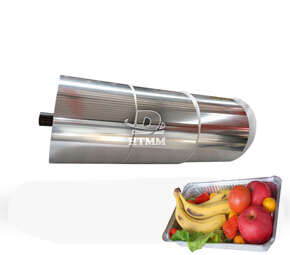
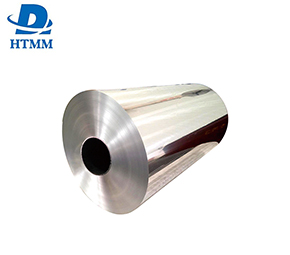
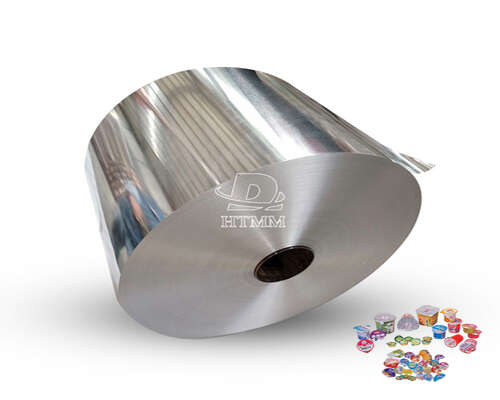
Aluminum foil is more than just a shiny barrier material for flexible packaging converters, pharmaceutical packagers, food container manufacturers and other industries. While buyers pay attention to thickness, pinhole rate and barrier performance, they tend to overlook the concept of tensile strength, which is one of the important mechanical characteristics of aluminum foil and impacts the production efficiency, yield rate and quality of finished products. Poor production quality can be caused by tape breakage, stretching unevenly, tearing during slitting and forming defects, many of which are attributable to poor quality of aluminum foil rolls. Knowledge of physical properties of aluminum foil, including its tensile characteristics, is vital for every processing unit.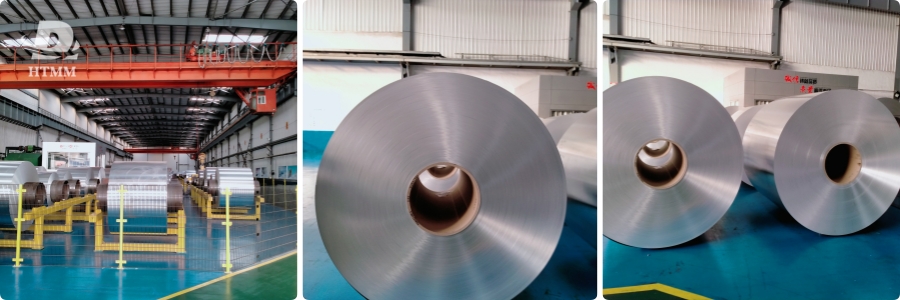
What does "tensile property" mean in case of aluminum foil material?
Tensile strength is the capacity of aluminum foil to endure tensile stress before breakage under constant tension. It is an indicator of aluminum foil's resistance to tearing during stretching. The tensile strength indicator goes along with elongation, which explains how much the foil can stretch before it breaks.
Aluminum foil is a type of thin metal foil with several thickness levels. The tensile properties of it depend on the type of the alloy, amount of rolling as well as the heat treatment process. The soft foil (or O temper foil) has the lowest tensile strength as well as the biggest elongation making it highly ductile and flexible. The H temper foil has high tensile strength and low elongation but makes it stronger and less flexible than O temper foil. The process of testing involves pulling a sample at a constant speed and registering the breaking force as well as elongation percentage of the sample. The most qualified aluminum foil suppliers like HTMM undertake the process of testing every large roll including the checking for defects and for the quality of the surface of the foil.
The tensile strength of aluminum foil influences all processes in foil converting including unwinding, slitting, printing, laminating, deep drawing, and packaging.
To begin with, it determines the operating speed of the converting line. In high-speed lamination and printing processes, the aluminum foil web is subjected to constant tension. If its tensile strength is too low, the foil will break during unwinding causing stoppages in the production line and loss of the substrate and adhesive. Moreover, different parts of one jumbo roll can have different tensile strength, so while some parts are working perfectly fine, others may break unexpectedly leading to unstable tension control and printing registration.
Secondly, tensile properties help to achieve dimensional stability after processing. In the laminating process where aluminum foil is combined with polyethylene or paper, the results may be affected if their tensile strength is not coherent. This can result in dimensional defects such as curling, wrinkling, and deviation in size.
The performance of forming is largely influenced by tensile strength and elongation. For the production of food containers and blister packs, deep drawing of the foil is required. Excessively high tensile strength in combination with low elongation can lead to cracking of the corners of the formed container. Whereas a tensile strength that is too low results in thinning, rupture, and lack of integrity of the container.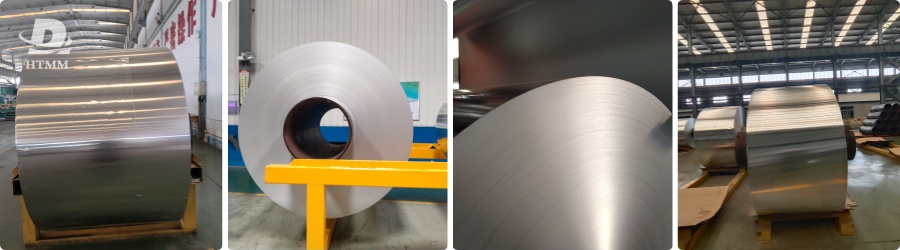
Another important aspect is the effect of tensile strength on slitting and rewinding processes. The foil edge undergoes twisting and stretching during slitting and poor performance in terms of tensile strength can be detrimental for slitting operations causing burrs and tearing of the edges as well as movement of the web. This adds another layer of complications to the production of the finished small rolls which may have uneven hardness of the roll and layer shifting.
The final package is characterized by satisfied working properties.
Aluminum foil made from the 1235 alloy is a grade of aluminum with purity exceeding 99.35%. This aluminum foil exhibits tensile strength of between 60 and 100 megapascals, depending upon the temper, coupled with excellent elongation characteristics. High purity of the material gives its barrier properties excellent performance in addition to soft texture that makes it applicable in cigarette packaging, composite paper lamination and decorative packaging. Low tensile strength means that converters must ensure low line tension in use to avoid tearing.
8011 aluminum alloy is one of the most recognized grades in flexible packaging application. This aluminum foil employs some iron and silicon to provide tensile strength between 80 and 130 megapascals, which justifies the alloy's ability to provide balance between resistance to and ductility of deformation. The grade ensures high pinhole resistance and great ability to form the foil. 8011 aluminum foil is extensively utilized in food packaging, household foil, pharmaceutical blister packaging and semi rigid packaging. The material can be processed on high speed composite lines and permits medium deep drawing.
8079 aluminum foil has been made for use in packaging foil. Its tensile strength ranges from 80–125 MPa depending on the tempering. This material has an excellent ratio of elongation to tear resistance. The material is characterized by low pinhole rates at ultra-thin gauges less than 0.01 mm thick. Due to its special features, this aluminum foil is commonly used for pharmaceutical, aseptic and high-barrier food packaging.
However, the temper of aluminum foil also affects its tensile and other properties. O-temper aluminum foil has low tensile strength but high elongation. H14/H18 hard temper aluminum foil is characterized by high tensile strength with certain limits in elongation.
Tailored aluminum foil options from HTMM Aluminum Foil Plant
HTMM is a proficient aluminum foil producer with more than 15 years of exporting expertise and focusing on aluminum foil jumbo rolls making for processing factories across the world. Our knowledge reveals that a specific tensile specification cannot be suitable for different processes because each customer uses its machine with a different set of tensions, forming degrees, and requirements for the product, which implies that customized aluminum foil solutions are necessary.
HTMM is able to customize aluminum foil of 1-series, 3-series, and 8 series alloys such as 1235, 8011, and 8079. Our thickness range starts from as thin as 0.006 mm and can reach 0.2 mm with adjustable temper from soft O state to hard H states. Our professionals can adjust tensile force and length in accordance with customers’ settings. Regardless of whether you want soft and highly elongating foil for deep-draw food containers, properly balanced foil for fast flexible packaging process, and foil in hard condition for industrial shielding, we can modify the alloy and heat-treatment methods so that you get the desired tensile parameters.
Prior to shipment, each batch of aluminum foil will undergo thorough tensile testing, pinhole detection, and surface inspection. We will provide full inspection certificates for each coil, which will enable your production facility to stabilize yield and prevent downtime. In addition to improved mechanical properties, HTMM provides custom widths, weights, core diameters, and surface treatment options as well.
Instead of having your production line adapt to generic aluminum, HTMM will design your aluminum foil materials according to your specifications. Our customized aluminum foil materials will allow production facilities to minimize web breaks and maximize productivity. If you require aluminum foil with controlled tensile performance, contact HTMM today.