Specification
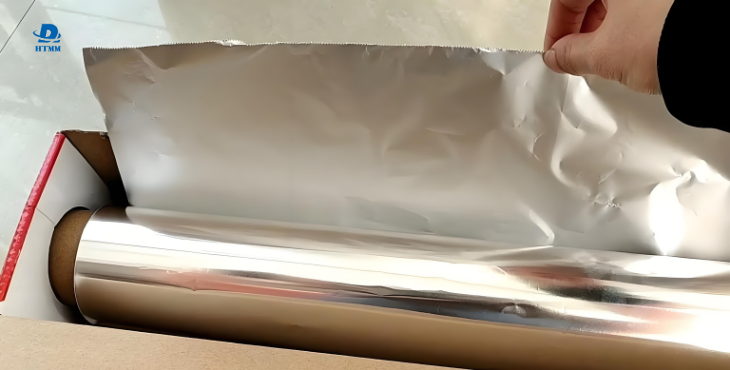
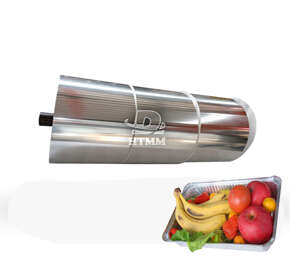
One of the popular applications of the 30cm catering foil is grilling and BBQing small things, such as creating foil packs for grilling seafood, vegetables and various cuts of meatThe packets retain juice and flavour, ensuring that the food remains moist and tasty and will not fall through the grate or stick to the grill, and also this can also be done by wrapping a cob of corn or garlic bulb prior to grilling, adding natural sweetness and fragrance to the grilled item.
Details include:
| Type |
Household Aluminum Foil / Catering Foil |
| Grade |
Food Grade |
| Alloy |
8011 |
| Temper |
O |
| Thickness |
8mic-25mic |
| Width |
200MM-600MM |
| Surface |
One side bright, one side matte |
| Packaging |
Cardboard Packaging |
| Customization |
Thickness, width, logo, and packaging can be customized |
| MOQ |
1,000 Volumes |
| PAYMENT Term |
30%T/T Advance + 70% Balance |
| Application |
Household kitchen foil rolls, catering foil, baking foil, wrapping foil |
|
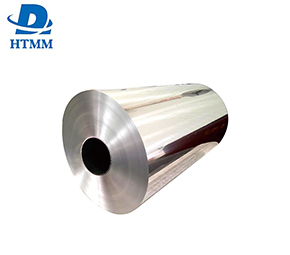
HTMM Aluminum Foil Factory: Pricing Options from Jumbo Rolls For Customized Options What also differentiates from other competitors is using the 18" x 1000' Heavy Duty Aluminum Foil Roll made by HTMM Aluminum Foil Factory is that it is produced by a vertically integrated manufacturer that has full control over the production from raw materials to finished product. With this integration, HTMM can consistently provide quality product, quick lead time, and flexibility for your customized ordering.
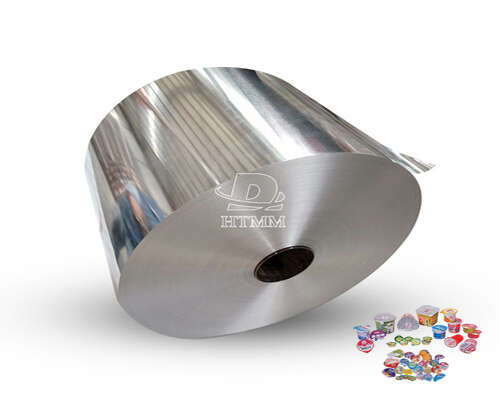
HTMM’s foremost advantage it the in-house manufacturing facility producing aluminum foil jumbo rolls for HTMM’s products. Jumbo rolls are the “raw material” used for aluminum foil—very large rolls, typically 50,000–100,000 feet long and 36–60 inches wide, of aluminum foil that is rolled aluminum ingots into thin, uniform sheets of aluminum foil. HTMM does not have risks from relying on suppliers of jumbo rolls since HTMM produces the jumbo rolls as part of their vertically integrated supply chain. The jumbo roll facility, owned by HTMM, has three distinct advantages:
Assured Quality: Quality standard assurance is achieved through HTMM controlling each state of the production process of the jumbo rolls. The HTMM production manages all production and quality aspects of the jumbo rolls, including selecting high-purity aluminum (99.5%+ purity) to thickness and strength testing, ensuring that every 18" x 1000' roll is subjected to quality controls to meet the commercially relevant demand of heavy-duty rolls (no thin spots or tears).
Cost Less: Eliminating layers of third-party suppliers allows HTMM to offer a better price for customers than others.
Align Supply Stability: HTMM vertically integrating the supply chain for jumbo rolls eliminates pinch points in the supply chain to allow HTMM to produce and ship orders on time.
Custom Rewinding: Customized to Your NeedsAlthough the hot selling product is an 18" x 1000' roll, HTMM recognizes that not all customers have the same requirements. The Custom Rewinding allows customers to take jumbo rolls and get them finished into any small roll size—ideal for businesses that require different applications. For example:
A sandwich shop might require 12" x 500' rolls (that are not 18" in width) to wrap up individual sandwiches without wasting foil.
A frozen food factory could want 24" x 2000' rolls (that are not 18" in length or width) to fit into their automated packaging lines.
A bakery could want 18" x 300' rolls (instead of 1000') in a small kitchen to cut down on storing larger rolls.
HTMM Factory can provide all sizes customers need.
Custom Packaging: Branding & FunctionalityBesides custom roll sizes, HTMM provides with branded packaging—so businesses can differentiate themselves on store shelves, or reinforce their branding. Options include:
Printed Labels: Custom printing the foil roll’s cardboard core or outer wrapper with your company logo, contact information, or usage instructions (“Oven-Safe Up to 660°F”)
Specialty Wrap: Choose from eco kraft paper or clear plastic, both are not your standard cardboard material and deliver a premium look.
Tamper-Evident Seals: Apply seals on the outer wrap for food security, so customers will be assured that this roll wasn’t open at time of purchase.
The 18" x 1000' Heavy Duty Aluminum Foil Roll is one of the most heavy duty foil options on the market, making it great for roasting, baking, or grilling in both home and professional settings. The sturdy construction and unmatched barrier making its perfect for grilling, baking, roasting, catering or takeout’s.Whether you’re barbecuing with friends, preparing dinner for the family, running a catering business or hosting a party.You need to make sure everything is perfect.
Whether you’re a catering service or restaurant that needs to keep food warm for prolonged periods, a bakery making delicious bread and delivering it to people in the community, or an organization producing thousands of rolls of food per day, this plastic film is guaranteed to make your life easier! ET And because of HTMM’s flexible silt and roll sizes, you can have a product that fits your business to a T—no cut corners involved.

.png)
.png)
.png)
.png)
.png)
.png)