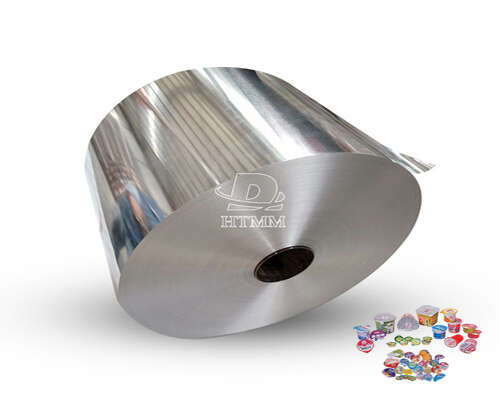
Specification
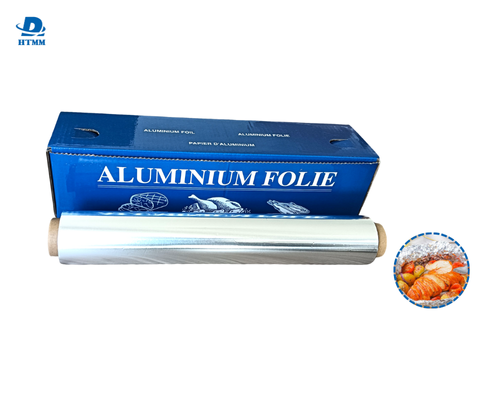
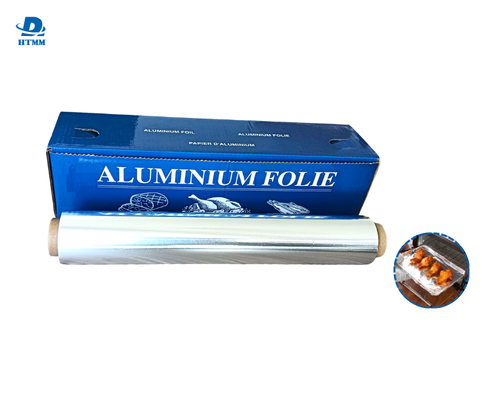
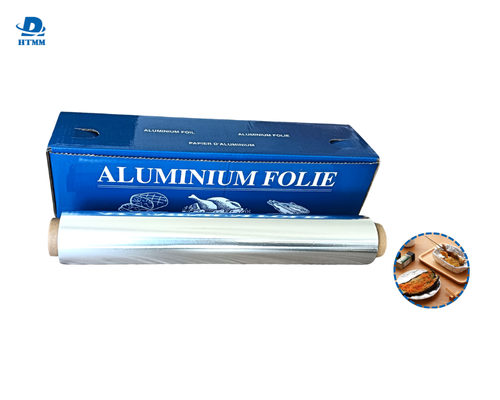
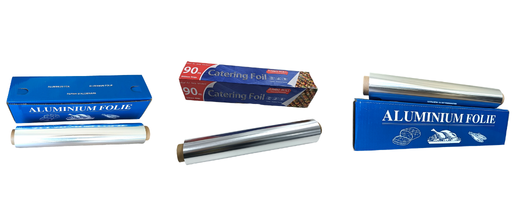
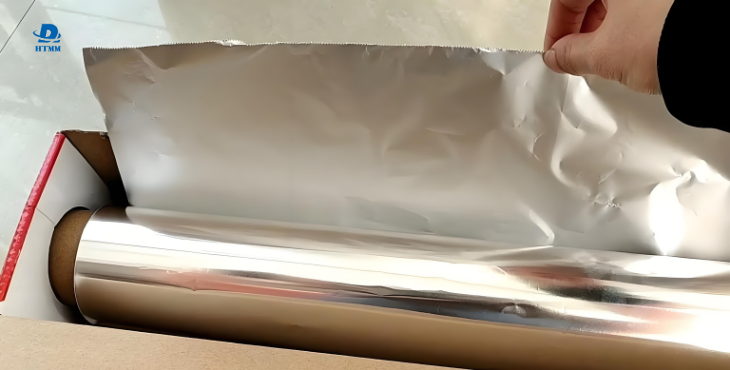
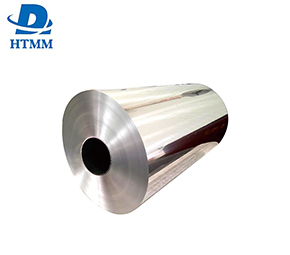
Most of the aluminum foil rolls of 18 inches in width are manufactured from 8011 aluminum alloy, these alloys provide excellent corrosion resistance and ductility allowing them to be safe for food use applications, and for cooling (refrigerator, freezer), and for high temperature cooking applications (oven).
Details include:
| Alloy |
8011 |
| Temper |
O |
| Width (mm) |
280-600mm |
| Thickness(mic) |
8-30mic |
| Surface |
One side bright |
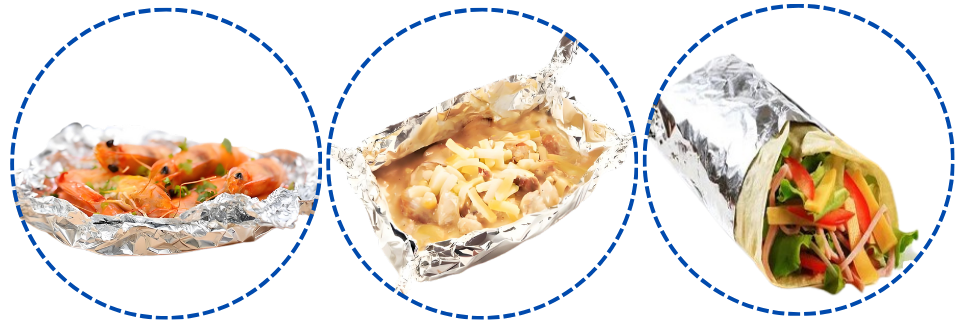
10-12 μm / 0.0004-0.0005 inches Standard Lightweight Thin, flexible, cost-effective Wrapping small to medium food portions, covering leftovers, lining small to medium baking sheets for light baking (e.g., cookies, pastries)
15-20 μm / 0.0006-0.0008 inches Heavy-Duty Durable, tear-resistant, heat-resistant up to 400°F (204°C) Grilling, roasting large meats (e.g., Thanksgiving turkey), lining grill grates, covering casserole dishes, making foil packs for side dishes
25-30 μm / 0.0010-0.0012 inches Extra Heavy-Duty Ultra-sturdy, leak-proof, withstands high heat (up to 600°F/315°C) and freezing temperatures Commercial catering, long-term food freezing, transporting hot foods, lining industrial baking trays, wrapping large cuts of meat with bones
12-inch wide aluminum foil has long been a popular household size for its convenience of size and storage; however, aluminum foil that is 18" in width offers greater coverage capabilities as well as improved efficiency in applications where higher coverage is needed. The following is a summary of the major advantages of using 18"-wide aluminum foil vs. 12"-wide aluminum foil.
1. Increased Coverage of Large Food Items or CookwareAn entire standard sized baking sheet, roasting pan, and/or casserole dish will be fully covered by a single sheet of 18"-wide foil rather than by overlapping several sheets of 12", which saves time and helps prevent gaps that may lead to food splattering, cooking unevenness, and moisture loss. In the case of a whole turkey or large roast being wrapped in foil, the 18" foil provides complete coverage, keeping the meat moist and tender; 12" foil, on the other hand, would require the use of multiple pieces of foil that needed to be folded over, which means they are more likely to rip when wrapping the meat or to be misshapen such that the meat does not have an even wrap.
2. Improved Speed/Convenience in Cooking for a Large Number of PeopleIn today's society, families that might host family reunions and restaurants and catering operations can take full advantage of using the wider width of 18"-wide foil. They can line very large grill grates; cover many different servings of food all at one time; and/or create larger foil packet meals for those who need to prepare food in batches. Conversely, you may find that the 12"-wide foil is only practical for individual-sized portions of food and/or pans and would thus be less efficient when working with food that is intended for high-volume serving.
3. Lower Waste and More Economic Value for BusinessAlthough 18 inch aluminum foil may seem to cost more initially for each roll, it ends up costing business owners less on an ongoing basis because less foil is wasted in commercial kitchens compared to the use of multiple 12 inch aluminum foil pieces to cover large dishes or food items (or even utensils). Large rolls of aluminum (upwards of 500 sq ft for the 18 inch foil) also allow businesses to save time by needing fewer restocks of aluminum foil than they would for 12 inch rolls.
The best size of aluminum foil for your needs will depend on what you plan to use it for, the size of the cookware/containers you use to store your food, the space you have available to store uncut rolls of aluminum foil, and how much you typically cook. The following steps will help you choose the right size of aluminum foil for your needs.
You must know (or measure) the size of your everyday-sized cooking pans, baking sheets and casseroles. If you’re using Large Roasting Pans (16-18 Inch) often, you’ll need to stick with an 18" Foil Roll. If your everyday sized pans (10-12 inches) you’re using are smaller, the 12" Foil Roll should work just fine for those sizes and types of cookware. Using a Foil Roll that matches or is slightly larger than your cookware will give you total coverage of your pan/dish/baking sheet without wasting too much foil.
For the average home cook, the type of foil they use will depend on the size of their family and how often they are preparing meals or cooking. For example, a home cook that cooks for a family of 2 or 3 will likely find the 12" Foil Roll to be very convenient and easy to store. In contrast, families with 5 or more people, home entertainers who entertain often, and commercial users such as restaurants and catering businesses should consider using 18" Foil Rolls to be more efficient for high volume cooking.
18" rolls will require more cabinet/pantry space to store. Be sure that you have enough space in your cabinets/pantry to accommodate the larger width of the 18" roll. If you have limited storage space, the 12" Foil Roll would be the better choice as it has a smaller, more compact footprint than the 18" roll; especially if you only occasionally use large cooking projects.
If you are using the same pan for both grilling and freezing, you should use a thicker foil (20+ microns), even if it is less than 18 inches wide. If you are using an 18-inch mate to wrap and cover food, the weight of an 18-inch foil made from an extra heavy-duty (EHD) material will be far more durable than a weightless 18-inch foil that has a very thin walled thickness.