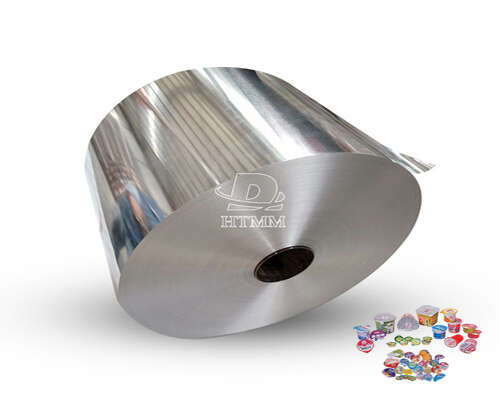
Specification
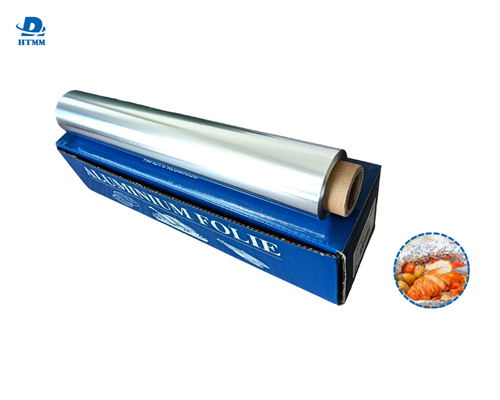
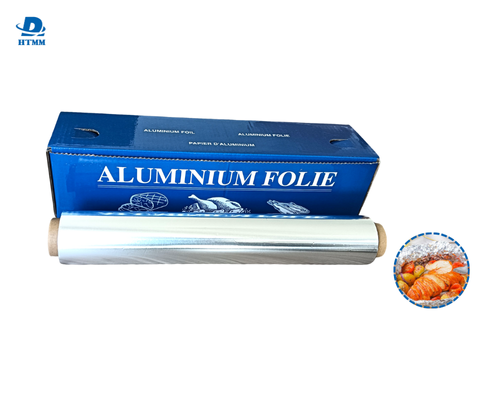
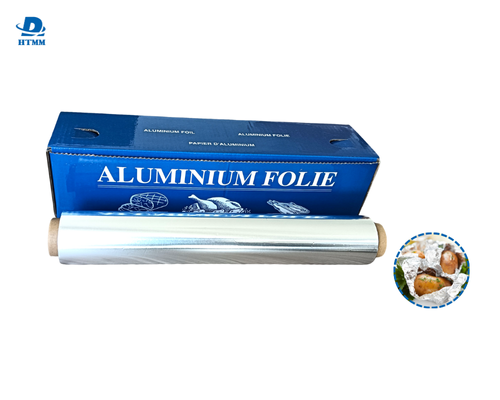
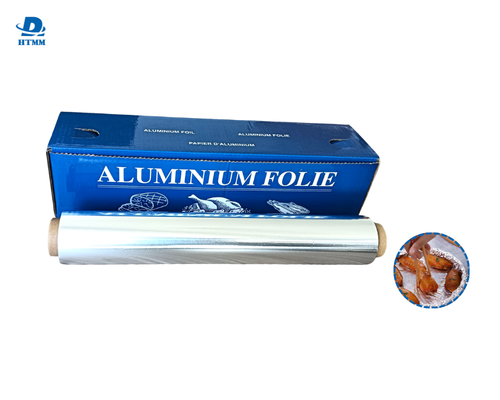
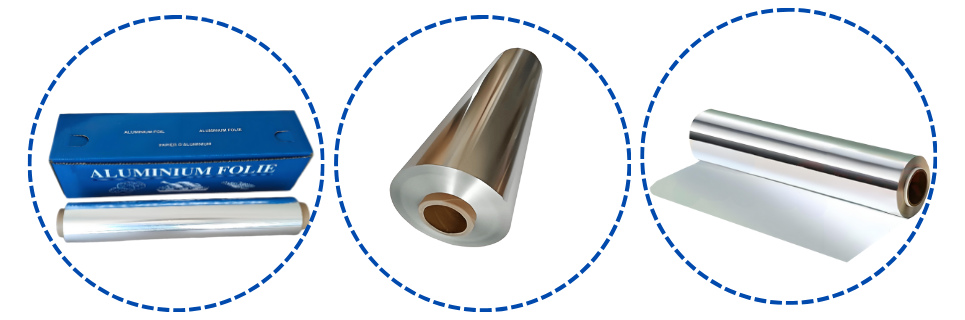
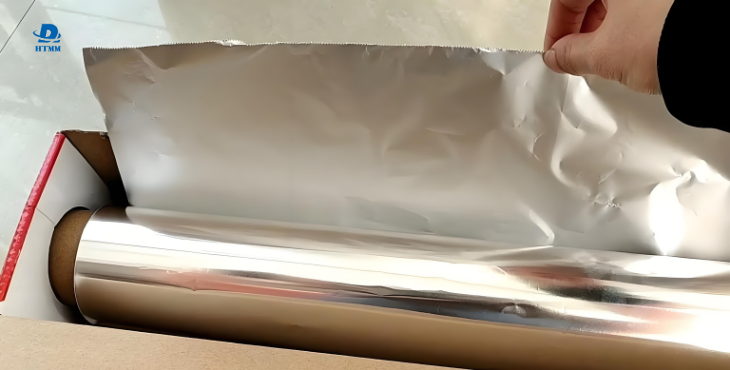
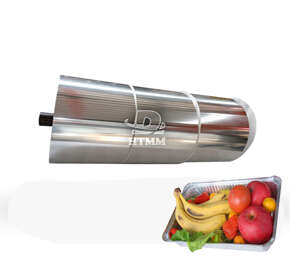
HTMM specializes in producing food grade aluminum foil containers, household aluminum foil and food packaging foils made from premium alloy materials that meet international food safety standards such as EN(scroll) and ISO.
HTMM products are produced in accordance with rigid third party certification requirements from the EU, FDA and SGS testing authorities.
Details include:
| Type |
Household Aluminum Foil / Catering Foil |
| Grade |
Food Grade |
| Alloy |
8011 |
| Temper |
O |
| Thickness |
8mic-25mic |
| Width |
200MM-600MM |
| Surface |
One side bright, one side matte |
| Packaging |
Cardboard Packaging |
| Customization |
Thickness, width, logo, and packaging can be customized |
| MOQ |
1,000 Volumes |
| PAYMENT Term |
30%T/T Advance + 70% Balance |
| Application |
Household kitchen foil rolls, catering foil, baking foil, wrapping foil |
For accommodation of varying application scenarios, the 72-metre 14-micron aluminium foil will be available in several different standard widths that are popular globally and can accommodate most users' day-to-day requirements. Each width will fit specific application situations to optimise the usefulness of the material. Below are the four most commonly used widths along with their specific application details:
30cm (300mm)Wide - Compact Household Use and Portable Daily If you want to be able to use aluminium foil at home for small scale cooking every day in your kitchen then 30cm is a classic narrow width for household aluminium foil. Because this width is compact you will be able to find room in kitchen drawers, cabinets or countertop organisers. 30cm fits most standard size kitchens. Smaller items like food can be wrapped up. This width also works great for air fryer use by covering small baking trays, wrapping chicken wings, fish fillets & sausages to ensure proper heating & to stop food from sticking on the pan.
The 45cm (450mm) will be the best seller in this category and is the most widely used width when it comes to 72 Metre 14 Micron Aluminium Foil. It offers a good compromise between both area coverage and flexibility for use in both home and commercial environments.
In the home, it will fit a standard size baking tray, be used on larger size plates to cover food when removing from the oven, and also on meat and vegetable roasting pans for roasting whole chickens, turkeys, ribs, and larger vegetables such as corn and pumpkins. You can also use it to line the interior of your oven to make cleaning easier, wrap your items in the refrigerator to prevent smells from transferring onto other food items and can store your food in your freezer for extended periods of time.
45cm (450mm) is also the preferred width when used in small businesses such as cafes, dessert shops, street food stalls and family-oriented restaurants. It is commonly used for wrapping food for take-away or delivery, covering food trays temporarily to keep them hot, and baking pastries and grilled food products in the oven or on the grill. The 14-micron thickness gives it the needed strength and durability to last under high heat in an oven or on a barbecue grill for repeated use within a commercial environment, compared to the thinner versions of aluminium foil.
600mm (600cm) Width - Catering and industrial packaging by 600mm is used for large quantity food handling and light industrial use. It is intended primarily for use by commercial and semi-industrial users. In the case of the catering industry this would include large functions for food insulation, wrapping entire cooked meats, large fish and multiple dishes for buffets as well as covering large baking/roasting items. Also, it can be used by food processing plants to wrap semi-finished products ensuring cleanliness and product integrity when shipping.
Custom Widths (Tailored to Clients) - In addition to the three regulated width sizes listed above, leading manufacturers such as HTMM Aluminum Foil Factory offer custom widths for the 72 Meter 14 Micron Aluminium Foil. These are designed for speciality purposes at both industrial and commercial levels. There are many possible widths from 20cm to 120cm depending upon customer equipment and packaging needs/scenario. This allows customers to find a custom fit to meet their site-specific operating requirements.
The overall quality of 72 Meter 14 Micron Aluminium Foil depends on the technology used to manufacture the product, as well as on the quality control measures in place that all combine to produce quality foil on an industrial scale; HTMM Aluminium Foil Factory is a trustworthy and experienced manufacturer offering complete aluminium foil R&D, manufacturing and sales.
HTMM has a wealth of knowledge spanning many years and operates highly advanced, fully automated rolling production lines that are equipped with precision thickness control equipment, food grade facilities where all production takes place, and stringent production procedures that guarantee that every roll of 14-micron aluminium foil produced will have the same thickness throughout, a smooth surface finish, will have the same performance characteristics and will conform to internationally recognised food safety standards such as FDA or EU food contact requirements.
HTMM is dedicated to the manufacture of high-quality household and commercial-grade aluminium foil, including one of their primary products, 72 Meter 14 Micron Aluminium Foil. The raw materials used for production are carefully selected based upon the properties associated with the purity of the incoming aluminium ingots; strict control processes are followed through each step of the production process, from the receipt of the raw materials to the shipment of the finished product after performing quality inspections on each package. The result of the manufacture of the above products, which are continuously produced and delivered to customers are quality assured products. HTMM has the ability to produce standard or custom aluminium foil production rolls that will meet the various needs of household, commercial, and industrial users with multiple product configurations.
With its versatility and multiple standardized widths to accommodate most daily and commercial applications, 72 Meter 14 Microns Aluminium Foil is a practical specification that offers a combination of excellent durability, flexibility and cost-effectiveness as compared to competitor products. The wide variety of uses for this foil include from small kitchen jobs to large-scale catering and industrial-specific use; there is no other aluminium foil that can equal the durability, reliability, and consistency of performance these foils give you. As an experienced and approved manufacturer of high-quality, safe and practical aluminium foil products, HTMM Aluminium Foil Factory has established itself as a go-to, trusted source for clients around the globe. When selecting this specification you will: receive use for an extended period of time, enjoy efficient operation and have peace of mind knowing you have selected a high-quality product suitable for any application involving wrapping, baking or packaging.