The 8011 aluminum foil is an important barrier component, but how well the foil works depends on the lamination process used and the equipment involved.
Different packaging structures, adhesives, and machinery impose different requirements on the foil.
A type of foil that may have great performance in one type of packaging may cause producing defects like delamination, web breaks, and ill barrier properties in another.
This is why the manufacturers must first determine their lamination needs and only afterward choose the required specifications of 8011 foil.
Knowing about available customization options allows the manufacturers to improve both the quality of their final product and productivity.
This guide lists the ways 8011 foil can be fitted to different lamination requirements..jpg)
Why Is 8011 Foil Customization Necessary for Different Lamination Processes?
Different composite structures such as PET/Al/PE or Paper/Al/PE demand different requirements for the aluminum foil layer.
The foil provides the main barrier to oxygen, moisture and light in these multiple layers.
This has to be balanced with processability to survive lamination without cracking or wrinkling.
Specific foil properties may occur due to different adhesives, substrates and production methods.
Foil specifications are usually required by packaging manufacturers based on the actual composite structure.
One specification seldom fits all applications.
The lamination performance is directly influenced by the flexibility and elongation of the 8011 foil, and thickness consistency is just as important since variations lead to an uneven distribution of adhesive.
The cleanliness and state of the surface affect the degree to which the foil bonds with adhesives and coatings.
Surface defects such as pinholes and scratches damage the barrier properties and may result in serious failures when high-speed converting is taking place.
In the case of continuous lamination production, these factors have to be kept within close tolerances, since converting lines operate at speeds of hundreds of metres per minute and any inconsistency can cause expensive production interruptions.
There are different requirements regarding the thickness of different packaging products.
There are some requirements related to the dimensions of the machine that have to match those of the lamination machine.
Some other operations such as printing or coating can bring new surface conditions requirements.
It is also important that the jumbo rolls match the production line at the customer's plant in order to avoid any difficulties.
The O temper guarantees the softness necessary for the forming and folding steps of the converting process.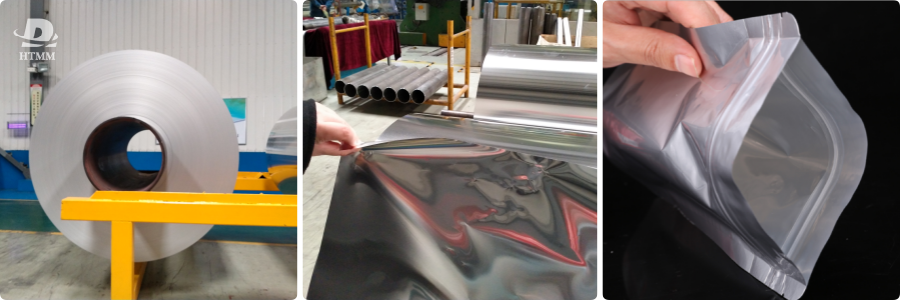
What Performance Parameters influence laminating outcome.
8011 foil thickness should be selected according to the structure and the performance of package.
Small material utilization required to employ thin gauge foil, but in mechanical property side, thicker gauge foil is much better in strength and rigidity.
Material cost and processing stability performance can be influenced significantly by the thickness.
Proper selecting width to reduce the quantity of wasted material from edge trimming, can give highest material utilization.
Width should be correspondent to available working width of laminator and dimensions of final article.
Width optimization gives more advantage to the material usage efficiency, if the throughput rate is high volume.
Surface finish options are bright or matte.
Each type is best for uses.
Keeping the surface clean is very important for sticking things.
If there is any dirt the stickiness won't be strong.
Checking the surface condition is needed before printing, coating and laminating.
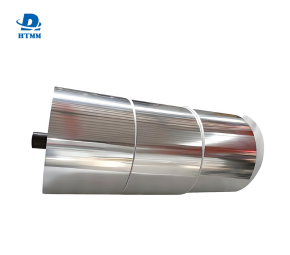
Roll details, like weight, size, center part tightness when rolled and how it is wrapped must fit the customers machines.
Making sure the big roll goes on the factory line without problems helps avoid situations and time lost.
How to choose 8011 Foil for different lamination jobs?
Food packaging has to be done with great care because cleanliness and good barrier properties are needed.
Thickness must depend on the food type and shelf life.
Foil should have good compatibility with other packaging materials for lamination purposes.
For mass production, consistency is critical.
Pharmaceutical packaging needs even better barrier properties and material properties.
Barrier properties to moisture, oxygen, and light are also very important.
Pinhole control and surface defects checks must also be done properly.
Printing and coating processes need certain surface conditions to achieve optimum results.
Foil surface should be checked before printing to see if the ink will adhere.
In case of coating processes, uniform and clean surfaces are required for a uniform application.
Different inks, coatings and adhesives may require different surface conditions to bond properly.
The material compatibility with actual printing and coating processes needs to be confirmed by production testing.
To ensure reliable operation of high speed lamination lines, stable thickness and width are required.
Roll instability caused web breaks and guiding problems, resulting in reduced efficiency.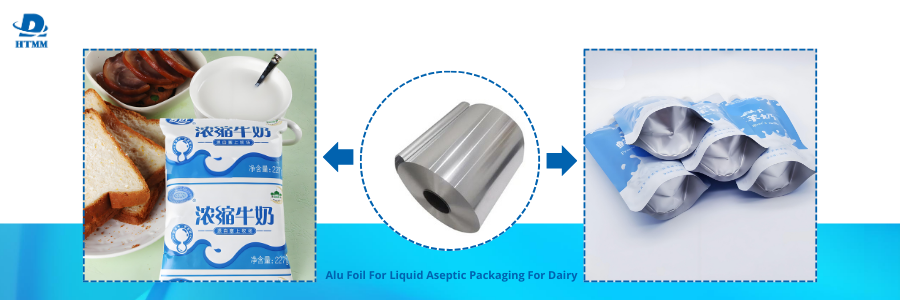
How Can You Request the Required Customization of 8011 Foil From Your Supplier?
Prior to obtaining an quote, give some preliminary details such as product to be made or the application of that foil.
State the packaging structure and the materials used for that package.
Mention your desired thickness and width.
Also mention the type of lamination, coating or printing process that you are going to use.
Also give the specification of the equipment which will include the maximum width, roll weight and core diameter.
Check custom specifications via qualification process for mass purchase.
Validate technical specification sheet and check again, conduct sample or pilot runs if required, check laminating performance, slitting performance, printing performance and coating performance, long-term procurement specs is finalized with validation success.
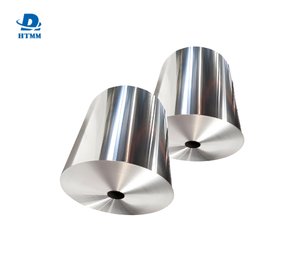
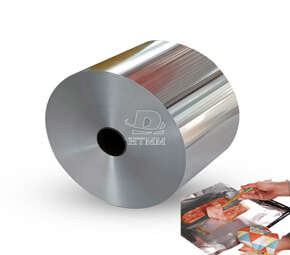
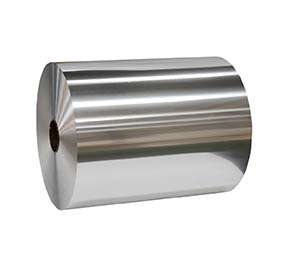
Htmm customize and manufacture according to needs 8011 aluminium foil jumbo rolls for food pack manufacturers and converters: we could make the required thickness,width, temper and roll weight, etc.
According to the client's exact requirements, and meet further lamination process, slitting, coating,printing requirement, we could supply 8079 and 1235 packing foil according to different composite structure and requirement.
Behind every customized 8011 foil order there is a manufacturer with comprehensive capabilities.
Henan Tendeli Metallurgical Materials Co., Ltd. started in 2009 is a modern enterprise focused on the deep processing of aluminum plate, strip and foil.
The company makes 8011 foil in tempers and thicknesses for flexible packaging uses.
With than ten years of export experience more than 90% of the products are sent to over 60 countries helping more than 3,000 customers, around the world.
HTMMs goal is to be the best aluminum foil material supplier providing value through high-quality products and reliable service.
To put it simply, 8011 flexible packaging foil can be fully customized for different kinds of lamination needs.
Thickness, width, temper, surface condition and roll parameters can all be tailored to the customer’s specific requirements.
To specify the correct foil, it is important to know your packaging structure, your production equipment and the subsequent processes.
By partnering with an experienced manufacturer such as HTMM, packaging converters can count on consistent quality, technical support and reliable supply for their custom 8011 foil needs.