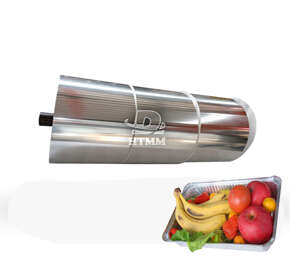
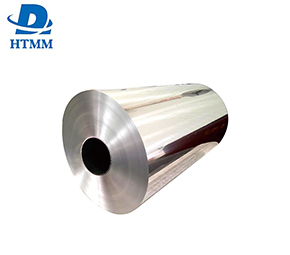
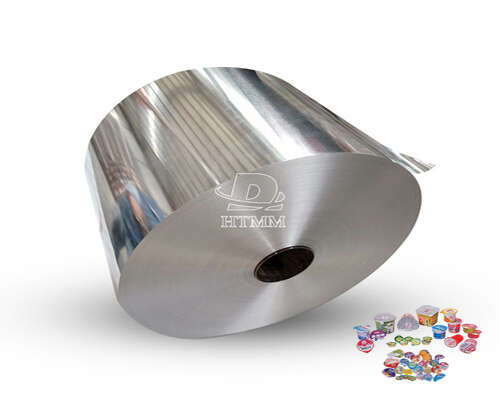
The purity of aluminium in 1235 alloy is more than 90.35%. Аultrathin foil made from this aluminium alloy features very low impurity levels, outstanding hygienic safety, and excellent thermal conductivity. This foil is mainly used in the high-quality food contact packaging sector and other industries where purity and non-toxicity are necessary. Its mechanical properties are inferior to 8079 alloy; however, its extreme purity makes it irreplaceable in high-quality packaging.
Due to its lightweight, low consumption of raw materials, and outstanding barrier properties, 6 micron aluminium foil rolls have been widely applied in diverse sectors since they are used as the basic material of lightweight flexible packing. The packaging of food products accounts for the largest share of 6 micron aluminium foil roll applications. The foil is widely applied in snack packaging bags, coffee, tea, spices and instant food packaging. Its design hinders ultraviolet light, oxygen, and moisture penetration, which helps prevent food products from oxidizing, dampening, and losing their flavor. Compared to the thicker foil, the thinner foil cuts the packaging weight and production costs while performing its primary freshkeeping function, which is in line with contemporary trends.
Pharmaceutical packaging is one major segment where 6 micron aluminum foil is commonly used. 6 micron aluminum foil provides the required qualities of high-quality aluminum alloys that make it suitable for medical applications and adhere to stringent healthcare hygiene regulations. Due to their excellent barrier characteristics, the foil keeps moisture, bacteria, and UV light away to ensure the safety of pharmaceutical materials throughout storage. Moreover, lower viscosity allows the foil to adhere to the surface of pharmaceutical product containers properly, eliminating the gaps and ensuring sterility of the products during storing them.
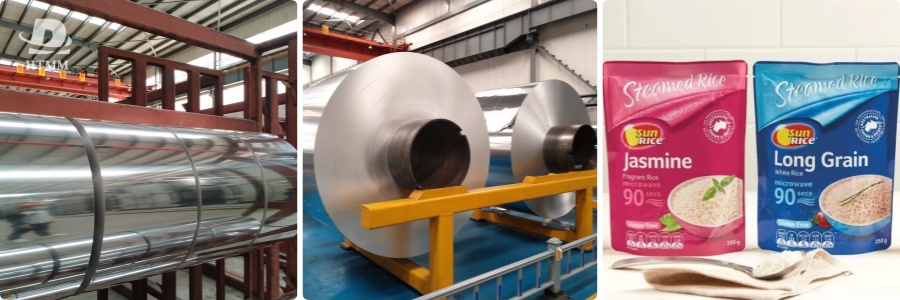
6 micron aluminum foil can also be employed in daily chemicals packaging, and creates composite material layers. In the case of making packages for cosmetics, detergents, and fragrances, the thin foil keeps active ingredients inside, thus preventing their escape. The foil provides good thermal conductivity and flexibility, which makes it perfect as an inexpensive thermal insulation and electromagnetic shielding composite material with excellent marketplace possibilities.
The reason why 6 micron aluminum foil is more expensive than the aluminum foils with larger thickness is that production of the aluminum foil of the mentioned thickness does not require less aluminum material than production of the heavier foil of the same type. The technological subtleties of creating 6 micron aluminum foil explain why this type of aluminum foil production is so expensive.
Firstly, ultra-thin rolling has a very high level of technological complexity. The process of producing regular foil that is 10-20 microns thick is less complicated compared to the process of producing foil that is only 6 microns thick. Each rolling stage must pay close attention to parameters such as pressure, speed, and temperature. Any slight mistake in process parameters will result in pinholes or foil tears. Moreover, because the foil is made in its ultra-thin form, it is very easy to damage at every stage of production.
Secondly, the yield achieved at the end of the production process is much lower for 6 micron foil as compared to thicker foil. The process is associated with high speed during which the foil can break or bend or develop edges that will make it useless. The chance of having pinholes in the ultra-thin foil is much higher than in thicker foil. Higher spoilage results in increased production costs.
Third, there are greater requirements on both the process machinery and the amount of energy being consumed while making 6 micron. High-precision specialized rolling mills and continuous annealing machinery would be required for the sake of product consistency. The multi-pass rolling and the repeated annealing techniques use more energy and equipment than while making regular foil due to any number of passes. There are also slitting, coiling and testing phases where ultra-thin foil is subjected to higher requirements of machinery as well as quality control procedures which would naturally add costs.
Finally, the quality of 6 micron is based on certain criteria regarding the raw materials. Only pure aluminium ingots and quality alloys can be used for making perfect foil. Raw materials used in fabrication of 6 micron foil are much more expensive comparing to the ordinary foil.
In view of the great technical difficulties and the strict requirements regarding the quality of production process of 6 micron foil, the experience in manufacturing and the level of technology are the most important criteria for the quality of the produced foil.
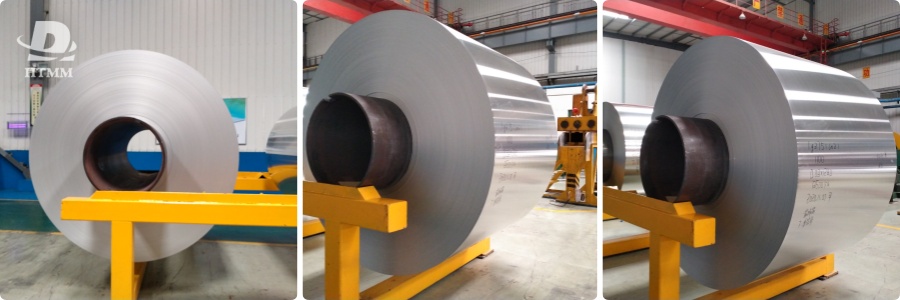
The high production standards for 6 micron aluminum foil necessitate extensive experience and advanced technology in manufacturing processes to ensure have high-quality products. HTMM has been involved in aluminum foil production for decades, being dedicated to the development and manufacturing of high-precision aluminum foil for many years, and thus establishing a very well-developed system for the production of 6 micron aluminum foil.
HTMM uses only high-quality materials from alloys such as the 8079 and 1235 in the manufacturing of aluminum foil, employing the full technology of precision rolling and constant temperature annealing processes. The manufacturing process is capable of eliminating thus securing the absence of defects in pinholes, uneven thickness, and ruptures, thus enabling the company to manufacture aluminum foil with consistent thickness, stable blocking effect, and great ductility.
HTMM has put a robust quality control scheme in place whereby foil thickness deviation, pinhole rate, tensile strength and barrier performance are separately analyzed. With extensive experience in producing ultra-thin foil, HTMM solves the problem of low yield and inconsistency in quality when it comes to the production of 6 micron foil while meeting various requirements such as width, hardness and surface treatment as detailed by customers.
Thanks to its reliable product quality and stable supply potential, HTMM’s 6 micron aluminum foil rolls are exported to different markets throughout the world, earning trust and recognition from downstream packaging companies, pharmaceutical producers and makers of daily chemicals.