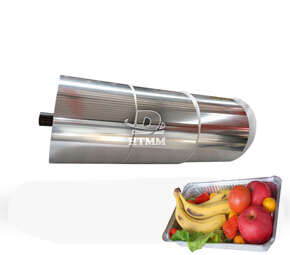
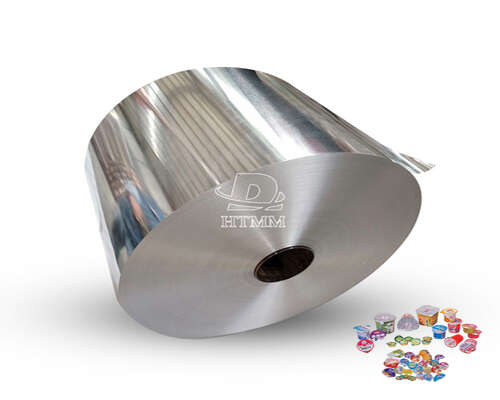
Aluminum foil is undoubtedly one of the key barrier materials in contemporary flexible packaging when it comes to products susceptible to light, air, humidity and smell.
Although most converters and brand purchasers concentrate on lamination design and plastic substrates, it is a foils thickness that is one of the most important parameters for determining how effective and beneficial the final package is.
Incorrect selection of foil thickness may lead to pinhole failures, flex cracks during conversion, insufficient shelflife result or excessive cost.
Aluminum foil is not commonly used as an independent packaging material.
Usually, in most cases, it is used with other materials (PET, PE, CPP, etc.) to build a composite packaging structure.
The same aluminum foil is used in many kinds of consumer and industrial packaging.
Among foodrelated packaging solutions, there are retort pouches developed to store ready meals, sachets used for beverages and powders, packages for nuts and dried fruits (snack pouches), wrappers for chocolate and candies, lids for yogurt containers, and vacuum bags for products with highfat content.
In the pharmaceuticals sector, aluminum foil is present in blister packs (lidding foil), ‘strips’shaped packs for medications, and sachets with granular medical products.
Apart from the food and pharmaceuticals industries, aluminum foil can be found in pet food pouches, cosmetic sampling sachets, and some executive packaging solutions aimed at the moistureproof method of storage.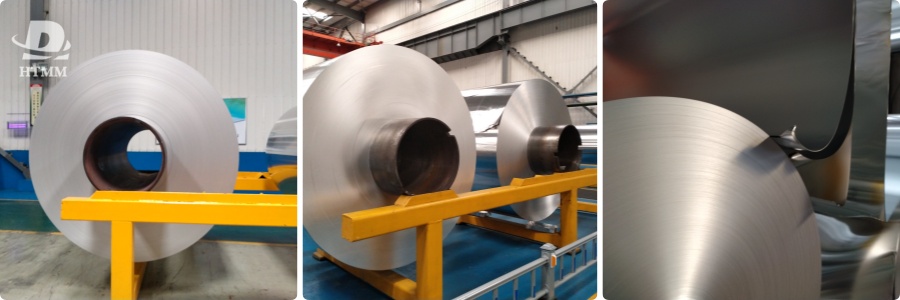
The Unique Benefits of Aluminum Foil in Flexible Packaging
Aluminum foil's tremendous success can be attributed to the numerous benefits inherent to the material that cannot be provided by polymerbased alternatives.
First of all, it gives excellent barrier characteristics.
Good quality aluminum foil with no pinholes protects against visible light, UV radiation, oxygen and water vapor almost completely.
This protects the product from oxidation, aroma loss and ingress of moisture that helps prolong shelf life of the product, covering everything from roasted coffee to drugs.
Secondly, aluminum foil has great deadfold properties.
When bent, it does not spring back so it is quite useful in wrapping and formfillprocess in high speed production process.
It also works well in a very wide temperature range, from frozen conditions to high temperature processing in retorts.
In addition to this, aluminum foil is printable and provides for embossing as well as lamination of various materials.
Its being a metal, makes it recyclable, thus maintaining sustainability in packing.
It is also foodsafe and drugsafe regarding the fact that it complies with the requirements for direct or indirect food contact from safety standpoint.
Determining the Correct Thickness of Aluminum Foil for Various Flexible Packaging Applications
Thickness (in μm) is an important parameter in the foil’s characteristics since it has a major impact on foil performance in terms of strength and resistance to defects.
It is important to note that once the foil thickness exceeds a certain limit, there will be little improvement in barrier properties with further thickening.
Thicker foil has rather improved puncture resistance and flex-cracking characteristics but does not enable significant improvement in barrier properties.
Assigning unnecessarily high thickness leads to an increase in the price of materials without substantial gain in performance.
Thin-gauge foil (6.5–9 μm): This foil is commonly used for confectionery wraps and low-load sachets for powders and spices.
Although these ultra-thin foils offer a low-cost solution, they are easily damaged by pinholes and flex cracking when stressed.
Thus, these foils perform well only when the polymer substrates are used to bear the load in laminated structures.
Medium-gauge foil (10–12 μm): Medium gauge is a popular option among sachets for coffee and tea, as well as flexible bags for nuts and dried fruits.
The medium gauge foil offers balanced barrier property as well as mechanical performance, withstanding weakness and retaining its properties during conversion, filling and transportation cycles while also serving as a barrier against light and oxygen and making it the best option among various general packaging foils.
Foil thickness in the range from 12 to 20 µm: This type of foil is used for yogurt cup lids, pet food bags, and basic pharmaceutical packaging in strips.
The greater thickness indicates higher resistance to punctures in case of high filling weight and bent multiple times in the course of the production process.
In the case of pharmaceutical strip pack, high-level mechanical stability prevents having high level of micro-fractures that can spoil the barrier properties of the pack for medicines.
Foil thickness in the range from 20 to 35 µm: The foil is specifically chosen for retort pouches that withstand sterilization at high temperature.
In retort processing, the material experiences maximum heat, pressure, and mechanical distortion.
The thicker the foil, the less likely cracks appear due to the influence of numerous heat cycles, allowing to provide uninterrupted barrier for long-stored ready meals.
Optimal foil thickness for every application is defined under three conditions: necessary shelf life, mechanics of converting and transportation as well as overall laminate structure.
It is not always “the thicker the better”.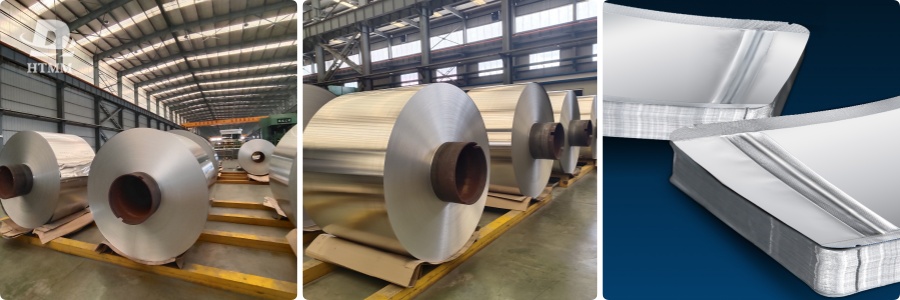
HTMM's Custom-Made Aluminum Foil Solutions
HTMM has been producing aluminum foil products and exporting them abroad for more than 15 years and knows very well that the normal foil specifications will not meet the needs of different flexible packaging manufacturers.
There are many different processes: different manufacturers use different laminating machines, have different fill speeds, sensitivity of the product and goals regarding expenses and profit.
HTMM offers flexible packaging aluminum foil mostly manufactured of 8011, 8079 and 1235 aluminum plastic with the thickness ranging from 6 μm to 50 μm.
The factory equipment is able to fulfill all the requirements.
It is possible to provide very tight thickness management, to offer various widths of the foil according to the needs of the customers.
Each batch is subjected to rigorous quality checks carried out internally focusing on the number of pinholes, thickness variation, cleanliness of the surface, and lamination suitability.
All our jumbo rolls of foil are supplied tested and approved for downstream operations.
By partnering with a reliable manufacturer like HTMM, producers of packaging materials eliminate the problems of wrong thickness of foil, thus ensuring constant performance of the end product.
In conclusion, aluminum foil thickness is an important technical parameter rather than an unimportant purchasing parameter.

Thin foils bring cost savings in low stress applications; medium foils offer a compromise in terms of barrier and physical performances for ordinary food and pharmaceutical packaging; heavy thickness provides the strength of foils in retort high temperature and difficult handling conditions.
When selecting the foil specification, packaging groups should fully consider the product sensitivity, mechanical load on the converting line, sterilization requirements, and budget.
Actual partnership with experts in the field of aluminum foil manufacturing enables one to have flexible packaging matching foil specifications perfectly.