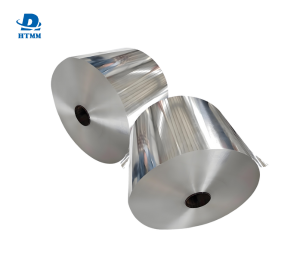
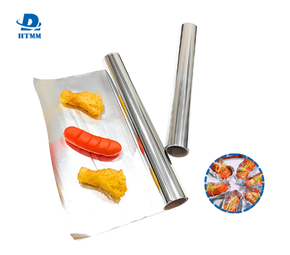
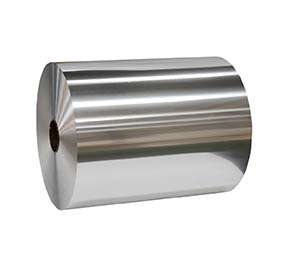
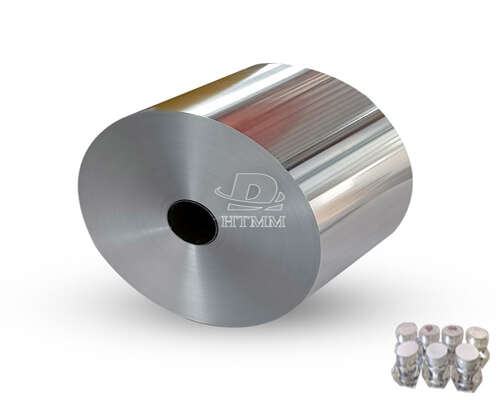
Aluminum foil 8011-O is commonly used in flexible packaging, food lamination, and composite packaging.
Apart from alloy grade, the surface finish is likewise considered as an important factor.
Different surface finishes bring different visual effects and also affect the lamination, printing, coating, and conversion processes.
Hence, it is important for packaging producers to know about what surface finish options exist, how processes may alter them, and how they should be selected.
What Types of Surface Finishes are Meant for 8011 Foil Packaging?
The bright surface finish gives metallic, highly reflective properties to foil because it is produced as a result of direct contact of foil with polished rolls during the cold rolling process.
The high gloss finish of foil gives it a very shiny metallic look making it appear attractive in terms of final packaging.
8011 foil is one of the most commonly used options for food packaging, flexible bags and also general-purpose laminate packaging products since it gives great visual performance as compared to other types of foil surface finishes.
A matte finish exhibits a silver appearance that does not reflect light or resemble any kind of mirror finishes.
The finish is obtained by using two foil layers during the process of double rolling, thus allowing the foil surfaces to touch each other, unlike glossy finishes where steel rolls are used.
The matte finish has a much softer appearance when compared with that of bright finishes and reduces the amount of reflected light.
Matte finish 8011 is commonly used in composite materials in order to achieve the desired aesthetic aspect of branding.
This finish creates a special kind of visual differentiation for product in the marketplace where a low-textured look is favored instead of shiny metal appearance.
In addition to being visually appealing, the matte finish allows for the efficient wetting of adhesives during lamination.
One-Sided Bright, One-Sided Matte vs. Double-Sided Bright
One-sided bright and one-sided matte is the end result of double rolling since one side is in contact with the polished rollers and is therefore bright, while the other side is in touch with an aluminum foil sheet and is consequently matte.
This explains how a single roll of aluminum foil can have two different gloss properties on its front and back.
The double-sided bright foil is made in single-roll conditions when both sides face the polished rollers.
Different surface combinations have their specific operational properties.
Packaging converters need to correlate the surface combination with the end structure of the pack.
For example, clients need to confirm in advance whether it is the shiny side moving outward in front of the display pack or the matte one facing the glue layer when ordering.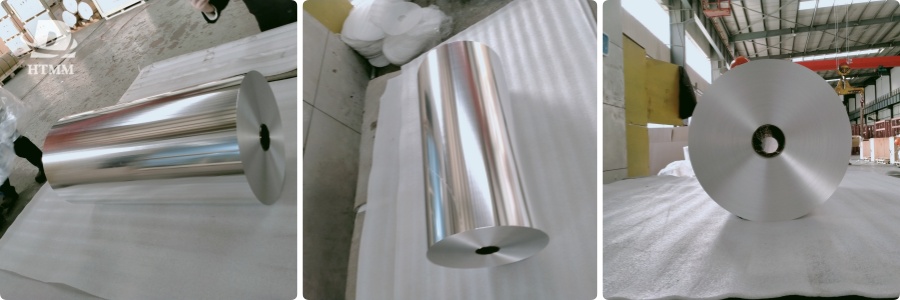
Is it Possible to Personalize the Surface Finishing of 8011 Aluminum Foil?
Surface finish must be defined according to the final applications of the product.
Special requirements can be sent to aluminum foil suppliers for lamination, printing, and coating.
Just specifying “8011 aluminum foil” in the purchasing documents is not enough.
The surface finish needs to be clearly communicated.
In case of mass-scale projects, clients should verify surface properties with the help of samples and technical datasheets before making a significant order.
What are the Effects of Different Surface Treatments on the Subsequent Processing of 8011 Aluminum Foil?
Influences of Surface Finish on Lamination
During the lamination of 8011 foil with PE, PET or paper, cleanliness is more important than brightness.
Clean and oil-free surface ensures good bonding and strong adhesive.
Although the gloss level plays a significant role in lamination, it is not the only factor, because even a foil with high gloss may perform poorly when contaminated with oil and dirt.
Therefore, manufacturers have to focus not only on surface gloss but also on surface cleanliness and energy.
Why Surface Quality Matters in Printing and Coating Processes
Printing and coating require the foil to be equally consistent throughout its surface.
Oil patches, scratches, or other surface defects lead to uneven surface printing of the ink and causing changes in color of the printing process.
Stable surface quality assures consistency when producing at high speeds, which leads to lower rates of rejection and machine downtime.
Difference in gloss is merely a visual effect, while surface uniformity defines the yield of the conversion process.
Should Rolling Oil Remains on the Aluminum Foil Be Taken into Consideration?
In the foil production process, the rolling oil is used as a lubricant and coolant.
In case of the food contact foil or flexible packaging products, the oil must be thoroughly controlled.
Presence of excessive residual oil reduces adhesion, causes delaminations and poses food safety risks.
Manufacturers have to consider the cleanliness and residual oil levels when buying aluminum foil in jumbo rolls from suppliers.
Difference between Surface Finish and Defects like Pinholes and Scratches
Surface finish usually indicates the deliberate quality traits achieved by rolling.
Pinholes, scratches, and indentations represent poor quality issues.
It is important not to confuse these two terms.
Quality norms should state the standards for these different parameters in detail.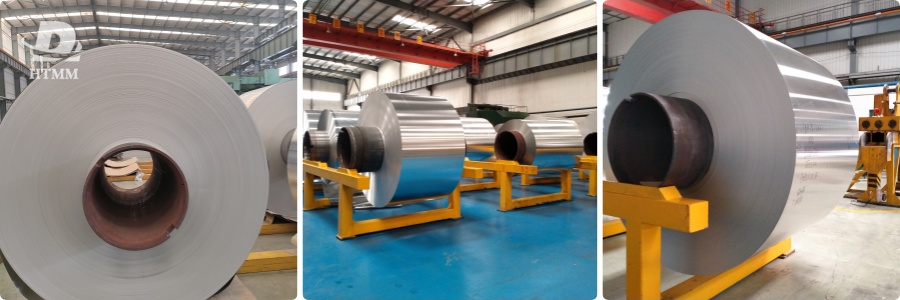
How can you determine 8011 aluminium foil type of surface finish according to the flexible packaging industry?
Surface finish choice for food composite packaging is determined by the structure of a composite and conversion methods.
First of all uniformity and cleanliness, as well as laminating compatibility come first in classifying the surface.
Additionally, one needs to ensure that the produced surface is suitable for food contact.
Standards for Pharmaceutical Packaging Surfaces
Pharmaceuticals are defined by their rigidity when it comes to cleanliness and consistency.
The manufacturing process for packs must take special care to avoid issues like pinholes and scratches.
It is the responsibility of the packaging manufacturer to determine what is an acceptable finish based on the type of coating, lamination etc. used in making their blister lid or sachet.
What Makes Packaging Printing Require Stringent Surface Quality Standards
Printing quality is determined by factors such as bright or matte finish; however, the uniformity of surface and post-processing conditions such as corona treatment are equally important.
Packaging manufacturers need to test the compatibility of the foil and the selected inks prior to mass production.
When to Use Bright Finish and When to Use Matte Finish
The bright finish is recommended for packages that need a strong metallic visual effect, while the matte finish is better when the cosmetics are important.
When it comes to lamination performance, it is important to focus more on process parameters than the gloss of the packaging material.
Confirming Surface Properties When Purchasing 8011 Flexible Packaging Foil
Essential Information to Obtain When Asking Aluminum Foil Suppliers
All information in the inquiry must include:
The alloy grade: 8011
The temper: for example, O temper
The thickness of the foil and the thickness tolerance
The width of the foil and the width tolerance
The surface finish: bright, matte, one side bright one side matte, or other specific conditions.
The weight of the coil, inner diameter, outer diameter and method of export packaging.
Why Surface Quality of Jumbo Rolls is Important for Large Manufacturers of Packages
Large manufacturers must constantly slit, laminate and coat using high-speed production methods.
In case the surface of the foil has defects, the running speed will slow down or the waste will increase.
Methods for Verifying if the Surface Finish Provided by the Supplier Matches the Necessary Standards
Examine the technical documents and quality standards provided by the supplier.
Investigate the surface’s appearance as well as its conversion performance using real-life examples.
Prepare for and carry out the required tests for lamination, coating, or other processes in cases of necessity.
Provide clear acceptance criteria for the surface quality of orders with a longer life span.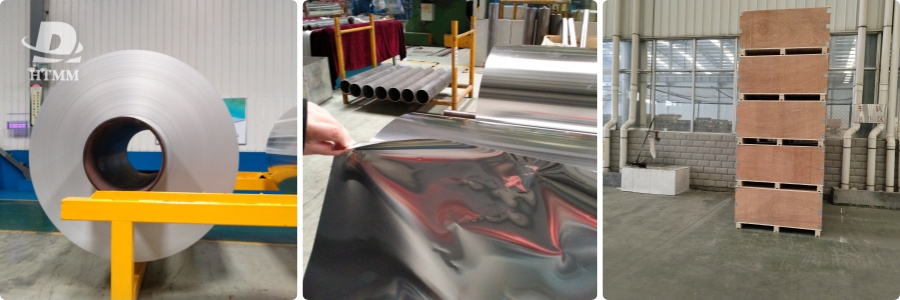
HTMM’s Supply of 8011 Aluminum Foil Rolls
HTMM provides 8011 aluminum foil rolls intended for flexible and food packaging companies.
HTMM produces aluminum rolls with the thickness, width and surface finish that are appropriate for a customer’s needs.
The rolls can be cut and used in laminating, coating, or printing processes for big orders.
If the customer requires different types of packaging aluminum, HTMM can also offer 8079 and 1235 aluminum foil products.