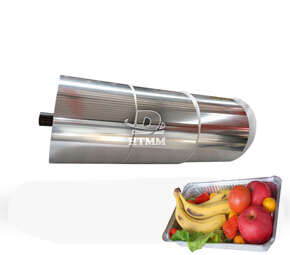
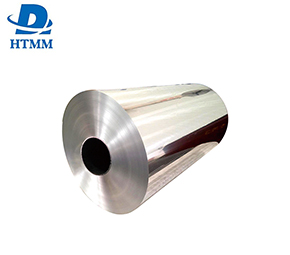
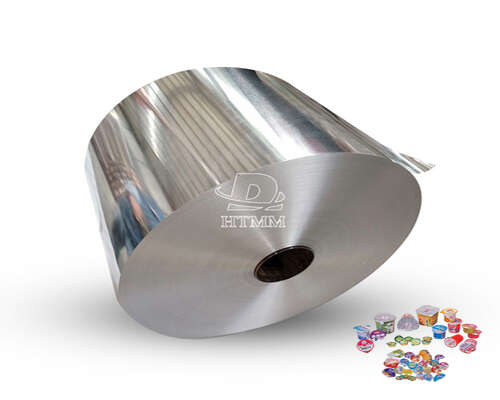
Composite packaging depends on aluminum foil being used as the primary barrier layer, and whether the laminated foil performs as designed depends on the quality of the master roll.
A poor-quality composite foil master roll can lead to delamination, pinholes, web breakages, and unsatisfactory barrier performance.
Not all aluminum foil master rolls are suitable for lamination, but we discuss the critical parameters that buyers should consider when ordering aluminum foil master rolls for composite packaging applications: alloy, thickness, pinholes, surface quality, elongation, tension, and winding.
Having an understanding of these specifications will help to identify suitable aluminum foil master rolls for composite packaging and avoid costly waste.
Alloy and temper
The alloy and temper are the basis of aluminum foil for composite packaging.
The common alloys are 8079, 1235, 8011, etc.
When the gauge is from 6 to 9 microns, 8079 alloy and 1235 alloy are more suitable.
These two alloys have higher elongation and purity, which can be easily stretched without rupture and pinholes during composite packaging.
The 8011 alloy is suitable for 10 to 30 micron gauges, which is abundant at a competitive price.
The common temper is O.
This temp can give the foil the best elasticity and formability, making it suitable for composite packaging with paper and PET.
To ensure the suitability of composite packaging foil, the appropriate alloy and temper are the first standards to check..png)
Uniformity of the gauge
Uniformity of the gauge is one of the most important parameters for aluminum foil used in composite packaging.
The foil must have the same gauge throughout its width and length.
If the gauge is uneven, the adhesive cannot be evenly distributed, and the tension of the raw material will fluctuate.
As a result, the barrier performance of the composite packaging will be uneven.
The standard tolerance of the gauge is within 5%.
For paper and PET, the tighter tolerance is 2%.
The gauge of 6-9 micron aluminum foil should be given a tight tolerance of within 3%.
When purchasing composite packaging foil, check the gauge matching report and ask the manufacturer to use automatic sensors during the winding process.
Pinhole
Pinhole control directly affects the barrier strength of the aluminum foil used in the composite packaging.
With the pinholes, the gas and moisture can penetrate the material, resulting in the deterioration of product quality.
For chocolate, coffee, and pharmaceutical packaging, the pinholes should be very limited.
The following parameters are considered basic for aluminum foil used for composite packaging: the number of pinholes is 200 pcs/m2 or less at 7 microns; 100 pcs/m2 or less at 8 microns; 50 pcs/m2 or less at 9 microns.
During production, the aluminum foil manufacturer will install laser detection devices to perform 100% inspection.
Only when the number of pinholes falls within the specified range can the aluminum foil be used in the composite packaging industry.
Surface cleanliness
Surface cleanliness is also important for barrier functions and evenness.
When the aluminum foil surface has residual rolling oil, dust, or other contaminants, the adhesion of the adhesive layer will be adversely affected, causing delamination.
For composite packaging, the residual oil of the aluminum foil surface should be controlled at less than 2 mg/sqm.
Besides, the surface of the foil should be tested for water wettability.
If the surface quality is not up to standard, the adhesive will not stick properly, and the finished product will appear dull.
When ordering aluminum foil, inquire about surface cleaning (degassing) data from the manufacturer and ask if they have a special process for surface cleaning.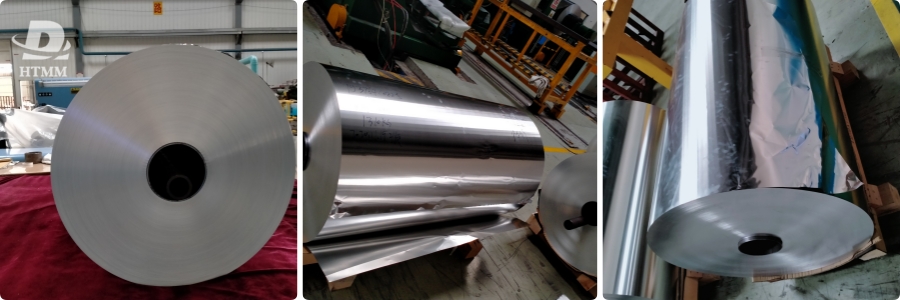
Mechanical properties
Mechanical property parameters such as tension and elongation will directly affect the performance of the aluminum foil during the lamination, printing, and pouching processes.
The elongation is very important here: it indicates how much the foil can stretch without breaking during high-speed operation.
The tensile strength indicates the strength of the foil under tension, allowing it to withstand the pressure of converting equipment.
The 8079 and 1235 alloys provide the elongation greater than 2% at thinner gauges, which supports the lamination.
The better the mechanical properties of the aluminum foil, the less likely it will break or cling to the machine, and the product will run more smoothly.
For each batch, please ask the manufacturer for the test data of the mechanical properties of the aluminum foil.
Roll winding
During the winding process, uneven winding quality will lead to the asynchrony of the aluminum foil on the lamination, especially when the roll runs, the vertical edge will drift.
This will lead to uneven tension, especially when the aluminum foil is used for composite packaging, which will lead to the mismatch of the aluminum foil with the inner and outer layers.
A neat roll face with no abnormal protrusions indicates that the winding quality is good.
Roll diameter, core size, roll weight, and other parameters should be met before ordering, and the customer should expect to have some samples to be used for testing.
Medical, food, and beverage safety standards and service
Before placing an order, the customer must confirm whether the aluminum foil manufacturer supplies food-grade products that meet EU and American FDA standards.
For better quality, check if the product can pass the relevant analysis of gas chromatography, body migration, and leaching.
Please also make sure the material supplier is a professional manufacturing company rather than a mixed trader.
We highly recommend purchase from a well-known company because the quality stability of the good manufacturer will be relatively better.
Henan Tendeli Metallurgical Materials Co., Ltd., which was established in 2009, is a manufacturer specializing in the production of 1235 aluminum foil, 8011 aluminum foil, 8079 aluminum foil, and other alloy series for packaging of composite packaging.
Our main customers are global importers and retailers, such as Nestlé, Mars, Mondelez, and other international brands.
Every year, we export nearly 10,000 tons of aluminum foil, and provide 8079 alloy, 1235 alloy, 8011 alloy as the composite packaging raw materials to 60+ global markets.
Our products cover more than 3000 domestic and foreign enterprises.
We provide application-specific aluminum foil use standards, with one-on-one technical support and production planning.