What to Consider When Buying Lubricated Container Foil
Die forming, deep drawing, easy removal
What is it?
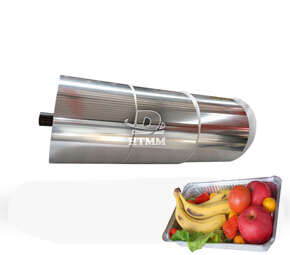
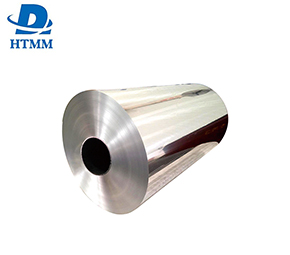
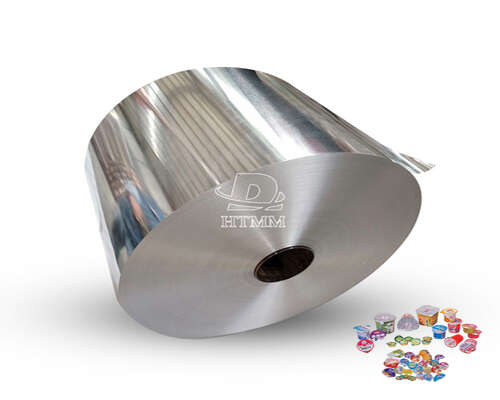
Lubricated container foil is the base foil for containers, trays, and formed packaging products, similar to standard container foil.
It is different, however, in that it is coated with a thin film of lubricant to enable easy stamping, deep drawing, and easy removal from press tooling.
The level of lubricant in the coating will be visible in the completed packaging product and can influence the final quality of the surface and formed component, as well as downstream processes such as washing, heat sealing, and coating.
Avoiding cracked containers, die buildup, variations in wall thickness, and foils that need to be cleaned is essential to optimal production efficiency and product quality.
What Is Lubricated Container Foil?
Lubricated container foil is aluminum foil that is supplied with a light coating of lubricant during the final rolling process or a separate coating operation.
Lubricants reduce the amount of friction created between the foil and the press die.
This makes it easier for the foil to flow into complex container shapes without tearing, and it also prevents the formed container from sticking to the tooling, which is important when using automated high-speed press equipment.
Lubricants used in container foil may be of various types, including mineral oil, synthetic esters, and vegetable oils that are suitable for food contact applications.
The selection depends on the final application, such as whether the container will be in contact with food products directly, and whether the production process includes washing after forming.
Lubricated foil is not the same as bare degreased foil, which is often used in lamination products to enable adhesive bonding.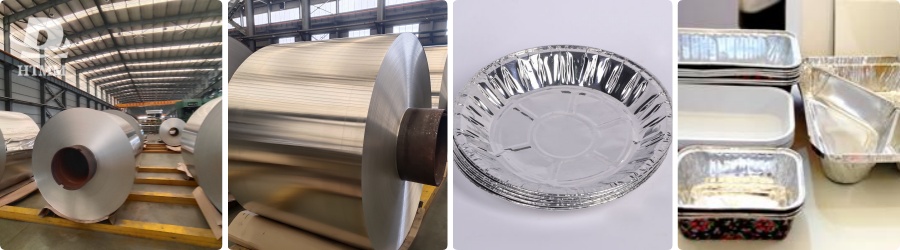
Selecting the Alloy and Temper for Container Fabrication
Alloy and temper impact how well the foil forms into containers.
In general, the most common alloys for lubricated container foil include 3003 (contains manganese to add strength and dent resistance) and 8011 (good formability at a lower price).
3003 is used for large-size trays, heavy-duty containers, or containers with thick walls; 8011 is often used for general purpose takeaway containers and pie plates.
Temper is also critical.
H22 temper is used to make deep-drawn containers with sharp corners and complex designs, where partial strain hardening results in some retained softness; H24 temper has even higher strength, for containers that must hold food but do not flex or warp.
Typical thickness ranges from 30 to 200 microns, depending on container size and rigidity.
The buyer should verify that their press line can accommodate the alloy and temper.
Lubricant Type and Coating Weight
The type of lubricant and coating weight are two of the most important specifications to look for.
Coating weight is generally measured in milligrams per square meter, and its ideal range is between 50 and 300mg/m.
Too little lubricant results in galling, tearing, and increased friction during deep drawing.
Too much lubricant results in a buildup on tooling, inconsistent forming, and contamination of the finished container.
If the container will come into contact with food without washing, food-grade lubricant specifications should be verified against the FDA or EU list of food contact regulations.
If the formed container will be washed, then industrial-grade lubricant specifications may suffice at a lower price point.
It is also important to verify whether the lubricant is water- soluble or solvent-based to determine post-formation cleaning needs.
This information can be obtained from the technical data sheet of the lubricant.
Surface Quality and Thickness Consistency
Surface quality and thickness uniformity have an effect on forming yields.
Surface should be free from scratches, dents, wrinkles and black spots that could be potential problems with the final container.
Tolerance should be held to 5 percent or less for thickness so the product flows well when pressed.
If there is any variation in thickness it can cause uneven wall distribution, weak spots or, even worse, container failure.
Flatness is also important for the highspeed press line because this can cause feeding problems, and thus misalignments.
Edge quality is important as rough edges or bands of burrs could damage tooling and cause downtime.
Tolerance of winding tightness and roll end face quality are also important since these factors influence how well the foil runs on the press line.
Buyers should ask for inspection reports with each lot to confirm quality was maintained.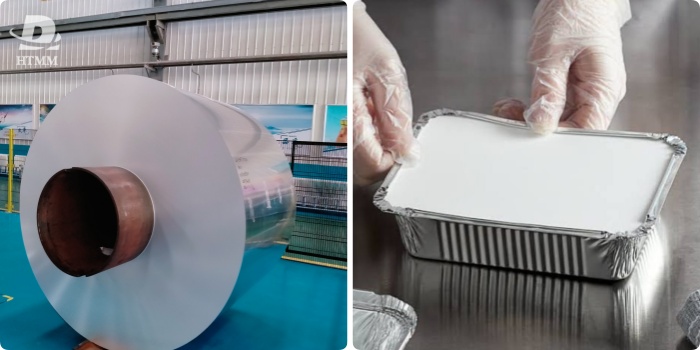
Cleanliness, Compatibility, and Regulatory Compliance
Cleanliness and compliance A food container foil must be free of contaminants, heavy metals, and excess rolling oil (which could migrate into the food) despite the lubrication, says Spahni.
The lubricant must also be food safe if the final container won't be washed.
Buyers will want to make sure the supplier has the necessary Food Contact Certifications from the US Food and Drug Administration or the EU (or other relevant market), and a migration test report from a recognized laboratory, such as SGS.
If the foil will be printed, coated or heat-sealed with a lid film, it's also necessary to evaluate if the lubricant is compatible with downstream processes: the lubricants must not affect adhesion, and a different lubricant formulation may be required if it negatively impacts ink or lidding film sealing.
Packaging, Storage, and Shelf Life
Packaging and storage condition is also one key factor affecting the lubricated foil.
Package to prevent dust and moisture, so that the lubricate layer not contaminated, oxidation and aging.
Fumigation-free solid wood package and moisture-proof packing, export to meet the requirements.
Moreover, the storage condition in your warehouse is very important.
Too high temperature will result in the lubricant migration, evaporation, evaporation; humidity will lead to oxidation, rust; the special odor of the lubricant will also accelerate.
Please ask the product manager about the lubricant standard temperature and storage period.
As long-term storage, lubricated film rolls should be placed in a cool and dry place, not in sunlight.
How Can You Check Your Supplier Before Proceeding To Order?
Confirm that your supplier is a manufacturer, not a trading company.
-Sourcing direct from the mill helps you manage alloy chemistry and lubricant application, and ensures consistent quality.
Have the supplier provide:
-A technical data sheet and certification that the aluminum foil can be used in contact with food, and a sample roll for a small initial order and product trial.
-Run sample rolls on your actual press equipment, not the sample machine, to verify forming and finish, lubricant function, container appearance, and batch-to-batch consistency of forming and appearance.
-Get the supplier to confirm lead times, MOQ, payment terms, package, and other requirement details in writing.
A professional and responsible supplier will be able to support you with technical documents and be quick to respond to your quality problems.
Henan Tendeli Metallurgical Materials Co., Ltd, established in 2009, is a large modern enterprise mainly engaged in research, development and production of aluminum plate, strip and foil processing.
-The company produces lubricated aluminum foil for containers, 3003 aluminum foil for containers and 8011 aluminum foil for containers, providing customized thickness, width and lubricating oil specifications.
With more than 10 years of export experience, HTMM's lubricated container foil is sold to 60 countries and regions around the world, with more than 3000 customers.