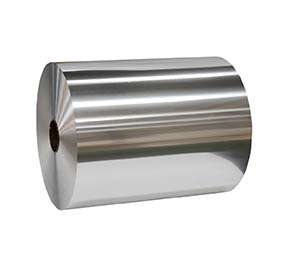
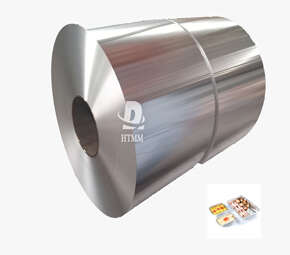
Specification
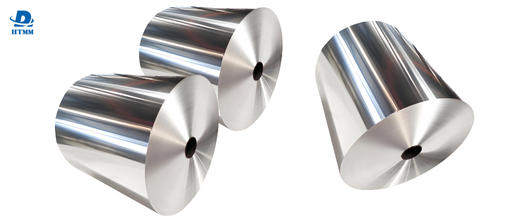
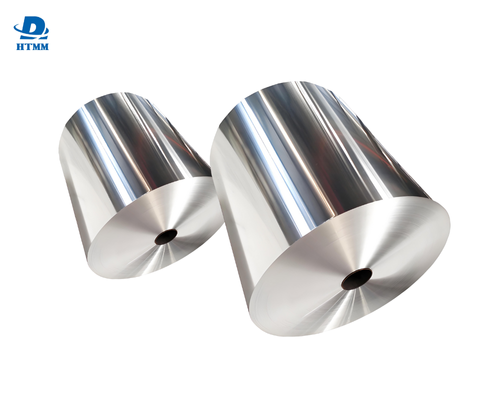
The Jumbo roll format with coil weights of up to 5000 kg and diameter of up to 1500 mm also reduces the frequency of roll changes, reduces downtime, and provides a great number of blanks from one coil.
Details include:
| Type |
Aluminium Foil for Food Container Application |
| Application |
For different food container applications, Such as dishes, plates, trays etc |
| Grade |
Food Grade |
| Alloy |
3003/8011/8006 |
| Temper |
H22 H24 H18 O |
| Thickness |
0.03MM-0.15MM |
| Width |
200MM-1300MM |
| Surface |
Both sides bright |
| Packaging |
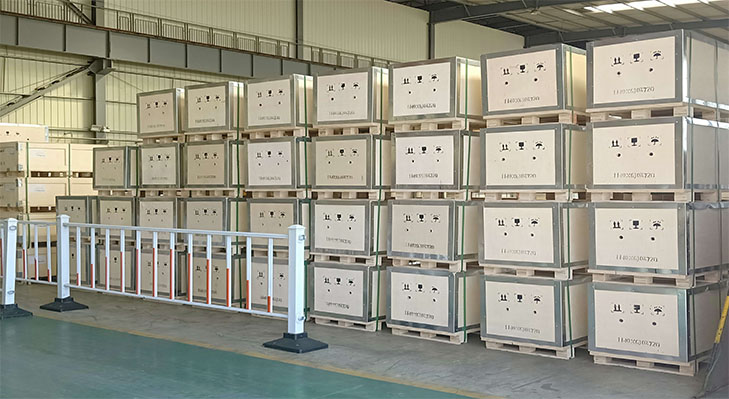
Free Fumigated wooden box |
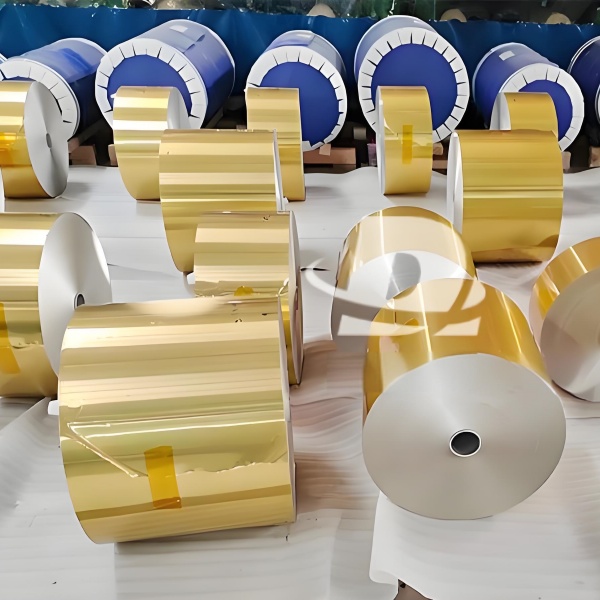
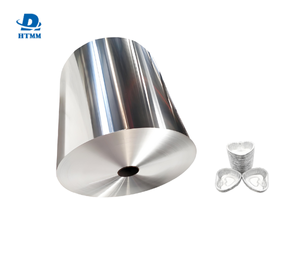
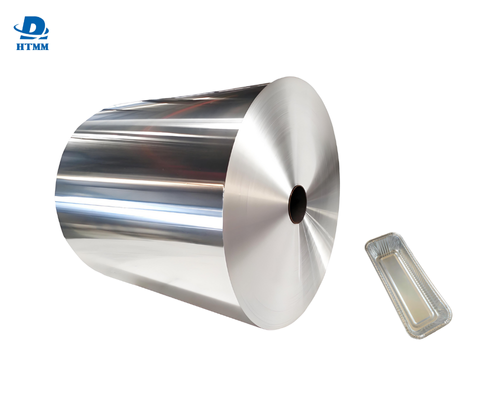
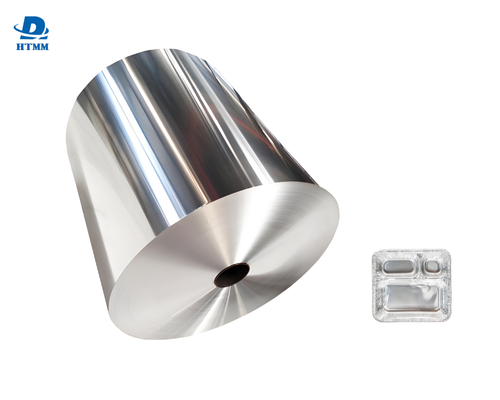
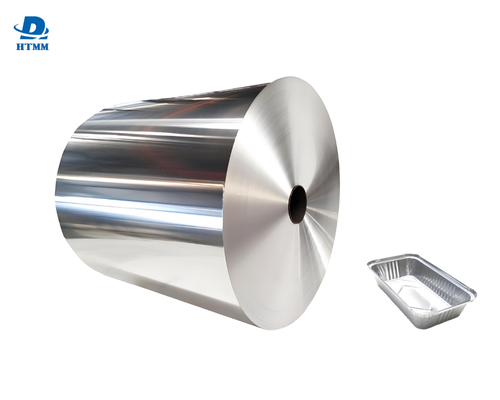
HTMM's Aluminum Foil Lubricated Jumbo Roll is an important raw material used for manufacturing aluminum food containers in high quantities in various sectors especially food service, retail baking, and industrial packaging. In high-speed container forming process, the lubricated jumbo rolls feed into mechanical or hydraulic presses where the lubricant enables aluminum to flow smoothly during the manufacturing process and ensures that the aluminum does not adhere to the molds.
The jumbo design of the rolls allows for long production runs which helps keep production time and costs low. In manufacturing food service containers our lubricated foil is used to produce takeaway food containers such as trays used to pack lunch meals in airplanes. In addition, the foil is used to make pie plates, cake pans, muffin tins, and roasting pans which provide safe and efficient baking results.
The Aluminum Foil Lubricated Jumbo Rolls we manufacture have gained significant recognition around the world and have become an important product in packaging industry at large. North America, especially USA and Canada is the biggest user of lubricated jumbo rolls, especially for its immensely growing frozen foods, take-away and food service sector which needs high volume production and productivity. Western Europe including Germany, France, Italy and UK also shows a good demand for premium quality lubricated jumbo rolls.
China has now become a world manufacturing hub for aluminum containers, and our lubricated jumbo rolls are extensively used by manufacturers in such regions serving both local and most of the export markets as well, particularly take away and food delivery containers. Turkey is also a very important market with strong container manufacturing industry to supply packaging needs to various customers in Europe and Middle East regions where pre-lubricated jumbo rolls are required in order to maximize the life of the tools and the speed of presses.
By collaborating with HTMM for your jumbo roll aluminum foil lubricated requirements, you gain access to the specialized tribology knowledge, advanced coating ability, and dedicated service that is tailored to help you maximize your operations in container forming. We provide expert consultation to enable you to choose the correct alloy, temper, thickness, and lubrication weight needed for your press equipment, container designs, and production goals, assuring maximum effectiveness and quality.
Our modern lubrication systems utilize FDA-compliant lubricants that are applied in a very controlled way, with real-time measurements of coating weight and coating uniformity ensuring constant performance of every jumbo roll. We offer complete customization services that include precision slitting, special lubrication weights according to the press speed and tooling design, edge treatment, and custom temper profiles for specific container designs.
Our quality system guarantees that the jumbo rolls are delivered with every requirement fulfilled in terms of the speed of container machine technologies by implementing such processes as thickness tests, mechanical testing, lubrication weight controlling, and surface examination. Additionally, we provide complete certification documentation that outlines the mechanical properties of the jumbo rolls, verifies their dimensions, includes the lubrication certificate, and confirms compliance with food safety regulations.
FAQ
1. What advantages does pre-lubricated foil provide over the application of lubricant at the press?Unlike in-line lubrication, pre-lubricated foil guarantees consistent uniform coverage of the blank on both sides, making it less prone to the problems of uneven application, overspray, insufficient coating on intricate shapes, and operator errors. It produces a cleaner press environment and less lubricant consumption, being more efficient and allowing higher press speeds.
2. Which lubricant do you utilize and does it qualify as food grade?We use synthetic oils and emulsions developed specifically for aluminum forming applications. All lubricants used are FDA 21 CFR 178.3570 and EU 10/2011 compliant, intended for incidental food contact, burning off clean or leaving a harmless residue during heating.
3. What lubricating weight is suggested for my container molding process?The general recommended weight of lubrication in the case of deep draw container applications is between 200 and 300 mg/m². However, for intricate shapes, high drawing ratios, or stainless steel tools, it might be better for the lubrication weight to be 350 – 400 mg/m². Lower lubrication weight (150-200 mg/m²) would probably suffice for shallow containers or for presses with polished tools. The technical department of our company will help you to select the best lubrication weight based on your specific container design and machine parameters.
4. To what length can pre-lubricated jumbo screens prolong tool life?Usually, the users find that the use of pre-lubricated foil allows prolonging the tool life by 50-100% in comparison with the tools that are used with no lubrication or with inconsistent lubrication. Such prolongation allows our clients to save significantly on the tools’ refurbishment as well as on tool inventory and downtime.
5. What assistance do you give for improving container forming? Our full assistance consists of the following: optimization of the parameters of the press ( blank holder pressure, draw speeds, temperature); analysis of the life of tools and prediction of the tool wearing; working out solutions for the forming problems such as earing, wrinkling, splitting, and galling; drawing out recommendations for lubrication with regard to the specific press; creation of new specifications for alloy, temper materials, and lubrication.

.png)