Specification
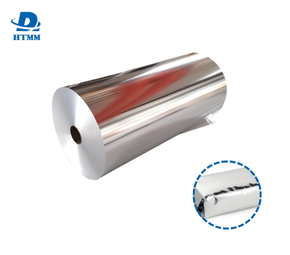
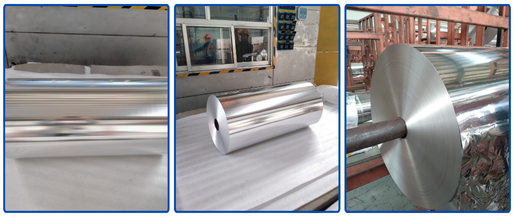
Aluminum foil has long been an essential item in every household kitchen. Household aluminum foil rolls have also developed into an indispensable practical tool in the food packaging and preservation field. Food-grade aluminum foil 8011-O stands out among many products for its superior quality and functionality.
Details include:
| Type |
Flexible Packaging Foil |
| Application |
To be used for food packaging/ Cigarette Packaging after lamination |
| Grade |
Food Grade |
| Alloy |
1235 8011 8079 |
| Temper |
O |
| Thickness |
0.0055MM-0.03MM |
| Width |
200MM-1600MM |
| Surface |
One side bright, One side matt |
| Packaging |
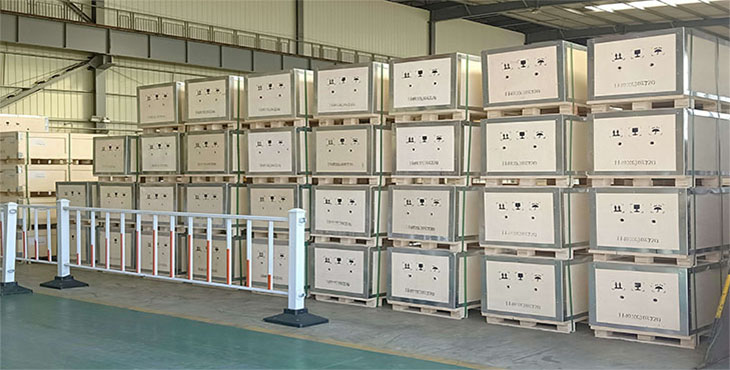
Free Fumigated wooden box |
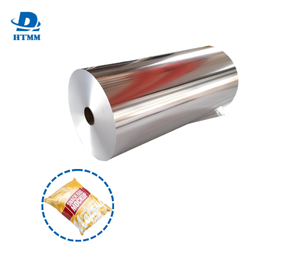
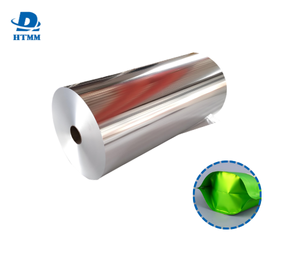
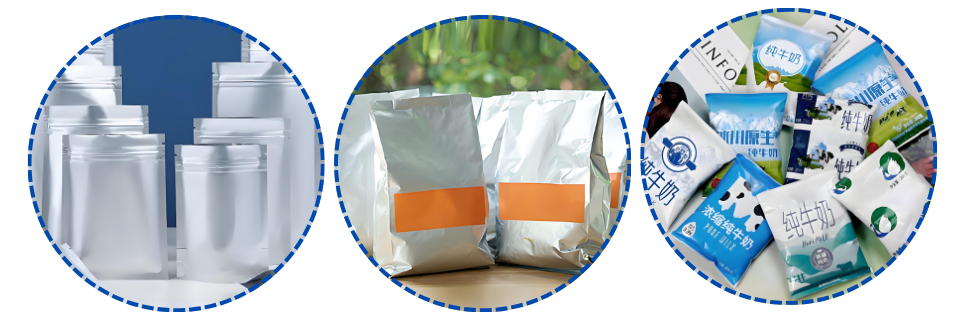
Flexible packaging foil is an essential element in most flexible packages. It is used as a protective liner for many products that are packaged in stand-up and flat pouches including snacks, coffee, dried fruits, and pet food by helping to keep their flavour and fresh smell within the package.
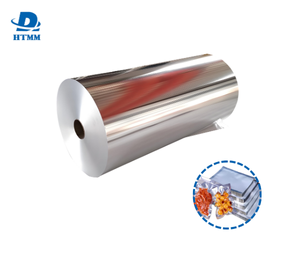
In the pharmaceutical and medical industries, foil is used as an impermeable barrier between the products and the external environment in blister packs and sterile medical device pouches. An absolute moisture barrier must be ensured to ensure that products maintain their effectiveness and are sterile. Foil is also very important for aseptic cartons and pouches that contain liquids such as dairy products, juices, sauces, etc. In addition, foil is also very important in the packaging of chemicals, agro products, and sensitive electronic devices. Foil provides a barrier to many environmental factors, which keeps packaged goods from contaminating and degrading.
Therefore, from the medicine cabinet and kitchen cupboard to the factory floor, HTMM's flexible packaging foil protects product integrity from the time it is produced until it is consumed.
Bestselling CountriesWith suppliers in multiple geographical regions globally, we are a Tier 1 supplier to leading manufacturers of laminated roll-stock and finished flexible packaging foil throughout North America, Europe and Asia. We have well-established supply partnerships within all of our major converting regions, including North America (USA, Canada) and Europe (Germany, Italy, France, UK), where we enjoy significant customer bases, and we are continuing to develop strong supply partnerships in the fast-growing Asian packaging industries in Japan, South Korea, and Taiwan, as well as China and Southeast Asia. We are also establishing strong and growing customer bases in Australia/New Zealand and significant opportunities exist in Latin America (Brazil, Mexico), and in Middle East markets.
FAQ1. Most Flexible Food Packaging uses a Thickness of Foil between 7-9 Microns.7-9 Microns is the standard thickness used in laminations; it is widely used, due to its Cost-Effective nature and its Excellent Oxygen and Moisture Barrier. For sensitive and/or longer shelf-life products such as Coffee and Certain Pharmaceuticals, A 12-Micron Foil or Specially Designed High Barrier Alloys, such as 1235 Alloy may be required.
2. What are the differences in the Barriers Provided by Aluminum Foil and Metallized Films?At ANY thickness (even at 7-Microns), Aluminum Foil Provides an Uninterrupted Near-Complete Barrier to Moisture Oxygen, UV, and Light where as Metallized Film (which has a very thin layer of Vapor Deposition Processed Aluminum), Provides only a Good Barrier, micro-cracks are built into this product, making it not as durable or as Resistant to Flexing as Aluminum Foil; Aluminum Foils are used when There is Maximum Barrier Requirements and Expected Shelf Life.
3. Do you supply foils for use in autoclave (retort) packages?Yes, we have foil grades (usually in the form of alloy 8079) that are designed to resist the extreme heat, moisture and pressure of autoclave sterilization. They have mechanical and corrosion resistance properties and will not separate from their laminate layer during the sterilization process.
4. What types of surface treatment are available to improve the laminating process?We offer both standard and high-performance corona (plasma) treatments to improve surface energy and create good bonding between your extrusion coatings and adhesives and the laminated surface. Other options include the use of specialized chemical primers designed to bond to the polymers (e.g., PE, PP) in your laminate material to create strong, durable bonds.
5. Can you provide finished laminated foil products?Our primary area of focus is producing premium quality un-laminated foil. However, we collaborate extensively with top-tier lamination providers. Therefore, not only can you acquire our foil and send it to the lamination provider of your choice, we also help speed up your supply chain by providing the ability, via established relationships with several high-quality adhesive lamination providers, to purchase pre-laminated "ready-to-convert" structures (such as PET/FOIL/PE).