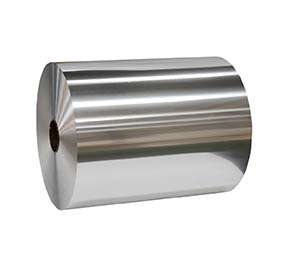
Specification
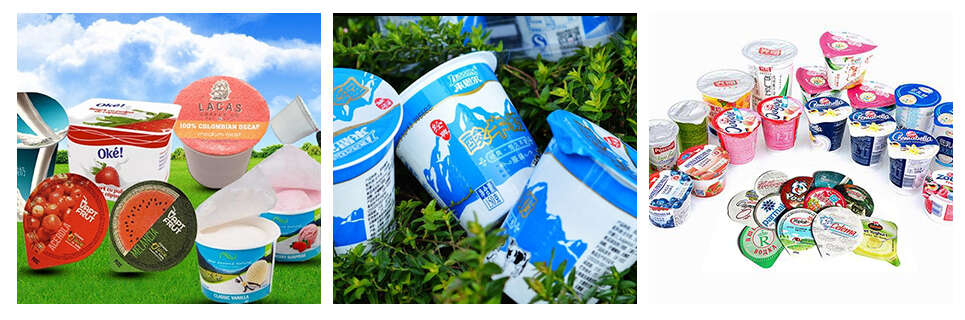
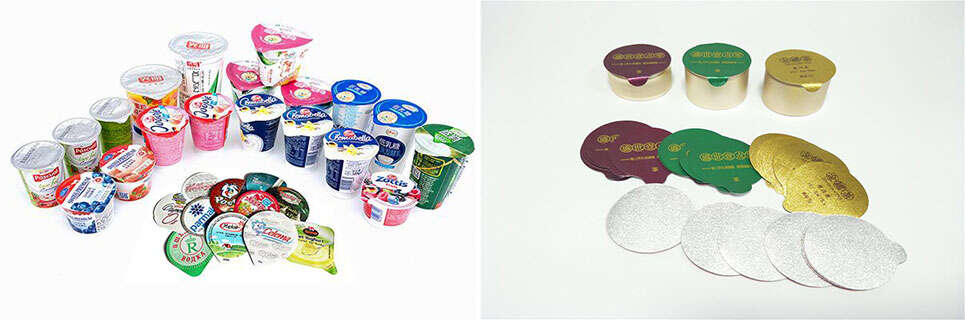
Our superior surface finish allows printers to print vibrant color and clear product information so that retail shelf appeal is maximized and the products are easy to identify and purchase. Our superior heat-seal compatibility to a wide range of cup/container materials (including PS, PP, PET and PLA) provides end-users with a uniform peel experience when removing the lid from their food products. Our brilliant, non-reactive surface prevents the transfer of metallic taste to food products and ensures that all dairy and non-dairy products are food safe.
Details include:
| Common Aluminum Foil Specifications for Yogurt Lids |
| Alloy Type |
Temper |
Common Thickness (µm) |
Width Range (mm) |
Surface Type |
Application |
| 8011 |
O |
30 – 45 |
200 – 1500 |
One side bright, one side matte |
Yogurt cup sealing |
| 8079 |
O |
25 – 40 |
200 – 1600 |
Bright or embossed surface |
Yogurt and dairy lids |
| 1235 |
O |
20–40 |
200–1300 |
High purity, soft surface |
Flexible food packaging |
a (primarily the United States and Canada, with some circulation to Mexico) continues to be an area with robust growth and demand for yogurt, ready-meal and food service packaging. Strong expansion cycles in both Russia and Eastern Europe exist, where their modern dairy and food processing industry continues to experience increasing demand for foil lidding materials. The Middle East (including the United Arab Emirates and Saudi Arabia) uses 8011/8079 for locally produced dairy products for their rapidly growing populations. Australia and New Zealand consistently use 8011/8079 as the lidding foil for their export-oriented dairy industries, where obtaining a reliable seal integrity on products shipped long distances is of utmost importance.
China and Southeast Asia represent rapidly growing markets due to increased dairy consumption leading to increased investment in advanced packaging equipment, which requires high-performance lidding materials. South America (specifically Brazil and Argentina) also continues to demonstrate increased acceptance of our products due to the increasing demand for dairy and food processors to modernize their packaging capabilities.
When you collaborate with HTMM for your lidding foil needs, you gain a full range of manufacturing and converting capabilities along with dedicated technical assistance to help you be successful in the highly competitive dairy and food packaging marketplace. With regard to technical support, our experienced consultants are available to provide guidance on selecting the most appropriate alloy, thickness, and heat seal coating for your particular cup material, filling equipment, and product specifications, which will guarantee consistent seal integrity and consumer satisfaction.
‘
’Our advanced manufacturing technologies, such as precision rolling mills, controlled annealing furnaces, and state-of-the-art coating equipment, allow us to achieve uniform quality and performance in every lidding foil roll produced. Additionally, we provide complete customization services, which include precision slitting to exact widths for your specific filling line, high-definition rotogravure printed with food safe ink to produce vivid brand graphics, and specialty heat seal coatings formulated to match your unique cup material and seal parameters. Our robust quality assurance system includes real time thickness measurement, automated surface examination, and extensive seal strength testing to ensure all shipments comply with the stringent requirements of high speed food packaging operations. We also provide complete certification documentation including FDA/EU compliance certificates, detailed testing reports, and full material traceability to meet the expectations of food brands and regulatory bodies worldwide.
FAQ
1. What's the difference between 8011 and 8079 alloys for lids?8011 is the 'go-to' alloy that has a nice balance of formability, strength, and cost so works well in most cases for food and dairy lid applications. If you have a more complex requirement for integrity of your barrier, great formability, and extended shelf life, then 8079 is the better choice as it has better tensile strength and has better resistance to pinholes.
2. What foil thickness is recommended for lidding?For lidding, typical foil thickness range is 20 to 40 microns, but if you are looking at lidding small diameter cups or standard dairy products, then 20-25 microns is acceptable. If you are working with large diameter containers, long shelf life products, or if the product is being filled into containers at high speed, then lidding with foil thickness of 30-40 microns is recommended.
3. Can you supply pre-coated lidding foil for lids that are made of different materials (e.g. foam cups or PET cups)?Yes, we provide heat seal coatings on our lidding foil to be used with a variety of different materials including PS, PP, PET, and PLA. Our Engineering Team can study your sealing process and provide a recommended coating for the material and your sealing process.
4. Will the foil be suitable for both hermetic sealing and easy open sealing? Absolutely, we can engineer lidding foil to provide either hermetic sealing, which offers the best barrier protection for maximum shelf life, or easy open sealing that provides convenience to the consumer for a clean, consistent open without tearing. We will tailor the strength of each seal based upon your requirements.
5. What are your capabilities for printing branded lidding foil?Our lidding foil can be printed in high-definition rotogravure with up to 8 colours using food-safe inks. Branded graphics, such as your company logo, product information, nutrition information and decorative images can be printed directly onto the foil. This will result in eye-catching, shelf-ready packaging that enhances brand awareness and attracts consumers.HTMM's 8011/8079 Aluminum Foil for Lids is widely used across dairy packaging (e.g., yogurt cups, drinking yogurt bottles), as well as other (food, beverage, dairy, etc.) types of food, to provide a reliable seal and consumer convenience in lidding applications. The use of HTMM foils in dairy packaging provides maximum seal integrity while keeping products (yogurt, sour cream, cottage cheese) fresh and preventing leaking while they are being shipped. The lids are easily opened by consumers without tearing due to their consistently designed peelable characteristics. In addition, HTMM provides customers with an attractive, printable surface that can be customized to represent their product's brand, while the foil lid maintains moisture in pudding and dessert cups.
HTMM's foil lidding for ready-to-eat meal and food service containers prevents temperature fluctuations throughout the supply chain and helps companies provide better service to their customers by meeting their quality standards. HTMM's foil lidding is also critical to businesses that manufacture and package yogurt drinks, juice, and other dairy-based beverages, etc. by providing a reliable seal around the container that will prevent leaking during shipment. Lastly, pharmaceuticals and nutraceuticals rely on HTMM's foil lidding solutions to provide the requisite barrier protection required for the stability of tablets and capsules in blister packs, and single-serve powder containers.
The 8011/8079 Aluminum Foil For Lids (8011/8079) has become very popular and widely used in all major international dairy and food packaging markets. As a result, 8011/8079 has emerged as one of the most popular options among leading dairy brands and converters in every part of the world. Western Europe remains the dominant geographical area and includes our largest customers: Germany, France, Belgium and the Netherlands. Each of these markets has advanced industrial dairy operations that require the highest level of quality in their lidding materials for their premium yogurt and dessert products. North Americ
Compared to paper and plastic films, aluminum foil yogurt lids provide unique protection while keeping dairy products safe and tasting fresh during shipping and storage.
Global Demand for Lids for YogurtAluminum foil demand from yogurt lids is growing rapidly in the international dairy market, particularly in Asia, Europe, and South America, where consumption has grown with single-serve yogurt cups and food safety awareness.
Asia Pacific: Increasing yogurt consumption has increased the need for aluminum foil packaging materials.
Europe: Strict environmental regulations encourage recyclable aluminum lids over plastic.
South America: The desire for premium dairy packaging and packaging display motivates increasing demand.
The global trend suggests that the aluminum jumbo roll for yogurt lids will remain at the forefront of the international sustainable packing movement.
Questions and Answers About Aluminum Foil Yogurt Lids1. What alloy is best to produce yogurt aluminum foil lids?The most common alloys for yogurt aluminum foil lids are 8011-O, 8079-O, and 1235-O.
8011-O: It provides good strength and barrier properties.
8079-O: This alloy is known for its high elongation properties, or greater flexibility.
1235-O: Preferred for its high purity and ductility.
2. What thickness should yogurt lid aluminum foil be?Common thicknesses can range from 25 to 45 microns (µm) depending on the yogurt container, sealing layer, and mechanical strength.
25-30 µm: Use for light weight applications
35-45 µm: Used for yogurt lids.
3. What surface treatments will aluminum foil yogurt lids have? Aluminum foil will have any surface treatments before lamination or printing.Primer coat for better ink adhesion.
Lacquer coat for heat sealing
Embossing for decorative texture, or easy tearing
Polishing or bright finish for gloss
4. What is the function of the heat-seal layer in yogurt lids? The heat-sealing layer (typically PET, PP, or PS film) is laminated to the aluminum foil to ensure the aluminum foil can seal tightly with the yogurt cup without leaking. Also, it allows the lid to peel easily without the yogurt cup tearing which creates the users preference of convenience and hygiene.
5. In what ways do aluminum foil lids help in food safety and freshness? Aluminum foil has total barrier qualities to light, oxygen, water vapor and odor. It protects against bacterial contamination, oxidation of flavor and loss of flavor - thereby maintaining yogurt freshness longer.
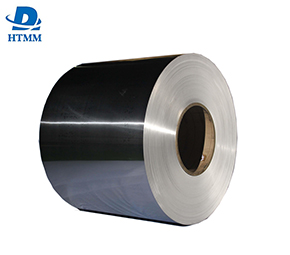
6. What are the standard size widths and cores for jumbo rolls of aluminum foil for yogurt lids? Width: 200 mm - 1600 mm (customizable)
Core ID: 76 mm or 152 mm (paper or aluminum cores)
HTMM can customize the roll gauge based on your slitting machine specifications.
7. Can aluminum foil yogurt lids be printed or embossed?Yes. Aluminum foil has a fantastic printable surface to allow multi-color flexographic, rotogravure or digital printing to be applied. Embossed foil lids can also be made in order to create texture, design style and to differentiate your brand.
8. Can the foil be customized to the cup material (PP, PS, or PET)?Yes. The sealing lacquer or film would be matched to the yogurt cup plastic type to achieve a successful seal. For example:
For PP cups → aluminum + PP film
For PS cups → aluminum + PS lacquer
For PET cups → aluminum + PET film