Specification
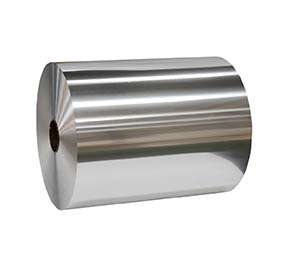
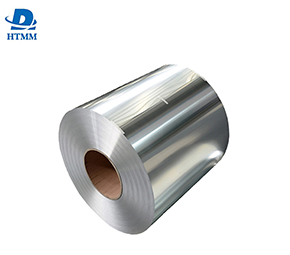
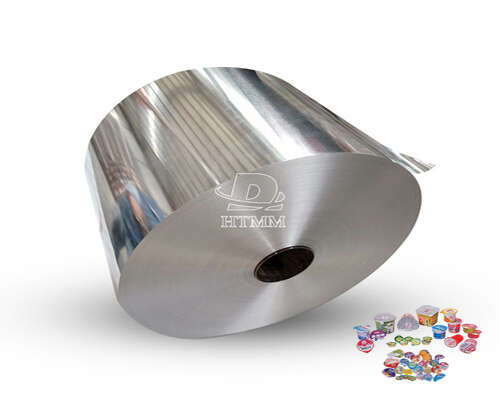
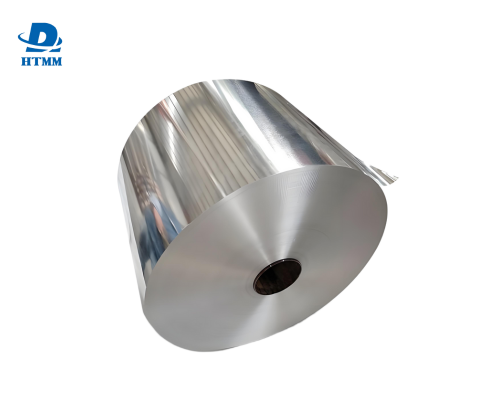
The 8011 alloy of aluminum is a non-heat-treatable alloy from the Al-Fe-Si series that was designed for transforming thin sheets of aluminum foil into packaging materials. Unlike pure aluminum alloys, 8011 alloy is formulated with specific ratios of alloying elements in order to provide a combination of strength, ductility and processing capabilities. The 8011 alloy is the preferred material for producing household aluminum foil from jumbo rolls.
Details include:
| Alloy |
8011, 1235 |
| Temper |
O (Soft) |
| Thickness |
8–25 microns |
| Width |
200mm–1600mm |
| Roll Core ID |
76mm (3 inch) or 152mm (6 inch) |
| Surface |
One side bright, one side matte |
| MOQ |
3 tons per size |
| Packaging |
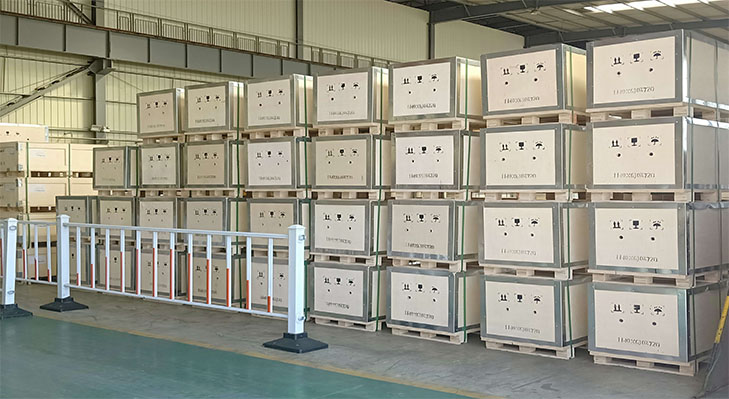
Standard export wooden case |
| Customization |
Thickness, width, logo, and packaging can be customized |
| Application |
Household kitchen foil rolls, catering foil, baking foil, wrapping foil |
| PAYMENT TERM |
30%T/T Advance + 70% Balance |
The temper "O" signifies the condition of the 8011 alloy in an annealed state. A heat treatment process that takes place when the alloy is heated to a designated temperature and cooled at a slow enough speed to relieve the internal stress caused by rolling it into sheets or coils. After being put through this annealing treatment, the aluminum alloy will have transitioned from a solid state to a highly ductile (soft) state. This characteristic ductility accounts for the material's great popularity as a household aluminum foil roll, but it does so for another four key reasons that match household usages perfectly.
Silicon and iron are important additions in improving the characteristics of the alloy. Adding silicon to the alloy increases the fluidity of the molten metal so that the final jumbo roll has a consistent thickness and surface finish throughout. Adding iron enhances the tensile strength and durability of the alloy, preventing it from tearing when it is subjected to pressure during production and operation. Comparing 8011 with other typical foil-type aluminum alloys (like 1100) shows that 8011 exhibits superior tensile strength while still maintaining reasonable elongation; accordingly, 8011 is much better suited to the very thin gauge rolls required for household aluminum foil. Furthermore, 8011 has good corrosion resistance and is non-toxic, complying with international food safety standards (i.e., FDA and SGS certifications), which makes it fundamentally acceptable for use in food contact applications in the home.
8011- O aluminum foil has good ductility and flexibility. The foil must be able to be easily folded and wrapped around items of all shapes and sizes and then fitted into containers before being cooked. (i.e. an enclosed container, lined up in a baking pan) The annealing process allows for multiple repetitions of stretching or bending the aluminum foil without cracking or breaking. Thus, it is able to adapt to the many different uses that require flexible foil on a daily basis. The flexible aluminum foil also provides manufacturers with a great deal of flexibility when processing large sheets or rolls of foil into smaller household foil rolls, thus creating less waste during production.
Secondly, it has high levels of hygiene and safety, which are vital as it is considered a food-contact item. 8011-O alloy is created from electrolyticly refined aluminium that is above 99.85% pure, with specific controls in place to limit the amount of impurities within it to ensure that no dangerous substances seep into food prepared at temperatures above 260°C/500°F. There are no harmful toxins present within the 8011-O alloy; it has no taste; it is resistant to moisture and grease, which means that it effectively blocks out oxygen and UV light so that food lasts longer and can be kept better when preserving food and cooking it.
Thirdly, 8011-O alloy has a lower cost of production (relative to other high-performance aluminium alloys), due to the amounts of alloy upgrading elements used (which are plentiful) and its mature annealing process (which allow manufacturers to produce high-quality food-use aluminium foil at an economical price point). Therefore, 8011-O alloy is an affordable product for the mass-market consumer. Manufacturers also see that 8011-O alloy has consistently reliable mechanical properties, therefore they will have uniform thicknesses and surface finishes from their jumbo rolls of the 8011-O alloy, thus resulting in lower production defects and increased manufacturing efficiencies for their products.
The size and thickness of the household aluminum foil varies quite a bit by region; this is due to differences in cooking styles and what consumers want as well as the demands of the market. These regional differences in the size and thickness of household foil are intimately related to local ways of living and how the 8011 jumbo roll can be processed to suit the regional needs of foil.
On the North American continent, consumer demand for thicker and larger-sized rolls of aluminium foil is high because they are most commonly used for heavy duty food preparation (e.g. grilling and cooking), as well as food storage in bulk amounts. The typical thickness of heavy duty aluminium foil is generally between 0.015 mm and 0.020 mm (15 to 20 microns), but there are also some heavier duty rolls that go up to 0.025 mm. The majority of aluminum foil sold in North America is very large in terms of both width and length; most commonly sold rolls are 30 cm and 45 cm wide, with a choice between 50 m, 100 m, or even 200 metres long. Large families and restaurant kitchens make up the majority of consumers who purchase these products.
Sustainable development within the environment is one of the greatest priorities for people in Europe, which has resulted in Europeans generally opting to use thinner, therefore more resource-efficient aluminum foil whilst still maintaining usability. For example, in England, Germany and France, the most common gauge of aluminum foils will range from 10 micron (0.010 mm) to 18 micron (0.018 mm). For example, in England, the standard size is approximately 70m x 300mm or 75m x 290mm, which optimizes both usability and sustainability. In Germany and France, the standard width is between 30 cm and 60 cm, and the standard length is between 50 m and 100 m, allowing for the use of aluminum foil for wrapping food as well as baking, packaging, and cooking on a smaller scale. The majority of consumers in Europe will also consider recyclability when making their choice of aluminum foil; thus using thinner 8011-O aluminum foils makes recycling them more feasible, which fits in well with the greater European environmental ethic.
Household aluminum foil in Asia has various sizes and thickness because there are different cuisines being cooked in each country. The Chinese typically use aluminum foils that are 10 - 15 microns thick, with widths of either 20 cm, 30 cm, or 45 cm, and lengths of either 30 m, 50 m, or 100 m. Those sizes are sufficient for smaller households; 20 cm and 30 cm widths are great for wrapping leftovers and small amounts of food. Thinner aluminum foil used in Japan or South Korea (8 - 12 microns) is used based on their smaller average household size and less cooking needs, available in widths of 25 cm to 30 cm and lengths of 20 m; 50 m. Southeast Asian countries like Thailand or Malaysia typically use aluminum foil that is 10 - 18 microns thick, with widths of 30 cm to 45 cm, due to rapid growth in the food delivery and snack packaging?

.png)
.png)
.png)