Products Category
.png)
.png)
.png)
.png)
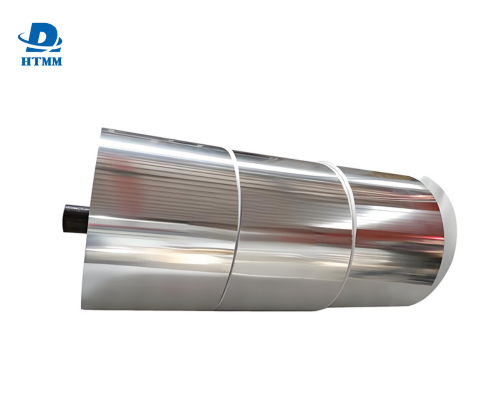
| Alloy | 8011, 1235 |
| Temper | O (Soft) |
| Thickness | 8–25 microns |
| Width | 200mm–1600mm |
| Roll Core ID | 76mm (3 inch) or 152mm (6 inch) |
| Surface | One side bright, one side matte |
| MOQ | 3 tons per size |
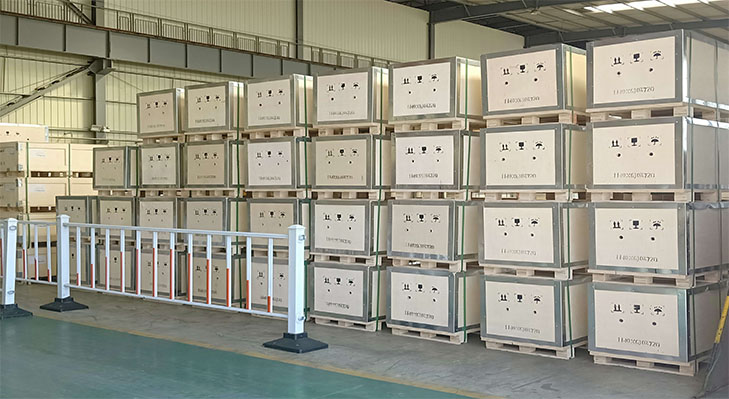
| Packaging | Standard export wooden case |
| Customization | Thickness, width, logo, and packaging can be customized |
| Application | Household kitchen foil rolls, catering foil, baking foil, wrapping foil |
| PAYMENT TERM | 30%T/T Advance + 70% Balance |
The large volumes of 30cm and 45cm are not intended for the end consumer. Conversely, you can go into a secondary conversion process or directly into a semi-automated packaging line. Here are the most common applications:
Retail roll conversion: cut a 30cm home roll into sizes of 10cm, 15cm and 20cm and pack it on a supermarket shelf. The smoothness of 8011 alloy ensures clean cutting.
Food & baking: commercial baking trays with a width of 45 cm. At bakeries in dubai and Riyadh, these giant rolls are placed on trays and used to wrap dough or cover freshly baked bread.
Takeout packing: many of the restaurants in the Middle East are made by wrapping shawama, roast chicken and salad sandwiches directly on paper made of large rolls 30cm thick.
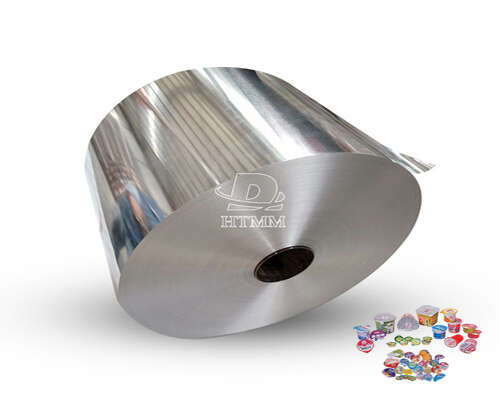
Milk cover foil: seal yoghurt cups, pudding containers and feeding bottles using a converter that covers a round or rectangular shape stamp from a 45 cm roll.
Insulation board: it is laminated with fiberglass or kraft paper and ACTS as a radiation barrier in the insulation of buildings. The 45 cm wide former reduces duplication waste.
Drug plastic packaging: drug foil requires a tough barrier coating, but the base 8011 roll is the starting material before painting and printing.
If there is an area where aluminum foil bituminous leaves in China are already universally recognized, it is the Middle East. Why? Several elements are perfectly combined.
First, the Middle East imports a large number of processed foods and pharmaceutical packaging materials. Local processing industries in Saudi Arabia, the united Arab emirates, Qatar and Kuwait rely heavily on imports for raw materials. Widths 30 cm and 45 cm are especially popular because they meet local packaging machine standards inherited from European equipment.
Second, climate also affects. Extreme high temperatures and humidity must have excellent moisture and oxygen protection in packaging. 8011 alloy provides better protection than recycled or lower grade foils even at 14 microns. Buyers in the Middle East have learned from experience that inexpensive alloys often lose potencies in the summer because of an increase in the quantity of pin holes.
The third factor is price sensitivity. It is 15 to 20 percent cheaper than local production companies in Europe or the gulf cooperation council (GCC). Since the majority of middle eastern countries do not impose an anti-dumping tax on ordinary aluminum foil, Chinese bags are constantly flowing into ports such as jeber ali (dubai), damman (Saudi Arabia) and hamad (Qatar).
In practical use, what are the differences between 30-centimeter and 45-centimeter coarse rolls?
A width of 30 centimeters is an ideal choice for making standard household rolls (usually the finished product width is 10-15 centimeters), and it is also suitable for packaging smaller foods, such as sandwiches. The 45-centimeter width is better suited for commercial bakeries, large dining trays and industrial LIDS. The wider coverage reduces the number of seams. Neither is "better" - choose based on your downstream slitting or end-use size.
What is the typical number of pinholes in your 14-micron 8011 foil?
Our standard production holds pinholes with a thickness of less than 80 microns per square meter. For pharmaceutical or high-barrier food applications, we can tighten it to ≤30 per square meter at a 5% surcharge. We use continuous pinhole detectors to inspect each batch of goods and provide certificates each time we ship.
How do I know which thickness to order - 14, 16 or 18 microns?
14 microns is suitable for dry food packaging, insulating padding and low-strength LIDS. 16 microns is the most popular universal thickness - strong enough for dairy sealing, yet still economical. For applications such as frozen food packaging, heavy-duty baking trays or any aluminium foil that will be folded and reopened multiple times, it is recommended to use 18 microns. Before making a commitment, free samples of all three thicknesses are requested.
What is your minimum order quantity for a trial order?
For first-time buyers, we accept a minimum order quantity of 2 metric tons, but this must be a single width (30 cm or 45 cm) and a single thickness. The trial price is 8% higher than our standard wholesale price. After a successful trial, we returned to the standard minimum order quantity of 3 tons, and the price was more reasonable.
How long does it take to get from China to Port Jebel Ali?
The sea transportation from major Chinese ports (Shanghai, Ningbo or Guangzhou) to Jebel Ali takes 16 to 22 days, with the exact time depending on the carrier and the transfer station. Including the production time (20-25 days) and customs clearance time (3-5 days), the total delivery time from the deposit to your warehouse in Dubai is usually 45-50 days. For urgent orders weighing less than 500 kilograms, air freight is feasible, but the cost is approximately five times higher.