Products Category
.png)
.png)
.png)
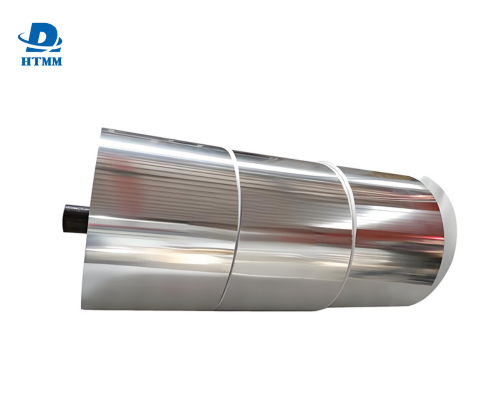
.png)
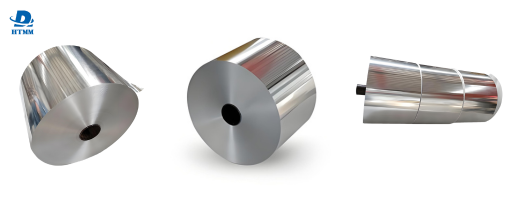
| Alloy | 8011, 1235 |
| Temper | O (Soft) |
| Thickness | 8–25 microns |
| Width | 200mm–1600mm |
| Roll Core ID | 76mm (3 inch) or 152mm (6 inch) |
| Surface | One side bright, one side matte |
| MOQ | 3 tons per size |
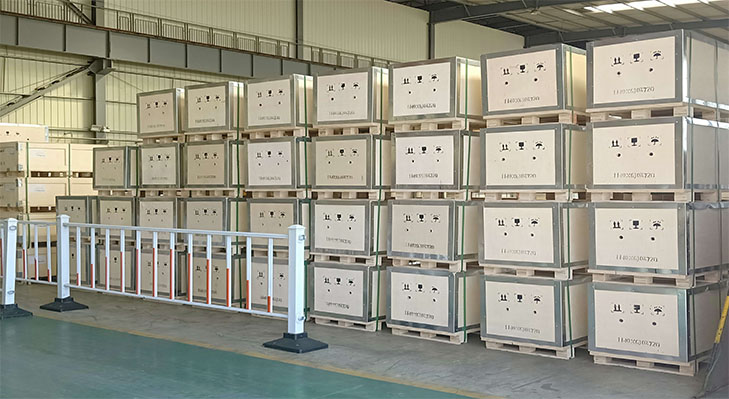
| Packaging | Standard export wooden case |
| Customization | Thickness, width, logo, and packaging can be customized |
| Application | Household kitchen foil rolls, catering foil, baking foil, wrapping foil |
| PAYMENT TERM | 30%T/T Advance + 70% Balance |
The following processes are performed to produce aluminum foil:
- Hot rolling of the aluminum slabs
- Cold rolling to reduce the thickness of aluminum
- Annealing to enhance aluminum sheet's softness and flexibility
- Final rolling to create a finished 18-micron sheet of aluminum foil
- Slitting the finished aluminum foil into jumbo rolls as needed
Cooking and Storing Food in the Home
Foil (18 microns) is a typical material used in households for the following purposes:
Wrap fresh food;
Cover containers;
Cook food in the oven;
Grill or roast food;
Store food in a freezer.
Baking, Catering, and Takeout Food Packaging
Heavy duty foil at 18 microns is also commonly used in many commercial foodservice applications, which include:
Food trays for catering;
Bakery packaging;
Takeout food packaging from restaurants;
Airline food packaging;
Industrial repackaging of foods.
Many distributors will purchase larger, rolling (jumbo) suppliers and convert the foil into separate retail foils for wholesalers and grocery stores.
Here are examples of typical converted foils:
Household Aluminum Foil
Catering Aluminum Foil
Private Label Foil
Key Benefits of China
Cost Savings
Aluminum producers in China have the advantage of being part of fully integrated aluminum production and manufacturing supply chains. This means that manufacturers are able to produce quality foils for distribution at competitive prices.
Ability to Produce Large and Small Volume Foils
Aluminum manufacturing companies in China have the production capabilities to produce both high volumes and low volumes of f aluminium foil. They are therefore ideal partners for international distributors to purchase aluminum foil.
Food Safety Requirements
When buying aluminum foil, the buyer should ensure the supplier's product is compliant with the following legislation:
FDA food contact regulations;
EU food contact regulations;
ISO certifications; and
Thickness & Strength Testing
In addition to being compliant with the above-referenced laws, many suppliers have laboratories at their facilities allowing the frequent testing of product thickness and strength to ensure:
Consistency and defined 18 micron foil thickness;
Foil that will not tear easily;
Foil that has the desired tensile strength;
Foil that is clean.
Environmental Impact.
Aluminium foil is a highly recyclable material that helps create sustainable packaging solutions, so when you are buying these products, be sure to check what thicknesses are available according to export markets and also what is expected from the packaging.
1. Why is 18 microns thick aluminium foil so widely used?
It provides a strong combination of durability, flexibility and cost that makes it appropriate for domestic (household) and commercial uses.
2. What type of alloys are typically used for household foil jumbo reels?
There are two primary alloys used in the production of household foil jumbo reels — 8011 and 1235 — both of which deliver outstanding food-contact safety and processing characteristics.
3. Can I get customized jumbo reels?
Yes, many manufacturers in China are able to customize the width, length, core size, packaging and privately-labeled branding.
4. Is 18 microns thick foil suitable for use in cooking and/or grilling?
Yes, 18-micron thick foil is ideal for cooking/baking and many grilling situations because of its strength and ability to withstand high temperatures.
5. What certifications do I need to request?
The customer is encouraged to ask for ISO certifications, FDA compliance documentation, EU food contact declarations and/or appropriate testing reports.
6. How do converters convert jumbo reels into retail products?
Converters use rewinding and cutting equipment to convert the jumbo reels into smaller-sized kitchen foil products available to consumers.