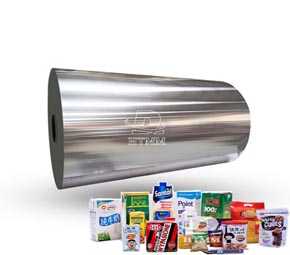
Certainly, aluminum foil of the alloy 8011 is well suited for applications involving food products as well as packaged pharmaceutical goods.
The fact that 8011 aluminum foil has all the right characteristics i.e. excellent formability, strong barrier performance, and being food-safe makes it one of the most used and established materials in the fields of packaging.
The purpose of this article is to discuss the various properties, applications, and quality aspects of 8011 aluminum foil along with its procurement.
Features of 8011 Aluminum Foil
Special characteristics of 8011 aluminum foil
As the name suggests, aluminum foil 8011 is produced from a combination of aluminum, silicon, and iron, which gives it an unparalleled mix of mechanical and physical features.
The features of interest in the case of aluminum foil are as follows:
Excellent ductility and formability: The ductility of aluminum makes it suitable for shaping and packaging any kind of food without causing cracks in the foil.
Effective processability: Aluminum foil can be printed, coated, and laminated smoothly.
Stable thickness: Regular thickness is required for the foil to perform well as an effective barrier between the packaged contents and the outside environment.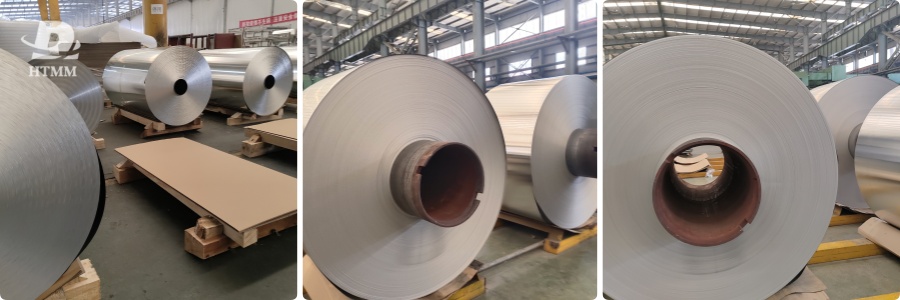
The reason for the extensive use of 8011 aluminum foil in food, medicine, and other types of packaging
The primary reason for the usage of 8011 foil widely is the fact that it is very versatile and has a proven track record, in addition to the fact that it acts as a great barrier against moisture, oxygen, and light, which are the main factors responsible for spoilage.
It is also cheaper than other high purity alloys like 1235 making it a popular choice in mass volume production processes.
Its food grade certification and regulatory compliance (FDA, EU 10/2011) reassures the safety regarding its usage in contact with food and pharmaceuticals.
In terms of application, 8011 foil provides a high level of protection, starting from chocolate wrappers and to blister lidding in pharmaceutical production.
How does 8011 aluminum foil protect packaging contents
The barrier effect against light, oxygen, and water vapor
Aluminum foil is unique among packaging materials since it possesses almost perfect barrier functions against the three most important factors of spoilage of products:
Oxygen prevents oxidation that leads to rancidity, loss of taste and degradation of vitamins.
Mitigating the influence of environmental factors on food and pharmaceuticals
Thanks to its full-fledged insulating characteristics, aluminum foil 8011 provides the products with protection from changing temperature, humidity, and air pressure in the environment.
This is of high significance for products that are transported under different climates and in various supply chains.
The barrier also makes it impossible for exterior smells and pollutants to reach the product.
Offering potential for quality preservation and longer shelf-life
All these properties of barrier materials combined guarantee that the products can be stored for long periods of time.
In the case of food, it means that the taste, texture, and nutritional values are preserved, while the medications retain their efficacy and stability during their life cycle, which is required by law.
Is 8011 Aluminum Foil Appropriate for Direct Food Contact?
Key Requirements for Aluminum Foils in Food Packaging
Whenever some substance is used for eating and drinking purposes, it has to correspond to a great number of safety standards.
There are a couple of standards that need to be taken into consideration:
FDA 21 CFR 175.300: Regulates the composition and the level of migration of the food contact substances in the USA.
Quality Indicators to Monitor in Food-Grade 8011 Aluminum Foil
The quality parameters are:
Thickness uniformity: Guarantees the uniformity of the foil's barrier properties and reliability of processing.
Surface hygiene: It must ensure the absence of oil, dust, and impurities that can get to food.
Pinhole density: High pinhole density is vital for sustaining the foil barrier properties.
Mechanical properties: High strength and elongation of the foil are necessary for reliable converting process.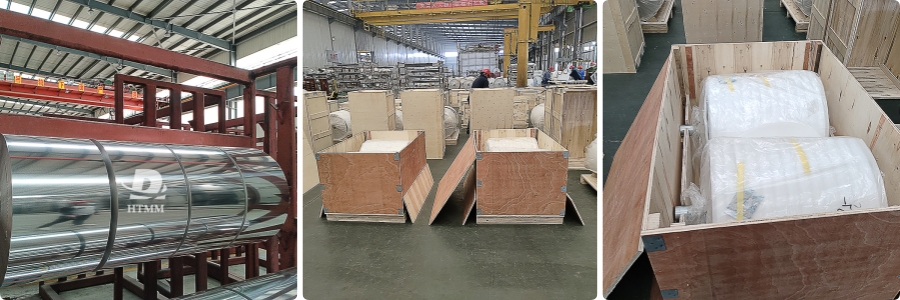
Why Aluminum Foil Should Be Clean, Free of Oil Residue, and Produced Properly
If some oil or lubricant is present on the surface of the foil, the smell would migrate to food and create a peculiar taste.
HTMM employs:
High purity rolling oil systems to eliminate the residue.
Heat degreasing, cleaning, and monitoring oil levels to ensure the conformity of aluminum foil with food grade requirements.
Quality aluminum foil 8011 respecting the ISO 22000 standard is guaranteed to be clean and safe.
What Are the Benefits of 8011 Aluminum Foil in Medical Packaging?
8011 aluminum foil protects medical products from moisture, light, and oxidation
Medical products are sensitive to environmental conditions.
8011 aluminum foil provides:
Strong barrier against moisture – preventing active ingredients from hydrolyzing.
Full barrier against light – keeping light-sensitive drugs safe.
Barrier against oxygen – preventing oxidative degradation of drugs.
Uses of 8011 aluminum foil in blister packs and packaging bags
Blister packaging – 8011 foil serves as a lid material for blister packs.
Packaging bags – 8011 foil used in multi-layer packaging for powder, granules, and liquids.
Composite packaging – combination of 8011 aluminium foil with plastic and adhesive films to form high blockage and sterilization packaging.
What makes pharmaceutical packaging more demanding when it comes to the thickness and surface quality of aluminum foil?
In the case of pharmaceutical packaging, foil should satisfy the following stricter requirements:
Thickness uniformity: By ensuring that the foil does not contain weak points, the barrier properties will not be compromised.
Pinhole statistics: A single pinhole can provide the access for humidity into the product and eliminate its effectiveness.
Surface quality: Should be devoid of flaws to ensure efficient coating, printing, and sealing.
HTMM provides aluminum foil 8011 for pharmaceutical purposes with the maximum control over pin-hole density and confirmed surface quality.
What should one pay attention to when employing aluminum foil 8011 in food packaging?
Common applications of aluminum foil 8011 in food packaging include
Food bags and compound flexible packages: This is in used as a barrier layer when it comes to composite pouches for snacks, coffee, and dry food.
Chocolate, sweets, and snack packaging: Where it serves for primary wrapping subject to the requirement of its dead fold ability and chemical inertness.
Yogurt lids, food packs, and other food packaging: This is used as a food lidding material and made according to the design of semi-rigid utensils.
What is the reason that aluminum foils are used with varying thickness in the food packaging industry?
Thin foils range from 6 to 12 microns in thickness.
They are primarily used in composite laminates, where these foils offer barrier protection, and the films ensure mechanical strength.
Aluminum foil that measures between 18 to 30 microns is used in construction involving semi-rigid containers, lidding as well as trays.
In this case, mechanically strong materials that can be shaped are needed.
Thickness does matter as thicker aluminum foil offers better protection but increases the final cost.
Thin aluminum foil enables money saving but may require extra support through other layers.
Does surface quality impact the processing methods that follow?
Yes, the quality of the surface plays an important role in printing, coating, and lamination processes.
If the surface is defective, the ink wouldn’t adhere properly; scratches and other impurities wouldn’t let the coating process succeed.
Surface cleanliness in lamination is important for better adhesion.
There may exist a number of defects, including pinholes, stains from oil, and scratches.
What aspects do food packaging producers need to consider while buying 8011 aluminum foil rolls?
Alloy and temper: Make sure the correct temper is used for the application.
Thickness, width, and tolerance: Ensure that the final product specifications are compatible with the machinery used.
Diameter of the roll, weight of roll, and inner diameter: Ensure compatibility with the unwinding equipment.
Methods of protection used during packing: Make sure moisture protection and secured packaging are ensured during transportation.
What are the differences between the 8011 aluminum foil used in food packaging and the one used for pharmaceutical packing?
While both processes are concerned with cleanliness, stability, and barrier characteristics, the requirements are still the same in this respect.
We need foil to provide reliable barrier protection, be free from contaminants, and have uniform quality.
The standards for consistency and quality control for pharmaceutical packs are stricter than those for other pack types.
The main difference is the requirements regarding quality.
Pharmaceutical foil has tighter limit of thickness tolerances.
Lower pinhole density is crucial for realizing absolute barrier function.
Surface quality should be perfect in terms of sealing and coating.
Documentation and traceability are also more extensive.
The actual specifications should be defined according to the type of packaging and production methods.
The actual foil grade, thickness and temper will depend on:
Whether it is used as a standalone foil or a laminate.
The requirements for printing, coating, or laminating.
Sensitivity of the product to moisture, oxygen, and light.
"8011 alloy" alone does not mean that all the specifications can work for any kind of food or pharmaceutical packaging.
The name indicates the composition of the metal but does not indicate that the temper, thickness, surface treatment, and quality correspond to the use.
It is standard policy to consult the supplier about the proper specifications of the foil.
How to choose the proper 8011 aluminum foil giant roll for packaging food or pharma?
Define the specification of aluminum foil on the basis of the structure of the final packing.
Direct use or lamination: Determine if the foil is used as a standalone material or embedded in multilayer structure.
Thickness and width: Determined according to the size of the finished product and the necessary properties of barrier.
Roll size: Must match the machinery and production requirements.
Why is it important when buying 8011 aluminum foil in bulk?
Thickness uniformity: When the thickness varies, it results in different barrier properties and other malfunction risks.
Width and evenness of rolls: Affect the accuracy of slitting and the process of lamination.
Quality of rolls: Affects both production times and waste reduction.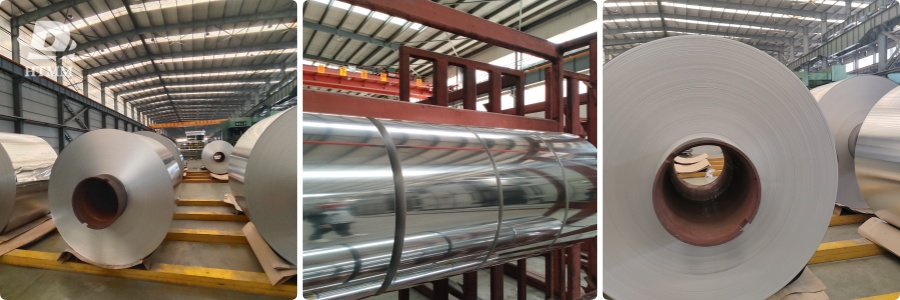
What procurement requirements are appropriate for the giant rolls of HTMM's 8011 aluminum foil product line?
HTMM's 8011 aluminum foil giant rolls are suitable for:
Food packaging manufacturers - For the lidding, laminating and the container forming.
Medical packaging manufacturers - For blister lidding, bags and the composite packaging.
Flexible packaging converters - For printing, laminating and slitting.
HTMM produces 8011 foil in a large variety of widths, thicknesses and roll weights based on the specifications of our clients.
Our company also manufactures 8079, 3003 and 1235 aluminum foil which can be used in special applications.