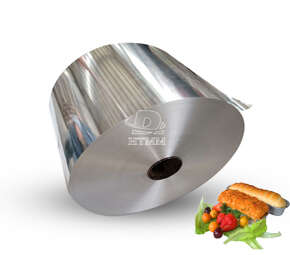
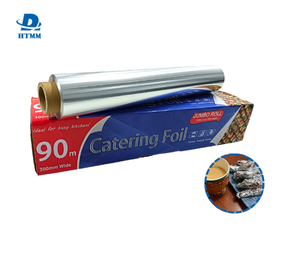
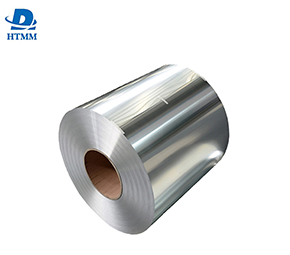
8011 aluminum foil, used in flexible packaging, must comply with specific quality criteria in order to function effectively during processing and use.
Thickness uniformity, surface cleanliness, pinholes control, and mechanical properties all play a vital role in determining the foil’s performance on high-speed lamination processes.
Packaging converters and brand owners do not tolerate any quality variations that can lead to production stops and package failures.
This guide describes essential quality requirements that must be considered when choosing a supplier of 8011 flexible packaging foil.
Once buyers understand these conditions, they can choose a vendor who can provide consistent high-quality material for their lamination purposes.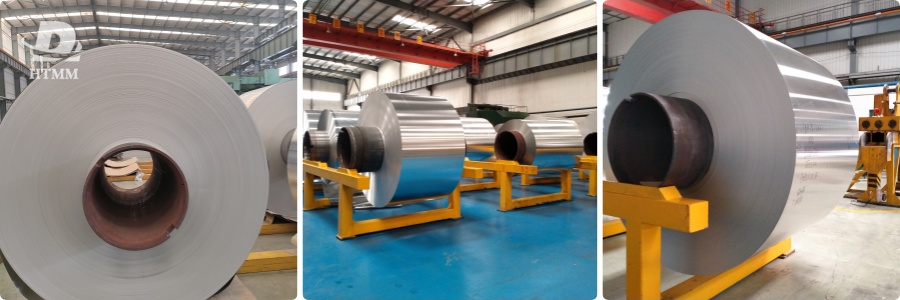
Summary of Key Quality Indicators for 8011 Foil for Flexible Packaging
Thickness and thickness tolerance affect barrier performance, strength and material cost directly.
Even thickness ensures an even moisture and oxygen barrier over the entire roll.
It also ensures stable tension during lamination and slitting.
Different packaging structures require different thicknesses, usually from 6 to 30 microns for flexible packaging applications.
The thickness and tolerance, generally ± 5 %, to be specified by the buyer when ordering.
Width and width tolerances shall be suitable for lamination and slitting equipment.
Any deviation in width reduces the utilization of materials and creates waste.
Proper width specification reduces edge trim Batch-to-batch width consistency is critical for high volume production.
Pore count is an important parameter of quality of packaging foils.
Pores affect the barrier properties of the foil, causing penetration of oxygen and moisture.
The quality of surface of the foil is very important for food and pharmaceutical products packaging.
The thinner foil needs to have higher standards of pores control during its manufacture.
The acceptable level of pores depends on the end use of the packaging foil.
Scratches, indents, wrinkles, black spots on the surface of the foil need to be checked.
Why it's important to have performance quality for flexible packaging
Good elongation means less risk of rupture on continuous converter.
Production of flexible packaging includes aluminum foil going through a couple of processing step without failure.
Production lines require higher elongation quality.
Material properties have to meet real converters performances.
Foils Flatness impacts on stable cutting performance in slitting operation, stable tension when laminating, good material running on printing and coating stations and reducing disturbances during continuous rolling process, since stable flat roll allows the stable and continuous supply of it.
No omission of winding quality must be achieved.
End of roll must be well closed, tightly wound with no space between circles, no telescoping or sideways moving.
For packaging producers buying in bulk this quality is essential, since every coil delivered must give same good quality in laminating, printing, etc to avoid subsequent adjustment work.
Constant thickness, width and surface quality guarantees continuity of production.
The quality controlling capacity directly related to a long term stable purchasing supplier.
As part of supplier qualification it's required from them the inspection reports per each batch and verify for stability between different production lots.
In case of producing many products this eliminates adjustment for all other products on your line.
Extra quality demanded in food flexible packaging
For food packaging the requirement for cleanliness during the manufacturing process is the highest since no traces of rolling oils and foreign particles should remain.
The fitness of the material must be proven to the food contact purpose.
All these quality parameters must be confirmed by manufacturer in the production documentation together with regulations compliance statement.
Also forfood packaging it is necessary to analyze barrier quality in relation to water vapor, oxygen andlight permeation.
This depends closely on thickness but also pinhole levels, the quantity of internal cracks must be below limit value.
You cannot assess this by just looking at alloy number!
For higher requirement packaging e.g. For pharmaceuticals, the control level for pinholes, thickness, defects on surface are more critical than for regular food packaging.
All pharmaceutical packaging specification must be confirmed.
Testing is necessary to ensure suitability for each part of that packaging process-lanimation, coating, heat sealing.
The O temper is chosen to fulfill a required softness during laminating or the packaging process etc., nevertheless one has to ensure the optimal for all respective processes used on your production line.
This has nothing in common with alloy number, and testing on line must therefore be performed in all cases, whether it's 100 microns thick it shouldn't run like a paper for instance.
How the quality is investigated when buying 8011 foil.
Clear specifications of the exact alloy and temper, defined thickness (with allowable range), thickness uniformity (within 2 percent tolerance), width and related tolerances.
Definition of surface appearance and quality requirements.
Pinholes and relevant quality for desired package purpose is very critical, specify for example size or count per m2; specifications related to winding of jumbo coils, (maximum roll weight, inner roll diameter, outer roll diameter); end of roll, width or lengthwise how well wound.
If large quantity then laboratory value on its own cannot guarantee applicability so for the line testing (lanimation, or coating, orslitting) it must be tested whether material fulfills needs during actual production runs with relevant production speed..
So the best option is to partner with reliable suppliers and manufacturers who understand packaging industry' needs of precise thickness uniformity, tight tolerances on width as well as width profile and good surface finish that meets visual and barrier requirements.
With the continuous advancement in the quality controlling technology they use during manufacturing and their capability in providing high consistent batches quality for long term relationship is very important element in our cooperation.
It offers manufacturers reliability in production.
In conclusion quality of 8011 flexible packaging foil is defined based on thickness uniformity, pinhole presence, surface appearance as well as production line stability of such a foil; one should look for 8011 suppliers that fulfill their requests about the characteristics of metal, and about their own quality procedures.
HTMM offer 8011 Aluminum foil jumbo rolls to the plastic bag, packaging producer or food manufacturer as well as industrial use, and can adapt the thickness, width of rolls, temper and other rolls to customer-specific applications.
Also control thickness uniformity of each Aluminum foil, quality of the aluminum coil's surface and pinholes as well as winding quality very strictly for the production demands.
Beside 8011, HTMM also offer 8079 and 1235 alloy Aluminum foil for different applications that you can utilize.
Founded in 2009 and with exports reaching 90% of its annual output to over 60 countries that use for 3000 more costumers globally, Henan Tendeli Metallurgical Materials Co., Ltd. Is among few producers that guarantee the very best aluminum foil quality standards.