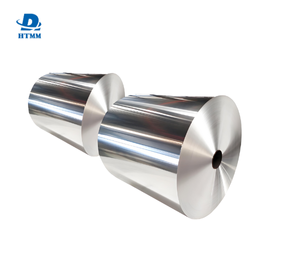
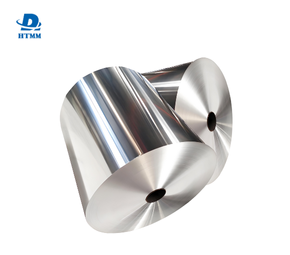
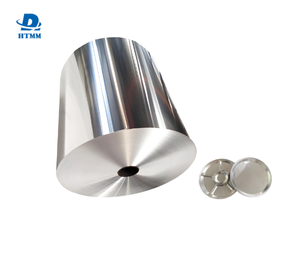
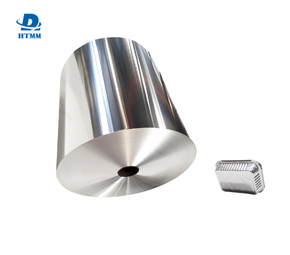
The rapid technological advancement in various industries, such as the food, pharmaceutical, daily chemical, and electronic packaging industries, has made the choice of aluminum foil thickness crucial for high-quality packaging, reduced production costs, and strong market competitiveness.
Flexible packaging aluminum foil has a sophisticated classification system based on thickness when it comes to industrial production, with the most common commercial thicknesses including 6μm, 6.5μm, 7μm, 8μm, and 9μm. Each of these thicknesses has specialized performance characteristics and the associated application conditions, resulting in a comprehensive product classification capable of ensuring differentiated packaging needs in different industries. This classification was made on the basis of barrier properties, mechanical strength, processing flexibility, and economical factors, including low-end traditional packaging materials and high-end sterile and high-barrier film.
6μm and 6.5μm foil types are ultra-thin lightweight packaging foils that represent the most popular thicknesses in mass applications and most economical, short shelf-life, and light applications. 7μm foil is a transitional thickness representing moderate thickness and being popular due to its unique properties. 8μm and 9μm foils can be characterized as medium-thick foils with good barrier properties used in high-barrier packaging solutions. Foils thicker than 10μm are primarily used for special industrial flexible materials requiring specific protection, so their market share is limited.
The 6μm and 6.5μm aluminum films are known as ultra-light packaged foil types that are the most commonly chosen specifications in daily consumer packaging applications. These aluminum foils are specifically used for cost-sensitive and light-duty packaging jobs which have a short shelf-life. At the same time, the 7μm aluminum foil is a transitional specification of medium thickness which balances flexibility with durability and is popular for medium-end food packaging applications. The 8μm and 9μm aluminum foil types can therefore be classified as medium thick because they have improved mechanical and barrier properties and mostly used for tough and strong packaging scenarios like medicines and retort packaging applications.
Fundamental Differences Between 6 Micron Aluminum Foil and Other Thicknesses
1. Variations in Barrier Performance
Barrier performance is a principal criteria for evaluating the function of flexible aluminum packaging; it directly impacts shelf life. Aluminum foil with a thickness of 6 microns has a basic performance. It prevents oxygen and water currents from penetrating packaging materials for products stored up to 6 months, such as snacks, dried fruit, and small packs of cosmetics sold in stores. However, in spite of its excellent barrier performance, it indicates a larger oxygen transmission rate (OTR) and water vapor transmission rate (WVTR) versus thicker aluminum foils, so the impact of extreme temperature and humidity is not negligible as well.
When compared to 6μm aluminum foil, both the 6.5μm and 7μm aluminum foils have been found to demonstrate better improvements in barrier uniformity. The increased thickness of the foil minimizes the effect of the minute pinholes and thin areas created during the process of rolling, thus reducing OTR and WVTR. The above specifications are suitable for medium duration shelf life products that stay for 6 to 12 months on the shelf such as milk carton inner layers and packages for preserving food. The 8μm and 9μm aluminum foils have achieved exceptional barrier effectiveness that allows complete prevention of oxygen, moisture, and sunlight influence while making them applicable in areas such as long-term shelf life food storage and sterile drugs packing.
2. Variations in Mechanical Strength and Processing Suitability
The lowest thickness 6μm aluminum foil has the greatest flexibility and ductility among all thicknesses of aluminum foil. The foil possesses good tensile and bending strengths. It can be easily folded and shaped and combined with plastic films, and its requirements for packaging machines are low. Therefore, it can be used in high-speed automatic packaging lines of small sachets. However, because of this, the structural strength of this foil is limited. It can be stretched and cracked under excessive tension and it has low puncture resistance, which makes it impossible for the packaging of products with rigid particles or heavy weight goods.
As the thickness of the foil rises, the mechanical strength of the foil rises significantly. The foils 6.5μm and 7μm have already solved the issue of easy stretching 6μm. The dimensional uniformity is much steadier so the waste during the stamping and combining processes is lower. The 8μm and 9μm aluminum foils demonstrate good puncture and tear strength so they resist outer pressure and friction during transport and storage and do not suffer from damages. At the same time, the flexibility is reduced along with the folding ability.
3. Differences in costs and Economic Capabilities
The 6μm foil, which is the thinnest foil used in general packaging, has a great advantage in terms of costs. It allows for the decrease of raw material volume per unit packaging surface, which decreases the general costs of manufacturing and packaging for companies. For low-end mass-produced goods, which require medium barrier qualities, 6μm foil is the best possible solution that gives the opportunity to maximize profit margins while keeping basic packaging functions. That is the main reason for 6μm foil having the biggest share on the market of traditional flexible packaging.
Thicker foils, on the other hand, cause incremental increase in costs. With every increase in thickness, say, of 1μm, the raw material and the manufacturing costs will also rise. 6.5μm and 7μm thickness foils will cause only slight increase in costs with stable performance, thus, being applicable for mid-range products which need to combine cost and quality. Foils thicker than 8μm would lead to higher cumulative expenses, thus being used only for high-value products such as medicines, high-end healthcare products and long-lasting specialty foods with strict requirements for quality of packaging.
4. Types of Applications
6μm aluminum foil is used in targeted application areas such as low weight, low-capacity, and short-term packaging. Some mainstream applications include the packaging of snacks, instant seasoning packets, face masks, non-reusable personal care packets, and common dried food packages. In these cases, the need for ultra-high barrier characteristics is negligible, but the advantage of the light weight of 6μm foil can be utilized.
The aluminum foil 6.5μm to 7μm is applied in wider ranges of packaging than 6μm aluminum foil, including dairy product packaging, tea packaging, nut packaging, lotion packaging and similar. Foils from the 8μm to 9μm range are used in high-end packaging, with 8μm aluminum foil used in frozen food and vacuum food packaging and 9μm aluminum foil used in the production of retort bags and medical blisters. Foil thicknesses greater than 10μm are used only in industrial electronic packaging and other types of packaging with high requirements for sealed packaging.
In the world of flexible aluminum foil packaging, there are no thicknesses that are better or worse than others—what matters is the thickness that is best suited for the application. 6μm aluminum foil, owing to its very low weight, incredible flexibility, and better overall performance, is in high demand for regular flexible packaging applications, meeting all requirements of mass production. Thicker aluminum foils, on the other hand, are advantageous in their barrier as well as mechanical properties, which makes them suitable for more demanding packaging applications.
With 15+ years of successful experience in aluminum foil manufacturing and export industry, the HTMM Aluminum Foil factory knows everything about all characteristics and technologies necessary to produce aluminum foil of any popular thickness. The factory is very stringent with the thickness deviation, flatness and pinhole rate, achieving stable and high quality products. The factory guarantees that diverse thicknesses including 6μm aluminum foil correspond to all the standards set for such types of packaging. Thus, the task of understanding the differences between aluminum foil of various thicknesses should be accomplished by packaging companies.