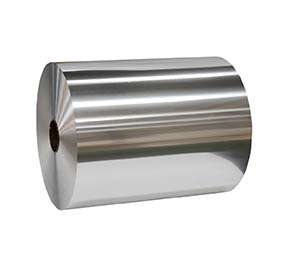
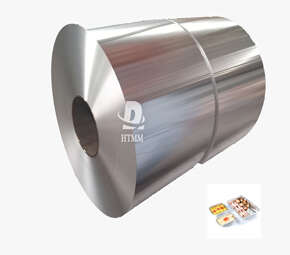
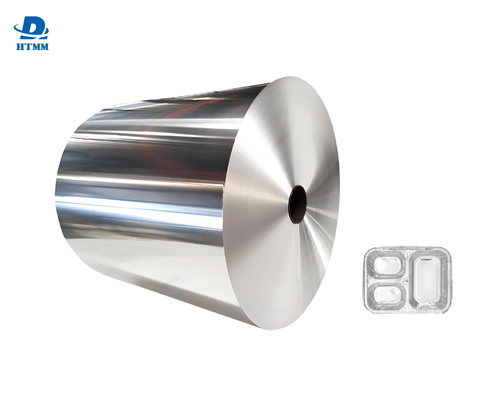
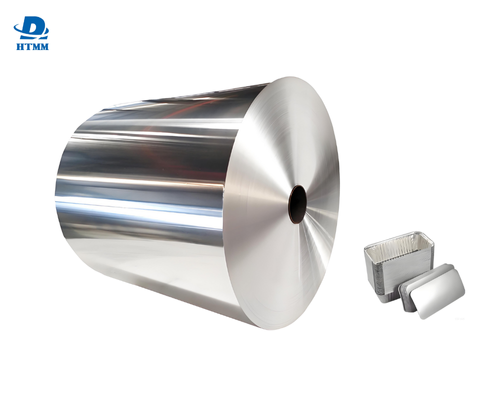
Specification
Pick proper thickness and temper
The thickness needs to be appropriate according to the container size and specifications. Thin foil can save you money on materials, whereas thick foil offers you strength and prevents deformation of containers.
Among the common tempers that are used one should mention:
O temper: Soft condition with excellent forming properties.
H22/H24 temper: Higher strength while still keeping good forming abilities.
Details include:
| Type |
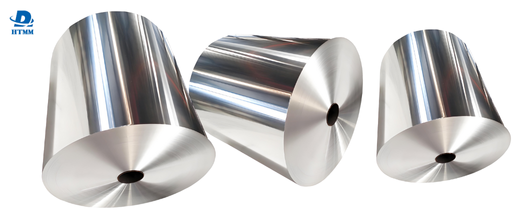
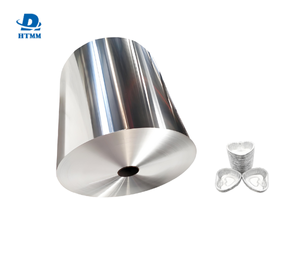
Aluminium Foil for Food Container Application |
| Application |
For different food container applications, Such as dishes, plates, trays etc |
| Grade |
Food Grade |
| Alloy |
3003/8011/8006 |
| Temper |
H22 H24 H18 O |
| Thickness |
0.03MM-0.15MM |
| Width |
200MM-1300MM |
| Surface |
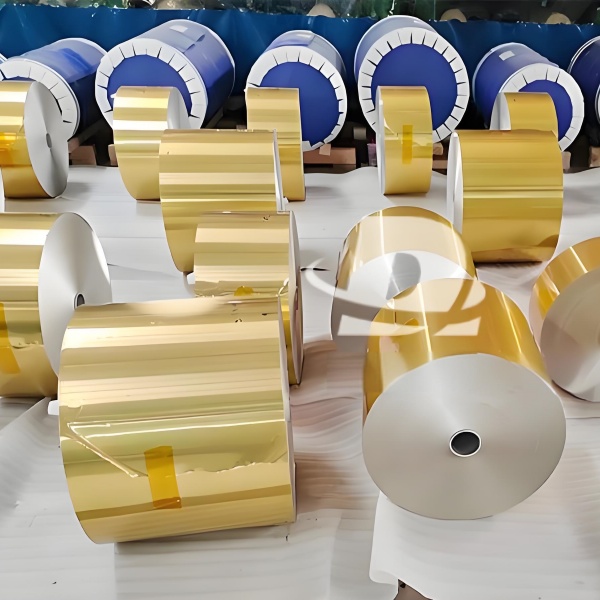
Both sides bright |
| Packaging |
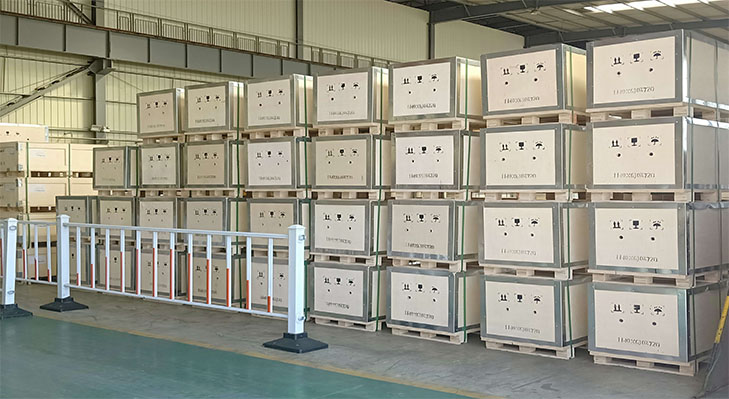
Free Fumigated wooden box |
The Main Characteristics of Aluminum Foil Meal Box Material
Food Safety
Food-grade aluminum foil is manufactured in line with the tough sanitation criteria and is to meet other requirements for food contact materials. It has a clean surface and does not interact with food products, thus preserving food safety.
Excellent Formability
The major property of a meal box foil is its high formability, which enables it to survive stamping and deep-drawing processes without cracking. Alloys like 8011 and 8006 provide good flexibility for the manufacturing of various shapes and designs of containers.
High Temperature Resistance
Aluminum foil meal containers can withstand both high and low temperatures. Therefore, they are used for cooking in an oven and for products in refrigeration or freezing. This is possible due to the stability of aluminum material during temperature changes.
High Barrier Properties
Aluminum foil provides excellent barrier performance against moisture, oxygen, light, and other outside odors as well as contaminants. Thus, it is a good material for fresh food products.
Recyclability
Aluminum is one of the most recyclable materials. Used aluminum products can be collected and recycled as they do not have any negative influence on the environment.
Pay attention to surface quality
The aluminum foil that is used for making your aluminum meal box should be of high quality, i.e.
Smooth and clean surface
No oil stains
No holes
No cracks and wrinkles
Good mechanical properties
Work with a good supplier
Finding a reliable supplier of aluminum foil will give you stable quality, customized particulars, and efficient service.
Aluminum Foil Meal Box Material Producing Process
To be specific, the aluminum foil production process comprises the following stages:
1. Aluminum Alloy Melting and Rolling
The production of high-performance aluminum foil starts off with the melting of aluminum alloys into liquid forms, after which they undergo a process of forming slugs which are then hot and cold rolled.
Annealing Treatment
Annealing helps enhance the flexibility and forming ability of the aluminum foil material. It is upon the application of proper heat treatment that one can be certain that the aluminum foil can be shaped into necessary forms due to useful qualities associated with this material.
Slitting and Surface Checking
The actual production process of aluminum foil consists of slitting the aluminum foil into the required width and checking it for features such as surface quality, thickness accuracy, appearance, among others.
Quality Control Testing Before Shipment
Quality control ensures that only tested aluminum foil rolls are shipped, meaning that all factors such as thickness tolerance, mechanical properties, cleanliness, and chemical composition are taken into account before the product leaves the factory.
FAQ:
Q 1: Which type of aluminum alloy metal is suited for production of meal box containers?The most popular alloys used in production include 8011, 3003, and 8006. The actual alloy choice depends on the design of the container, strength requirements, and moldability behavior of the alloy.
Q2: What thickness of foil metal is good for making meal boxes?Most meal box material applications require aluminum foil of thickness of 30 to 100 microns. The right thickness is determined by the size of the foil container and the strength needed.
Q 3: Is it safe to use aluminum foil for food contact?Yes. Food grade aluminum foil manufactured to existing standards possesses no hazards for food packaging use and has also been used in catering businesses, restaurants as well as food processing industries.
Q4: Are aluminum foil meal containers safe to use in ovens?Aluminum foil containers have excellent heat tolerance, which makes them great for baking and reheating food.
Q5: What is the difference between 8011 and 3003 aluminum foil for meal boxes?8011 aluminum foil is very flexible and cost-effective for different kinds of containers while 3003 aluminum foil is of higher strength and is used for firmer meal trays.
Q6: How can manufacturers ensure high-quality aluminum foil material?Manufacturers should choose quality aluminum foil suppliers who have modern manufacturing facilities and have quality inspection systems in place.

.png)