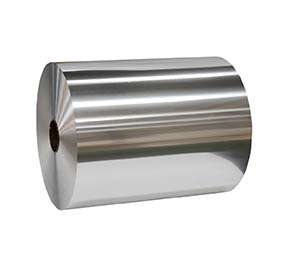
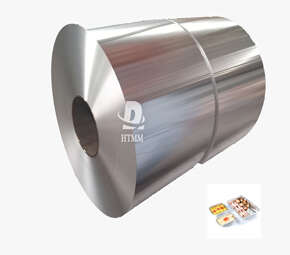
Specification
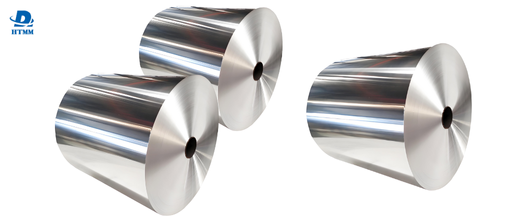
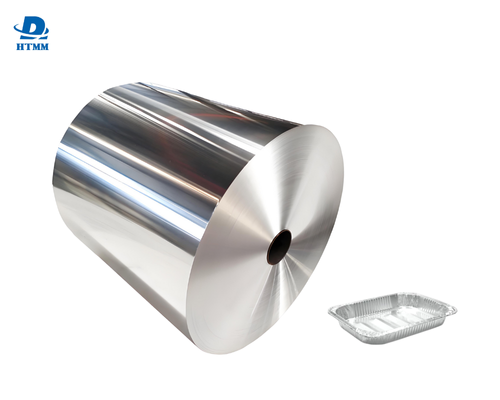
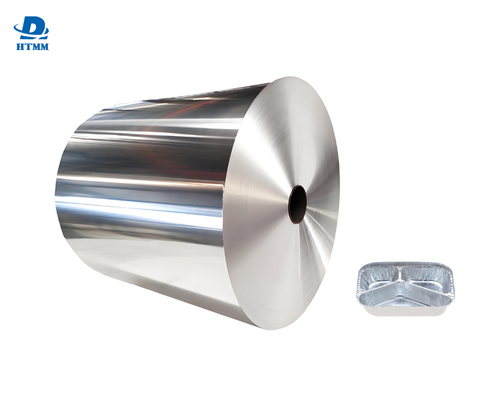
Food container aluminium foil 8011 is safe for food use and is recyclable, and therefore complies with all International regulations, including the FDA and EU Food Contact Regulations regarding its use.
Details include:
| Type |
Aluminium Foil for Food Container Application |
| Application |
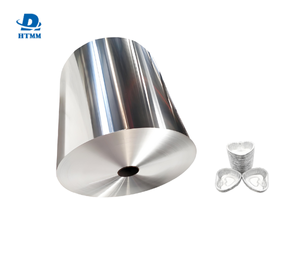
For different food container applications, Such as dishes, plates, trays etc |
| Grade |
Food Grade |
| Alloy |
3003/8011/8006 |
| Temper |
H22 H24 H18 O |
| Thickness |
0.03MM-0.15MM |
| Width |
200MM-1300MM |
| Surface |
Both sides bright |
| Packaging |
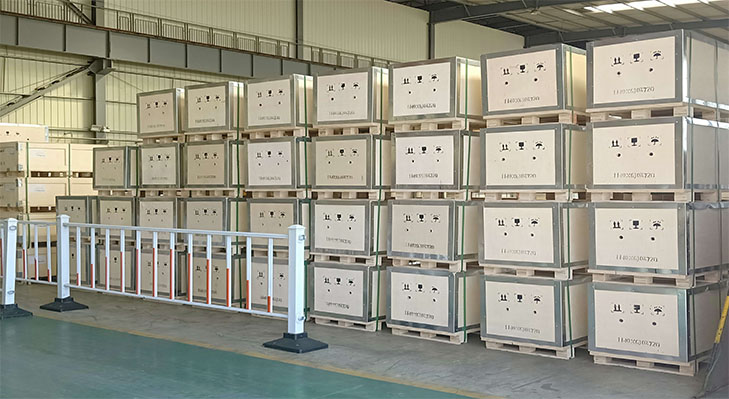
Free Fumigated wooden box |
Food Lids & Covers
Designed specifically to seal yogurt jars, dairy products, sauce jars and prepared food trays.
Packaged Frozen Food and Refrigerated Food
8011 Aluminium foil has very good barrier properties against loss of moisture, air (oxidation), and the entry of foreign contaminants.
Medical and Special Diet Packaging
Used primarily in the manufacture of specialized medically required foods where high levels of hygiene and barrier protection are required.
How Food Containers and Trays Can Be Manufactured Using 8011 Aluminium Foil
Normal manufacturing processes for food containers made from food container aluminium foil 8011 are as follows:
Casting and Rolling
Aluminium ingots will be melted, cast, and hot rolled into foil coils with controlled thickness (and cold rolled as required).
Annealing and Temper Control
The foils will be annealed to achieve various temper results, based on the requirements of the food containers made with the foil. Examples of tempers placed on the foils include H18, H22, and H24.
Surface Treatment
Cleaning (Degreasing and Cleaning) the surface of foils will ensure that they meet all food-grade standards before they are manufactured into a food container or tray.
Punching/Formation
Aluminium foils will be punched or formed into food containers or trays, etc. using high-speed press equipment and specially designed dies for this purpose.
Trimming and Stacking
Finished Food container aluminum foil 8011 is trimmed to ensure it has straight edges for easy stacking, packing and distributing.
The final container should have a consistent thickness, excellent elongation properties, and stable mechanical properties throughout the manufacturing process.
Packaging temperature for the 8011 Alloy, H18, H22, H24.
The performance of finished food container aluminum foil 8011 is substantially influenced by the varying temper (H18, H22 and H24) used in production.
H18 is the hardest and solidest raw material of all H series foils, providing high rigidity and strength needed for use in shallow containers and lids.
H22 is a compromise between unachievable extremes of excessive strength with limited formability. Most local takeaway food containers are built this way.
H24 provides much improved ductility & deep drawing characteristics making it best suited to deep trays and complex shaped food containers.
Selecting the right temper of food container aluminum foil 8011 is important to achieve optimum efficiency when forming and quality of product.
The Common Thicknesses of Aluminium Foils for Food Containers also reflects on how strong and heat resistant the material is, as well as the applications that can use it.
In conclusion, Thickness of 8011 is fundamental in defining Food Packaging Strength, Heat Resistance and Packaging Application.
Thickness and Container Type Summary
| Thickness (micron) |
Container Type |
Typical Use |
| 25–30 µm |
Light containers Bakery trays |
dessert cups |
| 30–35 µm |
Standard containers Takeaway |
lunch boxes |
| 35–40 µm |
Medium-depth trays |
Ready meals, airline meals |
| 40–50 µm |
Heavy-duty containers Barbecue |
oven cooking |
| 50–60 µm |
Extra-strong containers |
Industrial food packaging |
manufacturer according to the weight of the food being packaged, the method of cooking/heat being applied to the product, and the transportation requirements for the product. Therefore, a range of thicknesses (gauge) between 25-45 gage (0.025-0.045 mm) would be chosen by the manufacturer based on what their finished products will look like.
Frequently Asked Questions (FAQs) About Aluminum Foil Food Containers 8011Q1. Why do international manufacturers choose Aluminum Foil Food Containers 8011 over another type of aluminum foil?A1. The Aluminum Foil Food Containers 8011 is selected because it provides excellent formability, meets all food safety requirements, and has very good mechanical strength/stability properties.
Q2. How do international manufacturers determine specifications for their Food Containers?A2. They determine the Food Container specification according to the type of food, cooking method, transportation method, and what the customers would want.
Q3. What tests are performed to determine thickness of food containers using aluminum foil?A3. To determine the thickness of food containers using aluminum foil, the following tests are conducted; Load Test, Forming Test, and Thermal Resistance Test.
Q4. Is it safe to use Aluminum Foil Food Containers 8011 directly on food?A4. Yes, Aluminum Foil Food Containers 8011 can be directly in contact with food as it conforms to the applicable FDA and EU Regulations.
Q5. Is it safe to use Aluminum Foil Food Containers 8011 for other types of cooking such as Oven cooking and Grilling?A5. Yes, Aluminum Foil Food Containers 8011 can be placed in Ovens and Grills with confidence that they are safe to do so.
Q6.Which is the softest temper of deep-draw aluminum foil containers (H24)? Which is the softest?A6.The H24 temper is the softest temper of aluminum foil containers. The H24 temper has the highest ductility.
Q7.How does one increase the rigidity of an aluminum foil container?A7.Rigidity may be increased with the use of thicker (higher gauge) foil or a higher temper (H18, etc.) of foil.
Q8.Are aluminum foil containers considered to be reusable?A8.Alloy 8011 would be considered to be 100% recyclable for all food applications.
Q9.How do manufacturers evaluate the quality of an aluminum foil container?A9.The quality of an aluminum foil container may be checked through dimensional checks, forming tests, and food safety audits.
Q10.Do different markets have specific custom specifications?A10.Different markets may have specific custom specifications for the alloy, thickness, temper, size, and shape of their containers; therefore, all of these specifications may differ from one market to another.

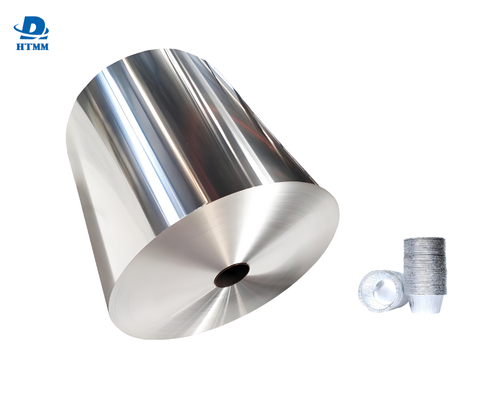
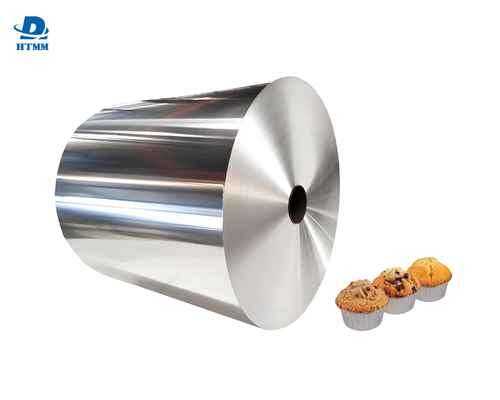
.png)