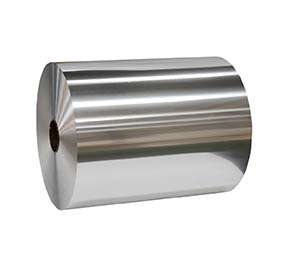
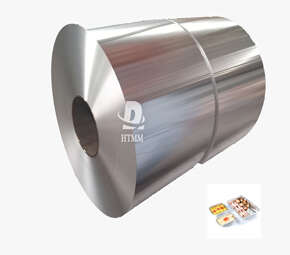
Specification
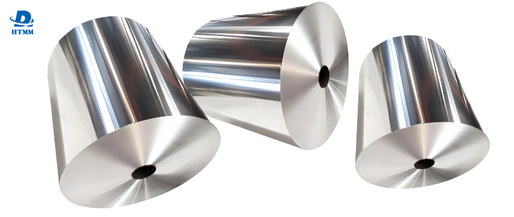
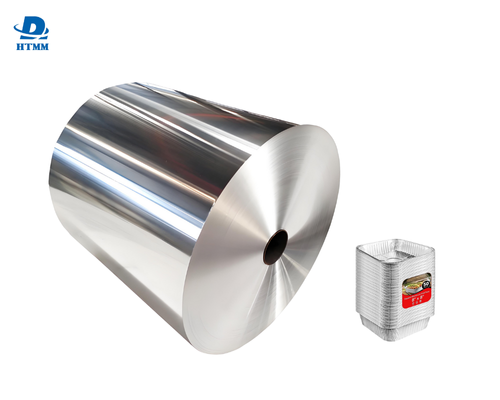
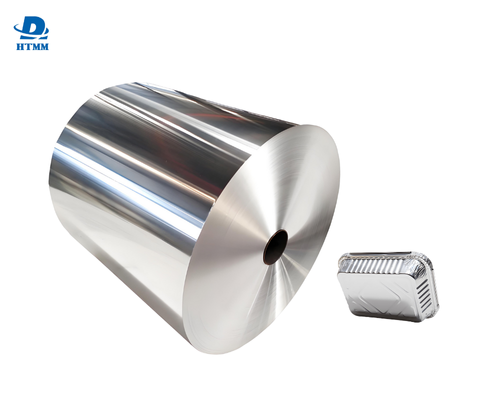
Our 3003 Lubricated Container Foil's exceptional performance has been engineered to provide superior capabilities by utilizing the 3003-H24/H26 temper, which has very high yield strength to resist buckling and sufficient ductility to flow into complex die cavities without splitting or excessive thinning. Precision-applied, food-grade lubricant systems provide consistent surface coverage, which is critical for stable forming and achieving sharp corner definition; creating a container with the same wall thickness throughout will enable longer tool life and lower costs associated with die refurbishment and press downtime.
Details include:
| Type |
Aluminium Foil for Food Container Application |
| Application |
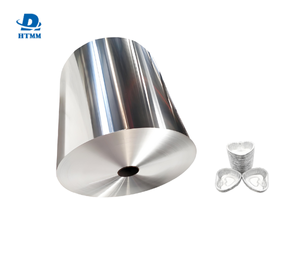
For different food container applications, Such as dishes, plates, trays etc |
| Grade |
Food Grade |
| Alloy |
3003/8011/8006 |
| Temper |
H22 H24 H18 O |
| Thickness |
0.03MM-0.15MM |
| Width |
200MM-1300MM |
| Surface |
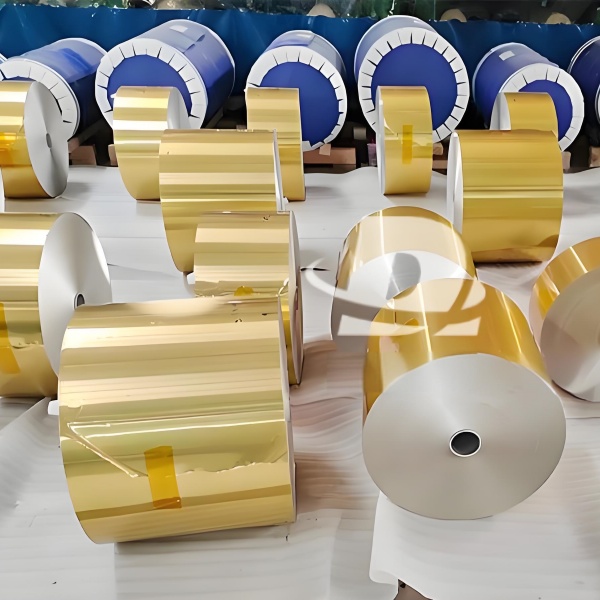
Both sides bright |
| Packaging |
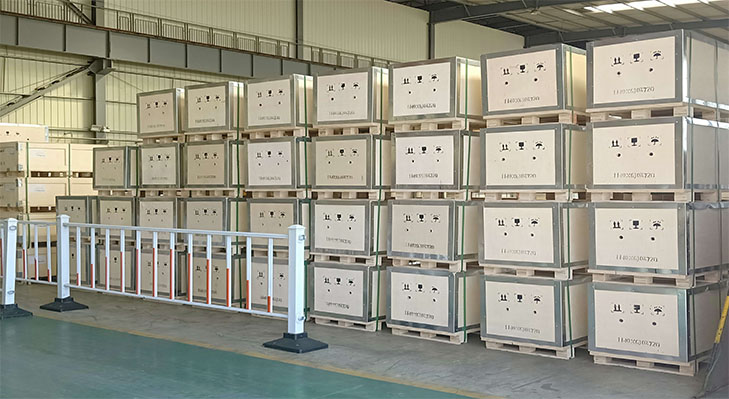
Free Fumigated wooden box |
The foil itself has very high post-form strength, rigidity, stackability, and dent-resistance; in addition, the foil has excellent thermal conductivity and food compatibility makes it suitable for containers used in an oven or for packaging a variety of food types. The entire combination of surface engineering and material science contributes to a higher productivity, reduced total operating costs, and higher-quality end products for container manufacturers.
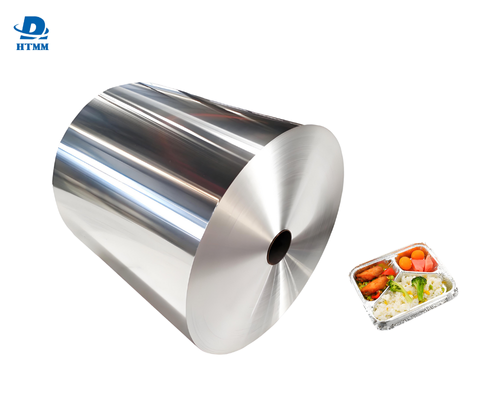
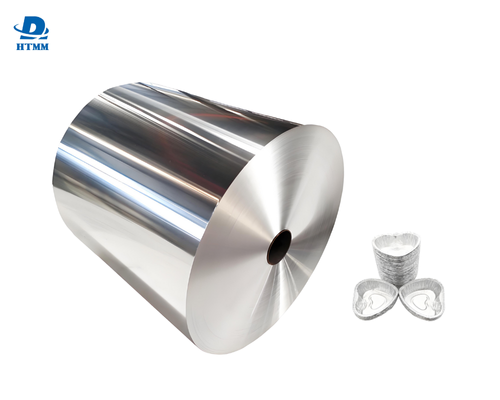
The primary purpose of the 3003 Lubricated Container Foil (HTMM) is to be the basic raw material for almost all types of aluminum food containers and packaging. These include: aluminum food trays (round, rectangular, and oval) for ready-to-eat meals, takeaway meals, and airline meals; baking containers (pie plates, quiche pans, cake pans); specialty food containers (pet food, frozen meals, and pre-made desserts) and lids and closures for glass and plastic containers. In addition to food, HTMM's 3003 Lubricated Container Foil is also used to create technical containers and housings for industrial and consumer products. The primary function of HTMM's 3003 Lubricated Container Foil is to provide an efficient means of high-speed stamping and drawing to create lightweight, durable, thermally conductive, and fully recyclable packaging solutions used throughout the modern food service and retail distribution systems.
Bestselling CountriesAdvanced manufacturing and large-scale food processing are two areas where Specialized Company’s product has the greatest demand. The largest markets for this product are North America (the USA and Canada) and Western Europe (Germany, France, Italy, and the UK), where the production of automated containers is commonplace. In Asia, the following countries have a significant demand for this product: Japan, South Korea, Australia, and, to a lesser extent, China. There is also a growing demand from the Middle East (Gulf Cooperation Council countries) and Latin America (Brazil and Mexico) due to the expansion of local food and hospitality industries. Our foil is supplied to manufacturers of containers and large volume converters who service clients in the global and regional networks.
HTMM Can Provide You WithWorking with HTMM as your supplier of lubricated container foil be will provide you with a technical expert committed to supporting you in achieving maximum production efficiency. We offer complete application engineering support and will work with you to determine the optimal temper, thickness, and lubricant formula that will deliver the best performance on your specific press and die set while maximizing yield and quality. Our latest technology in rolling and coating ensures consistent material quality, which is vital for trouble-free, high-speed stamping operations. We also provide just-in-time delivery and inventory management services so that your production lines remain uninterrupted. In addition to being your source of lubricated container foil; We are a partner in solving your issues. We can perform metallurgical analysis and provide process recommendations for the elimination of earring, splitting, or inconsistent lubrication when forming containers. By partnering with HTMM, you can ensure a steady supply of a critically important material and a partner willing to help minimize your cost-per-container.
FAQ1. Why is lubrication crucially important for container foil?Container foil requires lubrication to reduce the extreme friction and heat generated as aluminum is forced into a die using high-pressure and high-speed processes. Proper lubrication will:
Prevent Galling and Pick-up: Prevent the aluminum from welding to Tool Steel which would create scoring on dies and damage container surfaces.
Ensure Smooth Metal Flow: Enable metal to flow smoothly into all areas of the die to create uniform wall thickness and sharp corners.
Reduce Tool Wear: Greatly increase the longevity of expensive forming dies and punches.
Lower Press Force: Reduce tonnage required to create containers and provide energy efficiency.
2. Will you customize our lubrication based on our specific dies and press?Yes, this is one of our primary services. We can adjust the type of lubricant (synthetic oil, emulsion), coating weight, and application method to your specific tooling geometry, press speed, and complexity of container. We strive to provide the least amount of effective lubrication for your specific process.
3. Are the lubricants food-safe and are they required to be cleaned after forming the containers?The lubricants we use meet FDA requirements for indirect food contact, meeting the criteria of being both safe for food use and compliant with the respective regulations. In many cases (especially for container applications where the food product is not in direct contact with the drawn wall of a container) no cleaning of the lubricant will be necessary after the forming operation is complete. For containers used for direct liquid or fatty food contact, the end-user may want a recommendation for a washing operation before the container is used. We can provide recommendations on a case-by-case basis.
4. What are the differences between H24 and H26 tempers for making containers?Both H24 and H26 are strain-hardened tempers that can be used for making containers through deep-drawing processes.
H24: A strain-hardened and partially annealed temper, this alloy has an excellent combination of strength and elongation. This temper is the most common alloy used in a variety of container applications.
H26: Also a strain-hardened temper but with a different heat treatment process (stabilised). This has the potential to provide slightly greater strength than H24 and is typically specified for the most difficult deep draws or when the required container needs to be as rigid as possible. Our technical staff can help select the best option for your application.
5. The result of using an unlubricated or poorly lubricated foil will produce immediate and disastrous results.Severe Tool Damage- The aluminum will quickly adhere to and ruin the tool.
Poor Quality Forming- The edge of the container will be torn, the wall will be uneven, and the feature will be missing.
High Scrap Rates- Many Percent of the blank will not form.
Excessive Downtime- The press must frequently stop to clean the tool and polish it.
With our accurately lubricated foil, you can avoid all these problems, maintaining efficient and profitable production.

.png)