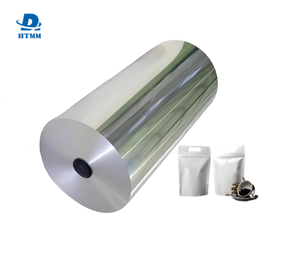
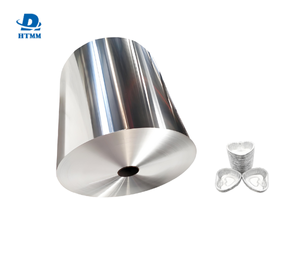
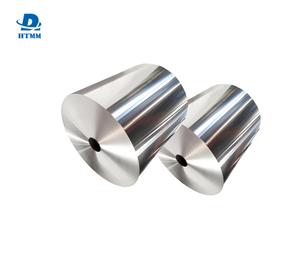
The selection of the optimal aluminum foil is essential for optimizing the balance of performance, expenses, and efficiency of machinery.
1235 and 8079 aluminum foils are two types of cheap foils frequently used for flexible packaging with high barrier properties.
Despite the fact that both types are highly effective against moisture, oxygen, light, and odor, they differ significantly in terms of their elements, mechanical strength, elongation, and processing properties, which makes them suitable for different uses.
As one of the top aluminum foil manufacturers in China, HTMM produces top-quality rolls of aluminum 1236 and 8079 that are promised to deliver the finest performance to packaging and converting companies around the world.
Fundamental Differences: Composition and Properties
Components in 1235 and 8079
1235 is a pure aluminum alloy comprised of high levels of aluminum, while 8079 is a silicon-iron-aluminum alloy.
Thanks to the presence of silicon and iron, 8079 features different mechanical and metallurgical qualities.
Strength and Elongation of Both Types
In the 0 (soft) state, both alloys ensure high levels of flexibility and elongation.
1235 is highly preferred by producers of flexible packaging due to its outstanding capabilities to be formed and low cost.
On the other hand, 8079 offers better strength and solid stability of processing.
While 1235 guarantees reliable forming performance, 8079 is usually preferred when the foil is required to perform repeated folding and bending processes, or undergo severe converting without excessive cracking.
Barrier Performance and Pinhole Resistance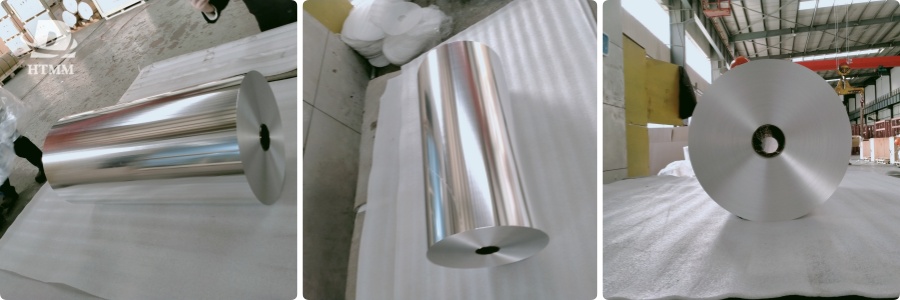
Alloy Selection Below 7 Micrometers
As the aluminum foil thickness drops below the 7 micrometer level, pinhole control becomes increasingly important.
The rolling quality, grain structure, surface condition, and process control will all contribute toward the final pinhole rate.
Alloy 8079 is commonly chosen for demanding ultra-thin applications, as it ensures an adequate combination of strength and reliability in the process.
WVTR, OTR, and Light Barrier
Both alloys 1235 and 8079 can provide excellent barrier properties as water vapor, oxygen, light, and aroma are concerned in the case of proper incorporation in laminate.
The final parameters of WVTR and OTR will depend on the alloy used as well as the foil thickness, the presence of pinholes, the quality of the glue and its layers, and the conditions of converting.
Alloy-Matching for Shelf Life
The use of 8079 in products that need a lengthy shelf life and enhanced protection ensures better stability in thin-gauge applications.
As for the part of conventional high-barrier packaging, 1235 offers cost-effective characteristics, resulting in good performance and processing efficiency.
Matching available alloys with packaging usage
Aseptic and retort packaging
8079 is widely spread in difficult cases such as aseptic liquid packaging and retort bags for exposure to high temperatures, which shows that the foil must stand high mechanical stress and thermal pressure while preserving its barrier qualities.
Coffee, milk powder, dry food
In case of using the composite packaging for coffee, milk powder, snacks, and dry food production, 1235 aluminum foil accelerates the return of investments since it combines flexibility, barrier performance, availability, and the cost-efficient solution.
Pharmaceutical blister and pouch packaging
Pharmaceutical packaging demands uniformity of thickness, high surface quality, mechanical properties, and barrier efficiency.
The choice falls upon either one of the alloys depending on the laminate design and forming parameters.
Effects on High-Speed Processing and Composite Production Lanes
“Reducing Breakdowns and Downtime”
On fast laminating and coating lines, foil works under constant stress.
Good tensile characteristics and consistent thickness allow minimizing tape break, web interruptions, and production downtimes.
For the specific thin gauge production, 8079 can give extra advantage in terms of processing.
Surface Wetting and Adhesion
Quality of surface and required dyne value are vital for adhesive, PE, and PET adhesion.
Proper surface treatment and cleanliness guarantees stable coating and lamination quality.
Clients need to check surface specifications with their adhesive and converting suppliers.
Wrinkling and Slitting Defects
Big master reels require accurate rolling, winding, and cutting.
Thickness variations, improper tension management, or improper edge quality might lead to wrinkles, telescope and function flaws.
That is why constant production control is as significant as the alloy selection process.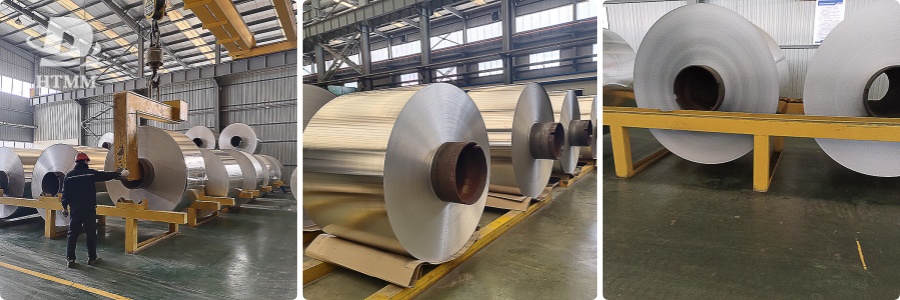
B2B Procurement Strategy: Cost-Effectiveness and HTMM Advantages
Price Difference and Long-Term ROI
The cheapest purchase price does not guarantee the lowest total cost.
In comparing 1235 and 8079 alloys, one must consider material yield, scrap percentage, production speed, downtime, and output quality.
While the 1235 alloy is cost-effective for general use cases, the 8079 alloy provides greater benefits in applications that require ultra-thin products.
HTMM Quality Assurance
HTMM also offers efficient thickness control, custom widths, and accurate slitting to satisfy different production specifications.
With custom specs, clients have less waste and consistent quality of production.
Marine Protection and Export Packaging
It is crucial to pack goods correctly when shipping internationally.
HTMM utilizes strong export packaging that is specifically made for the protection of aluminum foil jumbo rolls from damage such as moisture, impact, and handling.
The conclusion of the fast decision matrix is straightforward: use 8079 for situations in which the packaging has to withstand extreme conditions or is ultra-thin; use 1235 for situations in which the packaging material has to perform well at a lower cost.
HTMM aims to assure the consistency of the quality of the materials supplied; the prices quoted are competitive and factory-direct, the varieties available at HTMM are customized enough to satisfy the requirements of various clients, and the necessary certifications are issued (including FDA and SGS certificates).
Packaging engineers and purchasing managers can apply to HTMM to get the necessary Technical Data Sheets (TDS) and up-to-date rates on full container load (FCL) orders.